Microbial Sulfur Cycling from Environmental Ecosystems to the Human Gut: Linking Microbial Ecology, Biotechnology and Health
Published in Earth & Environment and Microbiology
Microorganisms govern key biogeochemical processes that sustain life on Earth. My research focuses on understanding how microbial communities transform sulfur compounds across diverse environments, ranging from aquatic ecosystems and sediments to food production systems and the human gastrointestinal tract.
A major part of my work investigates sulfur-cycling microorganisms, including sulfate-reducing microorganisms (SRM), sulfur-oxidizing bacteria, and anoxygenic phototrophic sulfur bacteria, particularly Purple Sulfur Bacteria (PSB) and Green Sulfur Bacteria (GSB). These microorganisms participate in essential sulfur transformations and play important roles in nutrient cycling, ecosystem functioning, and environmental sustainability.
Beyond environmental microbiology, I am interested in how microbial metabolism influences complex biological systems. My research explores the production and fate of sulfur-containing metabolites, microbial interactions, and their ecological significance in both environmental and host-associated microbial communities. This includes studies on intestinal sulfur-metabolizing microorganisms and their potential contribution to health and disease.
Another important direction of my research is environmental biotechnology and microbial biodegradation. I investigate the ability of microorganisms to participate in the degradation and transformation of emerging contaminants, including microplastics and other anthropogenic pollutants. Understanding microbial mechanisms involved in pollutant degradation may contribute to the development of sustainable biotechnological solutions for environmental protection.
In addition, my work includes food microbiology and food safety, with particular emphasis on microbial diversity, fermentation processes, microbial interactions, and the application of beneficial microorganisms in food systems.
Current research interests include:
- Microbial sulfur cycling and sulfur metabolism
- Sulfate-reducing microorganisms (SRM)
- Purple and Green Sulfur Bacteria (PSB and GSB)
- Environmental and aquatic microbiology
- Microbial ecology and ecosystem functioning
- Anaerobic microorganisms and microbial communities
- Biodegradation of microplastics and environmental pollutants
- Environmental biotechnology and bioremediation
- Food microbiology and microbial fermentation
- Gut microbiota and host-microbe interactions
- Microbial metabolites and their ecological significance
- Inflammatory bowel disease and intestinal microbial ecology
I am particularly interested in interdisciplinary research connecting environmental microbiology, microbial ecology, biotechnology, and human health, with the goal of understanding how microbial processes shape both ecosystems and living organisms.
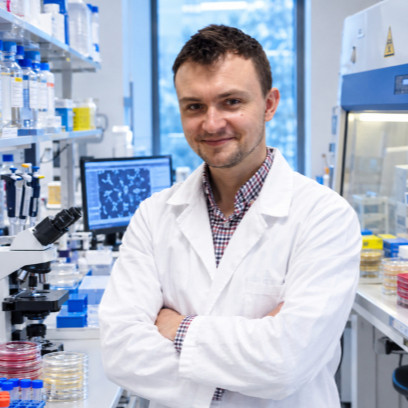
A scientist in the field of microbiology who received his first scientific degree, Candidate of Biological Sciences (CSc) in Microbiology, in 2010 – equivalent to a Ph.D. degree. Subsequently, he was awarded the Doctor of Biological Sciences (DSc) degree in Microbiology in 2016.
In addition, Dr. Kushkevych earned a second Ph.D. degree in Pharmacology and Toxicology in 2021 (Faculty of Pharmacy at Masaryk University, Brno, Czech Republic). His Ph.D. thesis was entitled “Testing the cytotoxicity and biological effects of salicylamide derivatives against intestinal sulfate-reducing bacteria”. His research focuses on the physiological and biochemical characteristics of sulfate-reducing microorganisms and their functional role in the development of inflammatory bowel disease in humans and animals.
Dr. Kushkevych is the sole author of original books entitled "Intestinal Sulfate-Reducing Bacteria" (2017) and "Bacterial Physiology and Biochemistry" (2022) as well as the author of several chapters of other books, among them are “Sulfate source and its role in the development of colitis” in the book "Colitis: Causes, Diagnosis and Treatment", Nova Science Publishers, Inc., Hauppauge, New York, United States (2019); “Isolation and purification of sulfate-reducing bacteria” in the book "Microorganisms", IntechOpen, London, United Kingdom (2019); and “Effect of intestinal microbiome, antibiotics, and probiotics in the prevention and management of ulcerative colitis” in the book "Probiotics in the Prevention and Management of Human Diseases: A Scientific Perspective", Elsevier Academic Press (2022).
Dr. Kushkevych previously worked at the Department of Human Pharmacology and Toxicology at University of Veterinary and Pharmaceutical Sciences (Brno, Czech Republic) and currently works as an Associate Professor at Masaryk University in Brno, Czech Republic.
Dr. Kushkevych’s scientific interests include sulfate-reducing microorganisms, sulfate dissimilation, inflammatory bowel disease, ulcerative colitis, lactic acid bacteria, and phototrophic sulfur bacteria.