Modular Endoprosthesis vs. Cement Spacer After Proximal Humerus Tumor Resection — Do We Really Gain Functional Advantage?
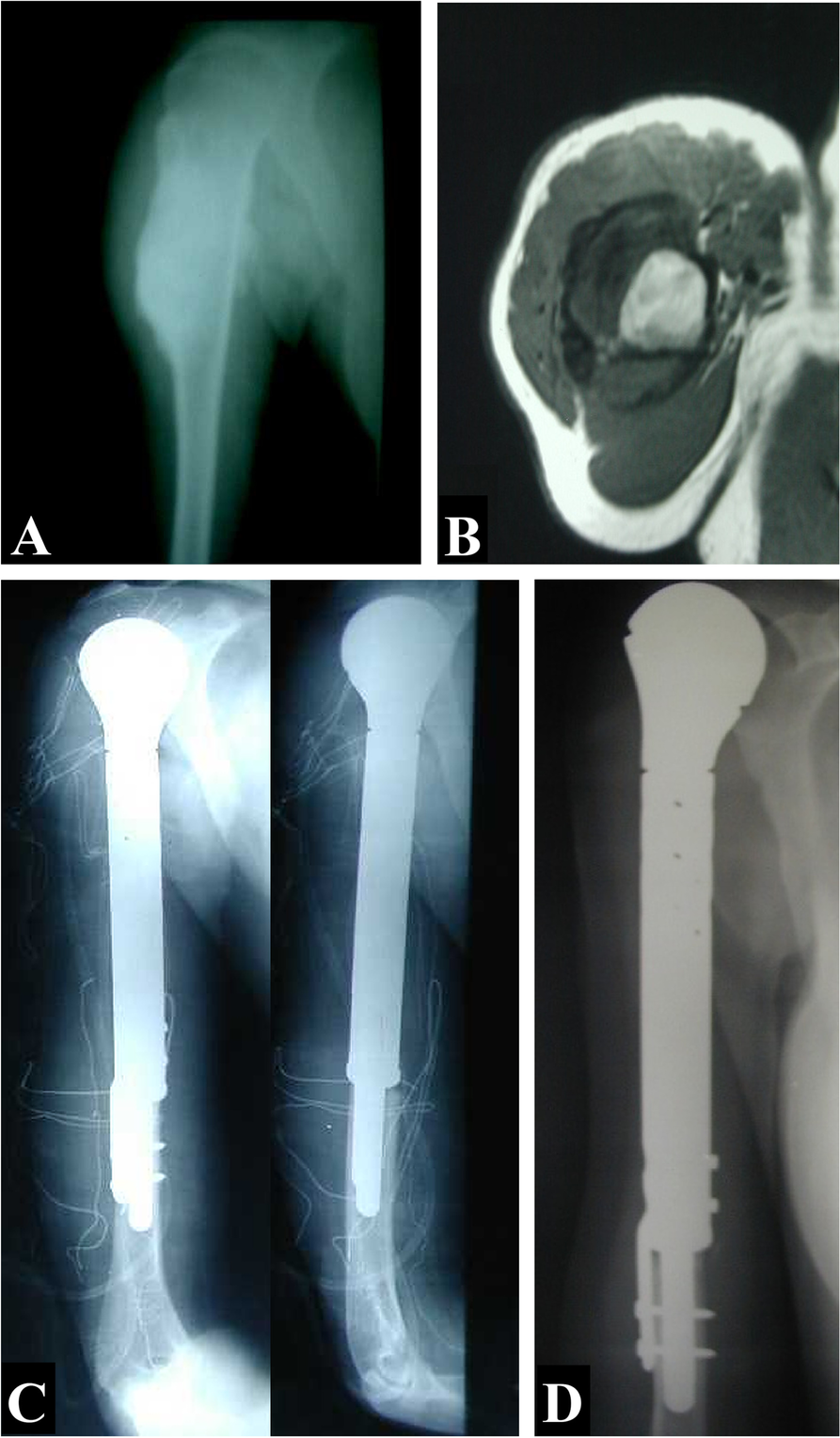

Reconstruction following wide resection of proximal humeral tumors remains controversial. While modular endoprostheses are often considered the more “advanced” option, their cost and potential complications raise an important question:
Do they truly provide superior functional outcomes compared to cement spacers?
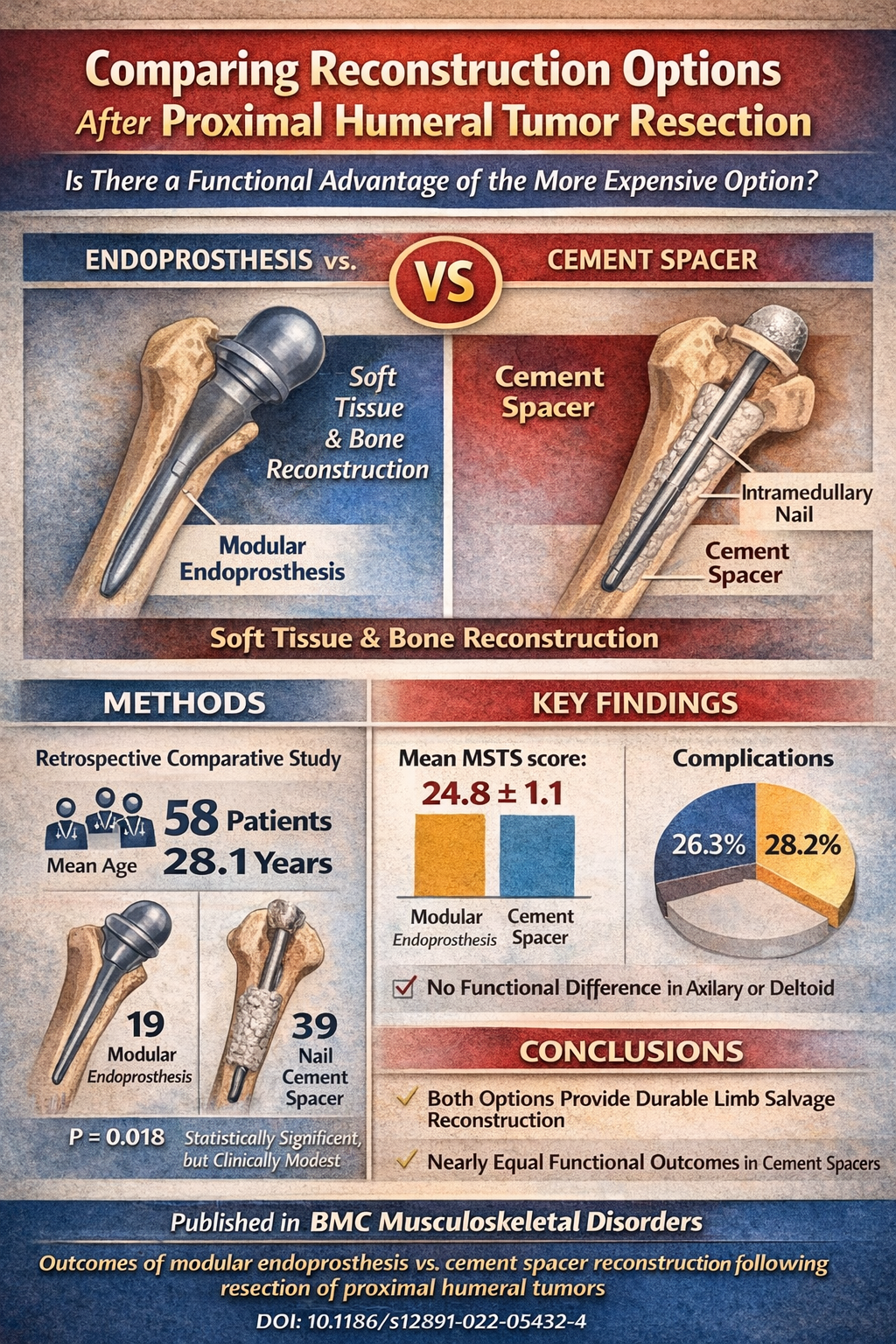
In our retrospective comparative study published in BMC Musculoskeletal Disorders, we evaluated outcomes in 58 patients who underwent limb-salvage surgery for proximal humerus tumors:
-
19 patients reconstructed with modular endoprosthesis (humeral hemiarthroplasty)
-
39 patients reconstructed with nail cement spacer
🔎 Key Findings
1. Mean MSTS score:
– Endoprosthesis: 24.8 ± 1.1
– Cement spacer: 23.9 ± 1.4
→ Statistically significant difference (P = 0.018), but clinically modest
2. Complication rates were comparable:
– Endoprosthesis: 26.3%
– Cement spacer: 28.2%
3. No significant functional differences were observed in patients with or without axillary nerve or deltoid resection.
💡 Clinical Takeaway
Both modular endoprostheses and cement spacers provided durable limb-salvage reconstruction with nearly equivalent functional outcomes.
Importantly, our findings suggest no substantial added functional advantage of the more expensive modular endoprosthesis, particularly in settings where cost considerations are relevant.
This study supports thoughtful, individualized reconstructive decision-making based on:
-
Soft tissue status
-
Patient age and prognosis
-
Resource availability
-
Surgeon experience
📄 Outcomes of modular endoprosthesis reconstruction versus cement spacer reconstruction following resection of proximal humeral tumors
BMC Musculoskeletal Disorders (2022)
DOI: 10.1186/s12891-022-05432-4
Walid Atef Ebeid MD, Sherif Eldaw MD, Ismail Tawfeek Badr MD, Mohamed Kamal Mesregah MD, Bahaa Zakarya Hasan MD
Article links:
https://pubmed.ncbi.nlm.nih.gov/35597987/
https://link.springer.com/article/10.1186/s12891-022-05432-4
I would be interested to hear how others approach reconstruction after proximal humeral tumor resection:
-
Do you routinely favor endoprosthesis?
-
In which scenarios do you prefer cement spacers?
-
How heavily does cost influence your decision-making?

Dr. Mohamed Mesregah MD is an experienced orthopedic surgeon with a strong background in both clinical practice and orthopedic research. He specializes in the diagnosis and management of musculoskeletal conditions, with a commitment to delivering high-quality, patient-centered care.
With years of hands-on experience, Dr. Mohamed Kamal Mesregah has developed a deep understanding of modern orthopedic techniques and evidence-based treatment approaches. His research involvement reflects his dedication to advancing medical knowledge and improving patient outcomes.
Follow the Topic
-
BMC Musculoskeletal Disorders
BMC Musculoskeletal Disorders is an open access, peer-reviewed journal that considers articles on all aspects of the prevention, diagnosis and management of musculoskeletal disorders, as well as related molecular genetics, pathophysiology, and epidemiology.

Related Collections
With Collections, you can get published faster and increase your visibility.
Alignment strategies in total knee arthroplasty
As the field of total knee arthroplasty moves beyond a one-size-fits-all mechanical alignment paradigm, increasing attention is being paid to personalized alignment strategies that aim to restore native knee anatomy, joint kinematics, and functional biomechanics. This collection will explore the theoretical foundations, technical execution, and clinical implications of kinematic, functional, restricted, and mechanical alignment approaches, as well as their role within modern, patient-centered total knee arthroplasty (TKA) practice to highlight how different alignment strategies affect postoperative function, implant survivorship, complication rates, and patient-reported outcomes.
Topics of interest include, but are not limited to:
- Comparative outcomes of mechanical, kinematic, functional, and restricted alignment in total knee arthroplasty
- Development and clinical application of personalized alignment strategies
- Biomechanical and kinematic implications of different alignment philosophies
- Impact of alignment strategy on patient-reported outcomes, function, and satisfaction
- Alignment considerations in complex or atypical knee anatomy
- Integration of alignment strategies with modern surgical techniques and technologies
All manuscripts submitted to this journal, including those submitted to collections and special issues, are assessed in line with our editorial policies and the journal’s peer-review process. Reviewers and editors are required to declare competing interests and can be excluded from the peer review process if a competing interest exists.
Publishing Model: Open Access
Deadline: May 12, 2027
Quadriceps tendon autograft anterior cruciate ligament reconstruction
BMC Musculoskeletal Disorders is calling for submissions to the Quadriceps tendon autograft anterior cruciate ligament reconstruction. The scope of this collection includes an in-depth exploration of Quadriceps Tendon Autograft (QTA) as a preferred technique in Anterior Cruciate Ligament Reconstruction (ACLR).
Topics of interest include, but are not limited to:
Technical aspects of the surgery, including graft harvesting, surgical procedure variations, and comparisons to other graft types (e.g., hamstring tendon, patellar tendon).
The implications of QTA in ACL injury repair, focusing on graft stability, functional recovery, and long-term outcomes.
Post-operative rehabilitation protocols.
Strategies for enhancing muscle strength and maintaining optimal knee function after surgery.
Common complications such as graft failure, re-injury, and the risk factors that contribute to these issues.
Researchers, clinicians, and scholars are invited to submit their work and share their findings with a global audience. By participating in this Collection, contributors will help shape the future of musculoskeletal disorder treatment and enhance the therapeutic options available to patients worldwide.
All manuscripts submitted to this journal, including those submitted to collections and special issues, are assessed in line with our editorial policies and the journal’s peer-review process. Reviewers and editors are required to declare competing interests and can be excluded from the peer review process if a competing interest exists.
Publishing Model: Open Access
Deadline: Oct 15, 2026