Multidisciplinary Competencies in Secondary Education
Published in Education




Publishing in Discover Education has been a milestone in my journey as a reflective practitioner, an educator, and researcher based in Nepal. I have long been fascinated by how science education can nurture curiosity, resilience, and agency among learners. My journey—from astrophysics to STEAM education—has shaped my perspective on integrating research with classroom realities.
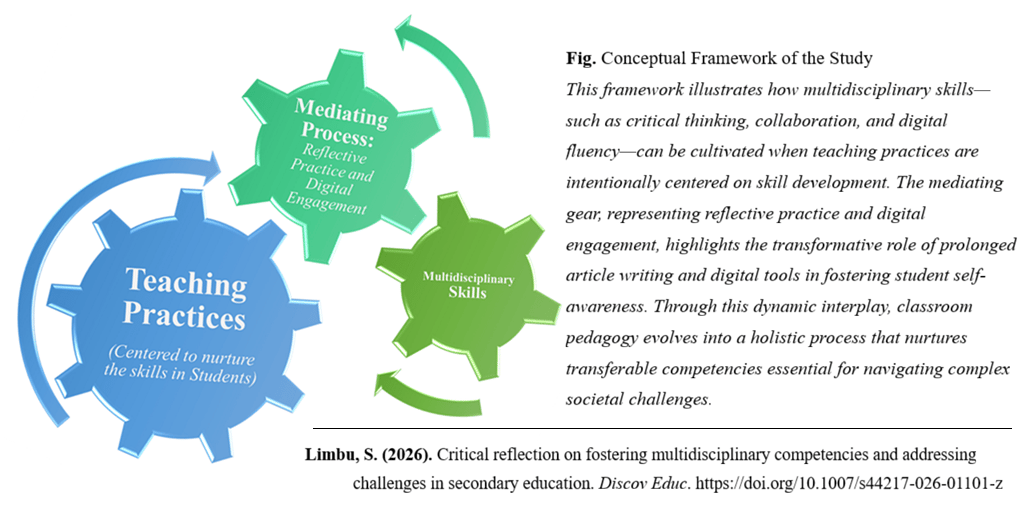
This study emerged from my desire to reposition classrooms as spaces of dialogue, resilience, and global citizenship. By embedding reflective practice, I sought to bridge disciplinary boundaries and empower learners to think critically and ethically.
Why It Matters
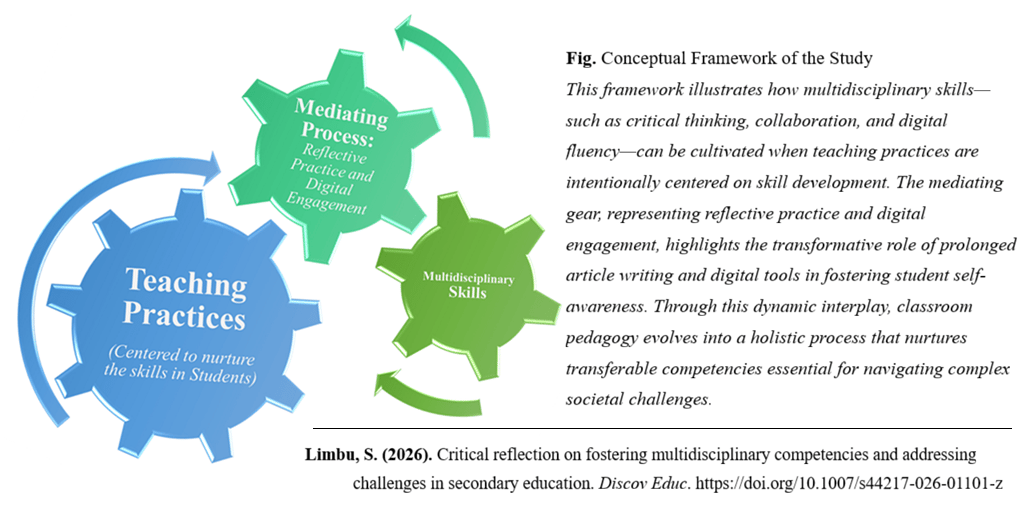
Education today demands more than subject mastery. It requires multidisciplinary skills—critical thinking, ethical reflection, and digital literacy—that prepare students for global citizenship. My findings indicate that reflective practice can be a transformative tool for achieving this vision, even in contexts where traditional pedagogies prevail.
Key Insights from the Study
Transformative Pedagogy and Multidisciplinary Competencies
Reflective practice helps students move beyond technical proficiency toward sustained, meaningful learning. In my study, I emphasized the clear intention of teachers to nurture skills rather than simply prepare students for exams. By embedding reflection into academic journal writing, classrooms can evolve into skills-oriented environments where learners develop creativity, problem-solving, ethical awareness, and digital literacy.
Importantly, reflective journal writing also nurtured critical thinking and narrative reflection, enabling students to articulate their learning journeys in ways that connected disciplines and personal experiences. Through this process, learners engaged in collaborative inquiry and began to see knowledge not as isolated fragments but as interconnected insights. This holistic approach reframes teaching from a narrow focus on test performance to a broader vision of cultivating lifelong competencies—preparing students to navigate science, society, and self with resilience and agency.
Resilience & Agency
Despite institutional resistance, students demonstrated resilience and ownership of their learning journey. On a personal level, I too faced many challenges—navigating institutional limits, scarce resources, and long-standing stigma against reflective practices. Yet, by balancing my personal motives of nurturing skills with the realities of institutional constraints, I was able to sustain this work. This balancing act became a model of resilience, showing students that agency is not only about resisting structures but also about creatively working within them to achieve meaningful change.
Strategic Advocacy
Embedding reflection within school culture requires advocacy, persistence, and alignment with broader educational goals. My findings highlight that reflective practice cannot remain an isolated classroom experiment; it must be championed at the institutional level. Teachers, administrators, and policymakers need to recognize its value in cultivating multidisciplinary skills and resilience. Advocacy thus becomes a strategic effort—ensuring that reflection is woven into the fabric of school culture, supported by resources, and aligned with national and global educational priorities.
I hope this study encourages meaningful conversations among the Springer Nature Research Communities and inspires educators globally to adopt reflection as a powerful tool for transformation. It aims to challenge the prevailing exam-centric mindset by promoting skills-oriented teaching practices that better prepare students for the future.
I invite fellow educators and researchers to reflect with me:
- How do you integrate reflective practice in your teaching?
- What challenges do you face in fostering multidisciplinary skills?
- How can we collectively advocate for inclusive, skill-based education across diverse contexts?

Follow the Topic
-
Discover Education
An international, peer-reviewed open access journal that publishes original work in all areas of education, serving the community as a broad-scope journal for academic trends and future developments in the field.

Related Collections
With Collections, you can get published faster and increase your visibility.
Advancing Teaching & Learning: Integrating AI, Emerging Technologies, and Pedagogical Innovation
Collection "Advancing Teaching & Learning: AI, Emerging Technologies and Pedagogical Innovation" addresses a major challenge in education today. There is a lack of resources that bring advanced technologies and innovative teaching together. AI, digital tools and emerging technologies are transforming classrooms. Yet many teachers and education leaders struggle to use these tools effectively. This Collection fills that gap. It offers expert insights, practical strategies and real-world examples for modern teaching and learning.
The Collection is linked to the United Nations Sustainable Development Goal 4 on quality education. It shows how to make learning more accessible, inclusive and effective for all. AI, adaptive learning platforms and immersive technologies can personalise instruction. They can engage students and support diverse needs. At the same time, the human element of teaching remains central.
Readers will find practical guidance on curriculum design, digital literacy and evidence-based teaching methods. The approaches can be applied in classroom, blended and online learning. Beyond tools, the Collection inspires educators to rethink traditional methods. It encourages them to embrace innovation while keeping learning meaningful and student-focused.
By addressing the lack of comprehensive resources on advanced technologies, Advancing Teaching & Learning helps teachers, school leaders and instructional designers navigate the digital age. It equips them to create engaging, future-ready learning experiences. Students are prepared for a connected, digital world. Educators gain the confidence to unlock the full potential of every learner.
This Collection supports and amplifies research related to the United Nations Sustainable Development Goal 4 on quality education. It shows how to make learning more accessible, inclusive and effective for all. AI, adaptive learning platforms and immersive technologies can personalise instruction. They can engage students and support diverse needs. At the same time, the human element of teaching remains central.
Keywords: Teaching and Learning; AI in Education; Emerging Technologies; Digital Tools in Classrooms; Pedagogical Innovation; Adaptive Learning Platforms; Immersive Technologies; Quality Education (SDG 4); Classroom Innovation; Blended and Online Learning; Student Engagement; Teacher Professional Development; Future-Ready Learning; Instructional Design; Educational Technology Integration.
Publishing Model: Open Access
Deadline: Apr 15, 2027
Advancing Health Professions Education: Innovations, Strategies, and Global Perspectives
Health Professions Education (HPE) plays an important role in preparing competent, ethical, and compassionate healthcare professionals capable of responding to the complex demands of contemporary healthcare systems. In recent years, the field of HPE has witnessed a paradigm shift towards learner-centred, competency-based, and interprofessional education models that prioritize not only clinical expertise but also communication, professionalism, teamwork, and leadership skills.
This Collection invites original research, systematic or scoping reviews, case studies and brief reports and that critically examine the evolving landscape of HPE across medicine, dentistry, nursing, pharmacy, and other allied health disciplines. Key areas of interest include curriculum design and reform, innovative teaching and assessment methods, integration of digital and blended learning technologies, interprofessional education (IPE), faculty development, educational management, student support and well-being, and strategies to promote equity, diversity, and inclusivity in HPE.
We also welcome contributions that explore challenges and best practices in clinical training, rural and underserved community placements, global health education, policy development, accreditation, and institutional leadership in health education. Studies from low- and middle-income countries are strongly encouraged to enhance global representation and to promote scholarly exchange on scalable and contextually relevant innovations.
By consolidating scholarly work in this Collection, we aim to advance the discourse on high-quality, evidence-informed HPE that supports the achievement of Sustainable Development Goals (SDG 3 and SDG 4) and ultimately contributes to improved healthcare outcomes worldwide.
Publishing Model: Open Access
Deadline: Nov 30, 2026