New Q1 paper: Classical to Generative AI for Time Series Forecasting (Finance, Energy, Health)
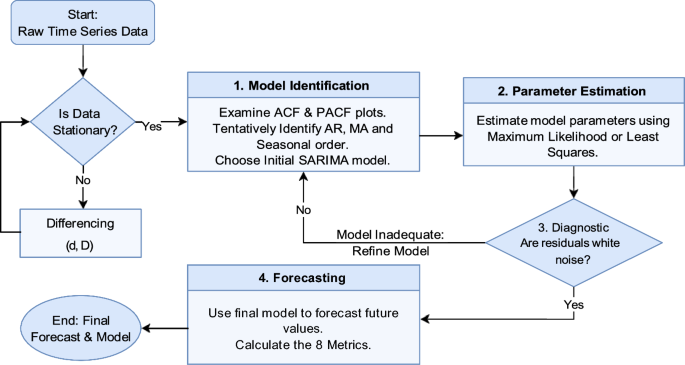

I am glad to share the publication of our new research article with my co-authors: Mohamed Nachat, Said El Melhaoui, Moustapha Faizi, Mohamed Fihri, Raby Guerbaz, and Salah-Eddine El Adlouni:
“From classical to generative AI approaches for univariate and multivariate time series forecasting with an evaluation in finance, energy, and health domains”
Published in Discover Artificial Intelligence (Q1, Scopus-indexed).
The study provides a cross-domain comparison of classical statistical methods, machine learning, deep learning, and generative AI approaches for time series forecasting across finance, energy, and health applications.
As a co-supervisor, I am particularly proud of our PhD student Mohamed Nachat for this excellent work and his valuable contribution to the research. Congratulations, Mohamed — great work, and keep going! The best is yet to come.
Many thanks to all my co-authors for this fruitful collaboration.
DOI: https://doi.org/10.1007/s44163-026-01866-0
ResearchGate: https://www.researchgate.net/publication/413555081_From_classical_to_generative_AI_approaches_for_univariate_and_multivariate_time_series_forecasting_with_an_evaluation_in_finance_energy_and_health_domains

I am an Assistant Professor of Statistics and Applied Mathematics at Mohammed First University of Oujda, Morocco. My research focuses on statistical modeling, econometrics, and financial time series forecasting, with interests in stochastic processes, machine learning, deep learning, and generative models. I publish in peer-reviewed journals indexed in Scopus and Web of Science, combining theoretical and applied research in finance, insurance, Healthcare, Social Sciences, and data analytics.
Follow the Topic
-
Discover Artificial Intelligence
This is a transdisciplinary, international journal that publishes papers on all aspects of the theory, the methodology and the applications of artificial intelligence (AI).

Related Collections
With Collections, you can get published faster and increase your visibility.
Transforming Education through Artificial Intelligence: Opportunities, Challenges, and Future Directions
Artificial Intelligence (AI) is rapidly changing the educational field by enabling personalized learning, intelligent tutoring systems, automated assessments, learning analytics, and administrative automation.
This collection invites original research, systematic reviews, and visionary perspectives on the transformative impact of AI in education. It aims to explore how AI technologies can enhance equity, inclusion, and efficiency in educational settings across different contexts, including higher education, K-12, vocational training, and lifelong learning. This collection will address technical, pedagogical, ethical, and policy aspects, fostering interdisciplinary perspectives and evidence-based insights.
This Collection supports and amplifies research related to SDG 4 and SDG 9.
Keywords: Artificial Intelligence, AI in Education, Educational Technology, Data Analytics, AI Ethics
Publishing Model: Open Access
Deadline: Nov 30, 2026
Advanced AI Methods for Personalized Healthcare
The advancement of Artificial Intelligence (AI) technologies, especially Reinforcement Learning (RL) and Deep Learning (DL), is transforming healthcare, enabling innovative solutions for patient monitoring, diagnostics, and personalized treatment. These technologies facilitate the effective use of healthcare data and intelligent analytics, enhancing clinical decision-making and improving patient outcomes. AI is revolutionizing how healthcare is delivered, making it more proactive, efficient, and accessible. This Collection explores new methods and applications of AI for healthcare such as personalized healthcare. Contributions in this Collection showcase novel frameworks, case studies, and interdisciplinary approaches that drive the future of personalized healthcare, fostering innovations that bridge technology and patient care.
In this context, we are inviting original research articles, reviews, and perspective papers addressing (but not limited to) the following themes:
- Personalized medicine
- IRL for dynamic treatment regimes
- Wireless sensor networks for patient monitoring
- Identification and prevention of critical condition
- Monitoring systems within the medical devices contest
- Methodologies and tools for the rapid integration of WSNs, IoT and AI in health monitoring
- Behavior analysis of patients
- Personalized health-promoting interventions
- Ambient assisted living and active assisted living
- AI security and privacy models for healthcare applications
- AI methods for rehabilitation
Publishing Model: Open Access
Deadline: Feb 27, 2027