Nicknames for lab instruments
Published in Chemistry, Materials, and Neuroscience


When I visit labs to watch and learn, I have picked up on the fact that the instruments in use often have names. So it's been high time to find out who is called what and why. As it turns out, the instrument names are chosen with affection and for good reasons.
It's practical to name your instruments.
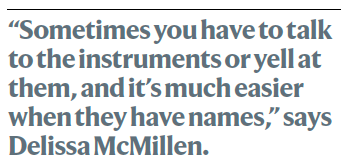
Delissa McMillen manages the spatial transcriptomics core lab at the Allen Institute for Brain Science
-
It's good to know your lab fridges and their quirks:
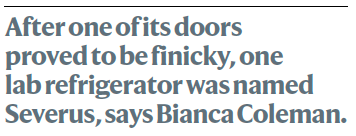
Bianca Coleman is the lab manager in the University of Pittsburgh lab of Dr. Sara Gaffen in the Department of Immunology.
Who is Severus? He is the professor of Potions at Hogwarts School of Witchcraft and Wizardry in the Harry Potter series.
-
Names make lab equipment more memorable:
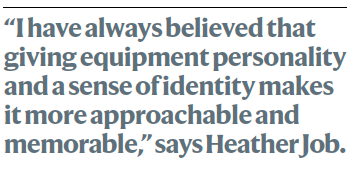
Heather Job is a systems engineer who co-leads the Materials Innovation through Robotics and AI Laboratory at Pacific Northwest National Laboratory.
-
Names can be delicious and make you think of desserts.
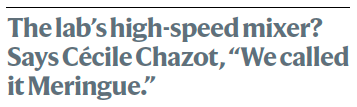
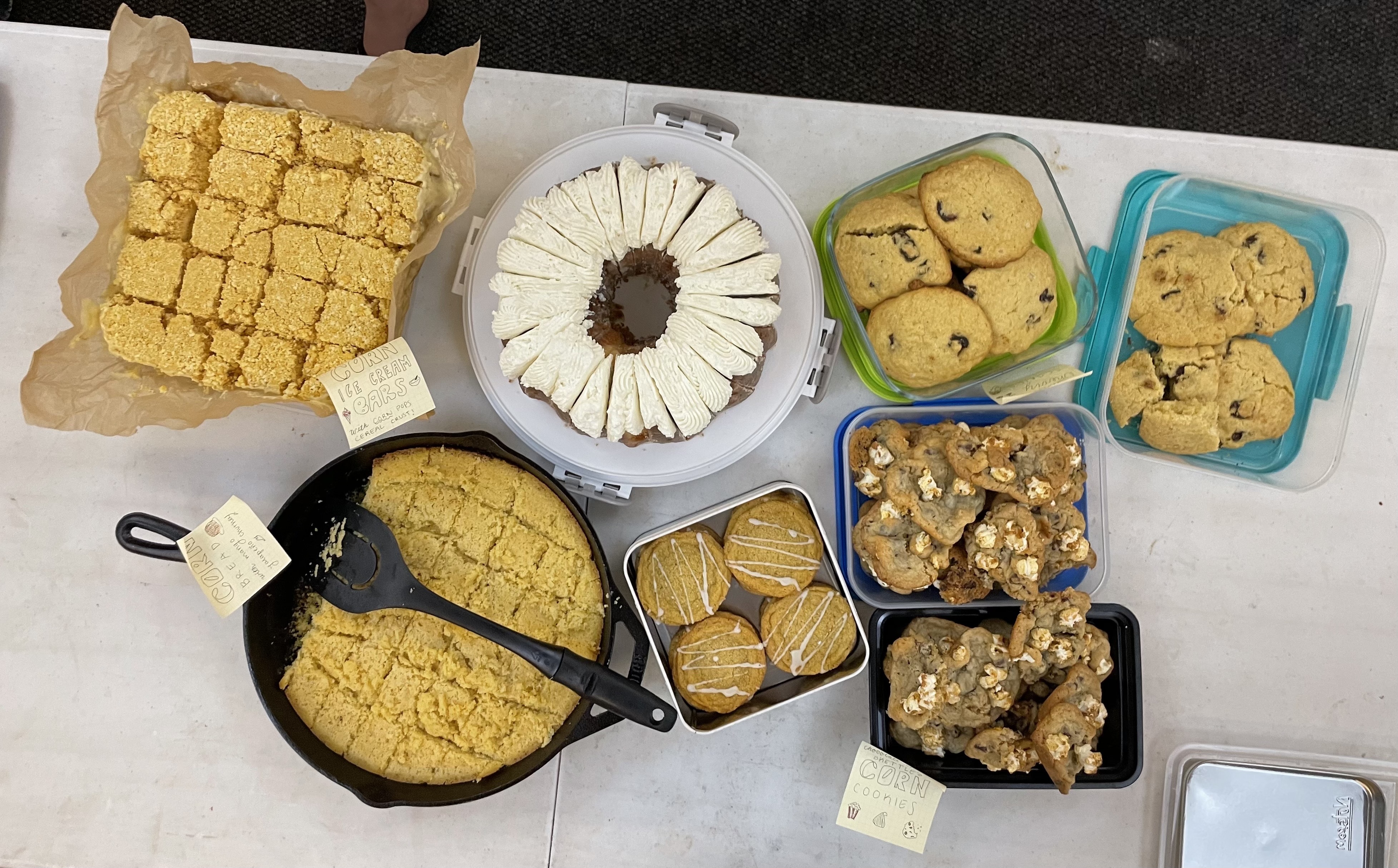
Dr Cécile Chazot is a materials scientist at Northwestern University’s McCormick School of Engineering. Her lab began naming its instruments two years ago. The lab bakes together when its their turn to bring baked goods for the department's coffee hour. Plus: Dr. Chazot is a self-professed foodie.
Here are is a photo of some of their baked goods.
-
The story 'An instrument named Cannoli' in Nature Methods is here. And here is a quasi openly-accessible version.
And I did a short video, which is here
After publication I received a few comments:
Dr Suh Hee Cook is a postdoctoral fellow in bioengineering at the University of Maryland who mentioned that during her PhD the PCR machine was named Peter. "Our hoods were named Luke and Leia," she says.
Dr Madeleine Scott is kindly letting this squeak by as a "minor error" but my descriptions of Plankton and Mr Krabs were switched. (Oh no, sorry about that!)
As a SpongeBob SquarePants fan, she points out that Mr. Krabs is the restaurant owner and Plankton is the (misunderstood villain) who regularly tries to steal Mr Krabs's secret formula.
What thickens the plot, however, is that that Krabs and Plankton actually were business partners when they were younger. And "after a fight Krabs essentially stole the recipe from Plankton and used it to establish his now-successful restaurant, whereas Plankton runs a failing restaurant," she says.
Who's SpongeBob SquarePants, you might ask?
And what does this series have to do with instrument names? Delissa McMillen at the Allen Institute for Brain Science applies names from the series and many more in her spatial transcriptomics lab. They all fit together.
You can read about the choices she and her colleagues made as well as the naming choices of others mentioned on this page and others still in the story in Nature Methods here. And here is a quasi openly-accessible version.
-
And if you have more instrument names to share, please reach out or put them in the comments, am happy to add them.
-

Follow the Topic
Introducing the Palgrave Macmillan Campaign for the Humanities
At Palgrave Macmillan we publish cutting-edge humanities research that has real-world impact. This research community brings together the voices of our authors and editorial team to highlight and publicize the value of the humanities and humanities research in our world today.
Continue reading announcement



Please sign in or register for FREE
If you are a registered user on Research Communities by Springer Nature, please sign in