Noble gas isotopes reveal degassing-derived eruptions at Deception Island (Antarctica): implications for the current high levels of volcanic activity
Published in Earth & Environment
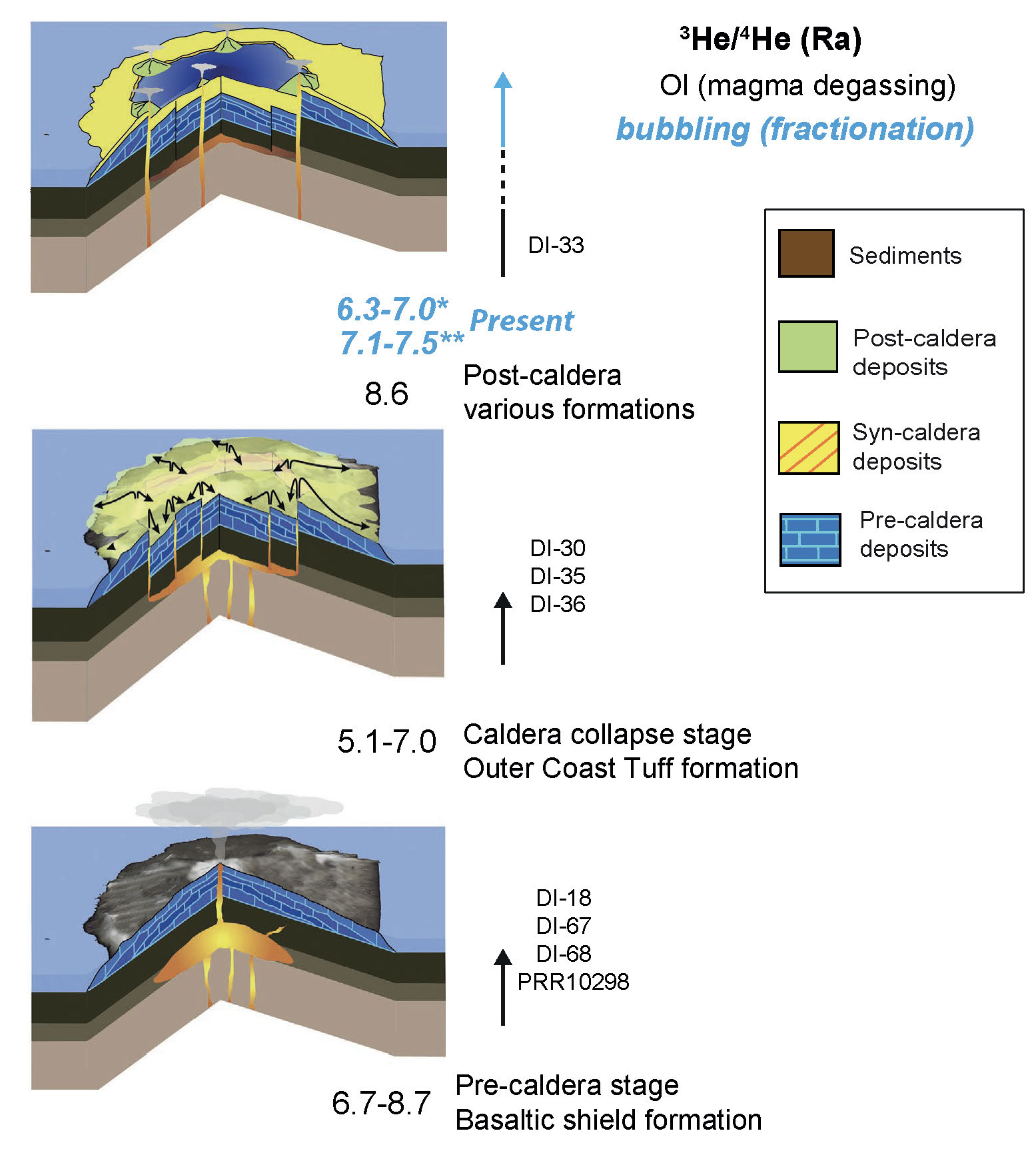



The most relevant interest for society of the scientific research in volcanology is the potential prediction of eruptions. Knowing when and how a future volcanic eruption will be, the better we will act to save lives and minimize the impact of these natural disasters on infrastructures and environment. Knowledge on degassing processes within the magmatic plumbing system beneath the volcano and especially before the eruption is already inevitable, is essential on advancing in these fundamental questions as these processes can promote notable catastrophes in the planet.
The geochemical information of subvolcanic volatiles is one of the three cornerstones (with seismic and deformation) in monitoring active volcanoes and allows a modern understanding of the processes controlling the magmatic evolution at depth and related degassing mechanisms.
We attempt to prove that the arrival of the deep magma into shallower crustal levels is defined by increases in the He isotope ratio (3He/4He) before the beginning of the eruptive event at Deception Island (Antarctica), which (i) is one of the most active volcanoes in Antarctica with more than twenty explosive eruptions in the past two centuries, and where (ii) it is not possible to carry-out low and high frequency volcanic gas monitoring because of the arduous climatic conditions and its remote location.
We conclude that the pre-eruptive noble gas signals of volcanic activity is an important step toward a better understanding of the magmatic dynamics and has the potential to improve eruption forecasting, especially at remote volcanoes that currently lack a high frequency monitoring network.

Follow the Topic
-
Scientific Reports
An open access journal publishing original research from across all areas of the natural sciences, psychology, medicine and engineering.

Related Collections
With Collections, you can get published faster and increase your visibility.
Cancer Prevention and Control
Publishing Model: Hybrid
Deadline: Feb 19, 2027
Healthy Aging
Publishing Model: Open Access
Deadline: Dec 31, 2026