Nutrition knowledge, dietary diversity, and household food security among mothers of under-five children in Abakaliki, Ebonyi State, Nigeria.
Published in Public Health

Public health nutrition research often begins with statistics. For me, this study began with people—specifically, mothers and children I met during my internship as a Nutrition Officer at the Nutrition Department of the Ministry of Health in Ebonyi State, Nigeria.
During this period, the department was collaborating with Helen Keller International to implement a programme called Transforming Lives Through Nutrition. One of the core components involved the administration of Ready-to-Use Therapeutic Food (RUTF) for children under five suffering from severe acute malnutrition. Day after day, I witnessed the remarkable short-term recovery these children made once they were enrolled in the programme.
But alongside this progress came an unsettling question that would eventually give birth to this research.
I found myself asking: What happens to these mothers and children if the programme folds up tomorrow? Because USAID programme at the time, conversations were already emerging about funding uncertainties. What if Transforming Lives Through Nutrition also disappears, what safety net remains? More importantly, do mothers have the practical means—not just the knowledge—to sustain good nutrition using locally available foods?
These questions stayed with me and became the foundation of our study: Nutrition knowledge, dietary diversity, and household food security among mothers of under-five children in Abakaliki, Ebonyi State, Nigeria.
From Observation to Research Question
Nutrition advocacy has made significant strides in Nigeria. Mothers are increasingly exposed to messages about exclusive breastfeeding, complementary feeding, and child care through health facilities and community campaigns. Indeed, much of the published literature focuses on what mothers know.
However, during my field experience, a troubling pattern was evident. Many mothers could correctly describe recommended feeding practices, yet still presented with malnourished children. This contradiction forced us to rethink a central assumption in nutrition programming: knowledge automatically leads to action.
Our study was designed not to dismiss nutrition education, but to interrogate its limits.
What We Found: A Knowledge–Implementation Gap
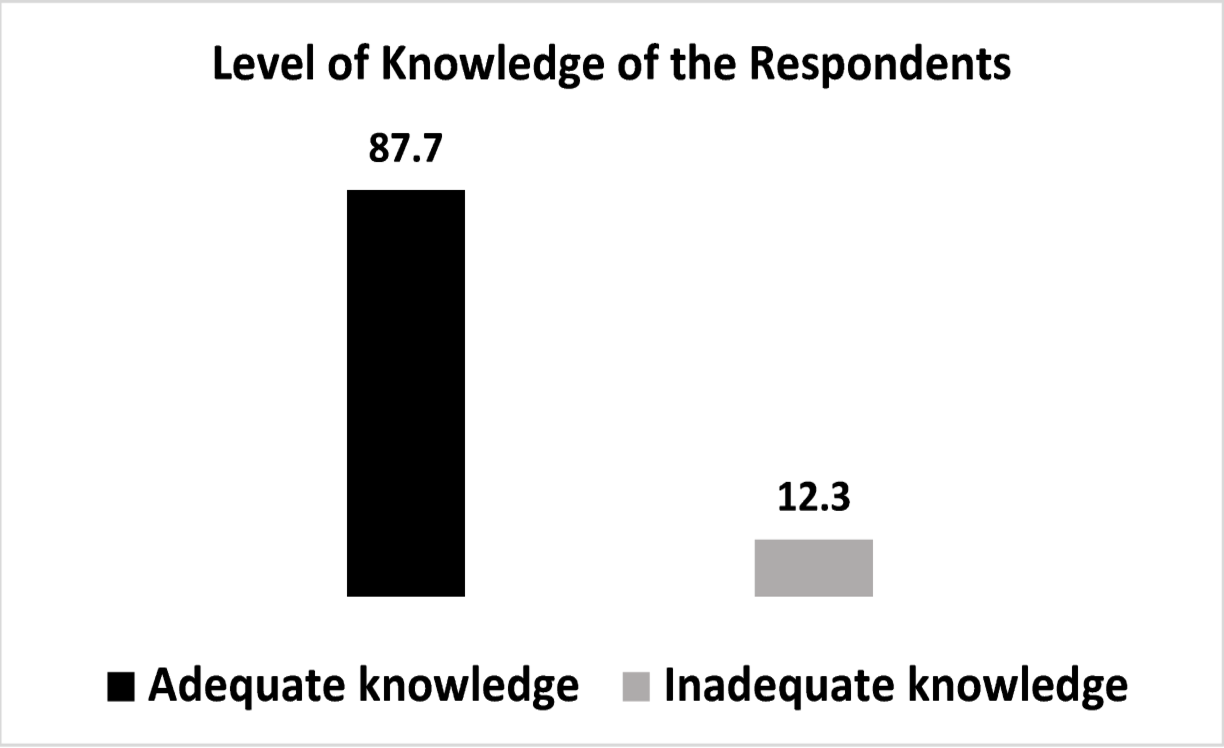
The findings were striking. An overwhelming majority of mothers demonstrated adequate nutrition knowledge. They understood exclusive breastfeeding, the importance of continued feeding during illness, and the basics of child nutrition. On paper, this looked like success.
Yet beneath this encouraging surface lay a harsher reality.
More than two-thirds of households were severely food insecure. Dietary diversity among women was suboptimal, with limited consumption of nutrient-dense foods such as eggs, dark green leafy vegetables, and dairy products. In practical terms, mothers knew what their children should eat—but often could not afford it, access it, or prioritize it within complex household dynamics.
This exposed a critical truth: knowledge without the means to implement it produces the same outcome as no knowledge at all—continued child malnutrition.
Why Implementation Fails
Our interactions with mothers revealed that poor implementation was not due to negligence or indifference. Instead, it was shaped by structural and social constraints:
Poverty and food access: Many households relied on monotonous staple diets, not by choice but by necessity.
Household decision-making: Mothers often lacked autonomy over food purchases and distribution.
Cultural practices: Persistent beliefs around herbal remedies and breastfeeding during pregnancy continued to influence behaviour.
Programme dependency: Emergency nutrition interventions saved lives but were not always paired with sustainable, food-based solutions.
In essence, mothers were being asked to practice “ideal nutrition” in non-ideal circumstances.
Why This Matters for Public Health
This research reinforces an uncomfortable but necessary message for public health nutrition: information alone does not change outcomes in contexts of deprivation.
Nutrition education remains vital, but it must be embedded within broader systems that address food security, livelihoods, gender dynamics, and access to diverse local foods. Without this, we risk placing responsibility on mothers for outcomes largely determined by structural conditions beyond their control.
Our findings align with global nutrition priorities, including the Sustainable Development Goal 2 (Zero Hunger), which emphasizes not only knowledge, but access, availability, and utilization of nutritious food.
Looking Forward: Rethinking Future Interventions
Future research and programming must shift focus from whether mothers know to why mothers cannot act on what they know. This includes:
Investigating barriers to translating knowledge into practice
Integrating nutrition education with food-based livelihood support
Promoting locally available, affordable dietary solutions
Designing culturally sensitive, community-led behaviour change strategies
Evaluating sustainability beyond donor-funded interventions
Only by addressing these dimensions together can nutrition knowledge become truly transformative.
A Personal Reflection
This study is deeply personal to me. It represents a transition from observing problems in the field to systematically documenting them, with the hope of influencing policy and practice. The mothers I met were not lacking in awareness—they were navigating constraints with resilience and dignity.
If this work contributes even modestly to reframing how we design nutrition interventions—away from knowledge alone and toward implementation-focused solutions—then it has achieved its purpose.
Because in public health nutrition, the real measure of success is not what people know, but what they are realistically able to do.
https://doi.org/10.1186/s12982-025-01310-1

Follow the Topic
-
Discover Public Health
This is an open access journal publishing research from all fields relevant to public health.

Related Collections
With Collections, you can get published faster and increase your visibility.
The Economics of Longevity: Health Expenditure and Societal Implications for Public Health Systems
The relationship between health investment and life expectancy has long been a focal point in public health research and policy. As nations grapple with rising healthcare costs and varying health outcomes, understanding how financial allocations influence population health becomes increasingly critical. Numerous studies have illustrated that increased spending on health services often correlates with improvements in life expectancy; however, the complexities of this relationship are not fully understood. Factors such as socioeconomic status, healthcare accessibility, and the efficiency of health systems play significant roles in determining how investments translate into health outcomes.
At the national level, health investments primarily encompass government expenditure on healthcare systems, public health initiatives, and health infrastructure. Nations that allocate substantial resources toward healthcare often experience better health outcomes and increased life expectancy among their populations. For instance, countries with robust healthcare funding tend to provide more comprehensive services, including preventive care, chronic disease management, and health promotion programs, all of which contribute to enhanced population health. However, it is crucial to consider how these investments are distributed across different segments of the population. Inequities in health spending can exacerbate existing disparities, leading to significant differences in life expectancy among various demographic groups. Effective health investment strategies must address these disparities to ensure that improvements in life expectancy are equitable and inclusive.
The motivation for this Collection arises from the urgent need to bridge the gap between health expenditures and tangible improvements in life expectancy. Recent global health crises and ongoing disparities in health outcomes across different populations have underscored the necessity for a deeper exploration of how resource allocation affects health dynamics. This Collection seeks to provide a platform for researchers and practitioners to discuss empirical evidence, theoretical frameworks, and innovative approaches to understanding these critical interactions. By fostering dialogue around effective health investment strategies, we aim to contribute to the development of more equitable and efficient health systems worldwide.
The purpose of this Collection is to gather comprehensive research that elucidates the dynamics between health investment and life expectancy across diverse contexts. We welcome contributions that analyze historical trends, comparative studies, and policy evaluations, as well as those that explore the implications of financial investments on health equity. By highlighting interdisciplinary perspectives and fostering collaboration, this Collection aspires to advance the discourse on optimizing health investments for improved population health outcomes.
Topics of interest include, but are not limited to:
- Economic evaluations of health interventions
- Policy impacts on health spending and life expectancy
- Health equity and investment disparities
- Longitudinal studies on health expenditures and population health
This Collection supports and amplifies research related to SDG 3.
Keywords: health expenditure; healthcare economics; life expectancy; economic evaluation; population health; health investment; health policy
Publishing Model: Open Access
Deadline: Dec 31, 2026
Improving Maternal and Infant Health: The Key for Future Wellness
Optimizing health across the life course begins with ensuring equitable, high-quality care during pregnancy, childbirth, and early infancy. Evidence increasingly demonstrates that early-life exposures and experiences are critical determinants of long-term health, shaping risks for chronic disease, developmental outcomes, and overall well-being. Despite progress, disparities in maternal and infant health outcomes persist globally, underscoring the need for innovative, scalable, and evidence-based public health interventions.
This Collection aims to highlight interdisciplinary research and practice-based efforts that advance maternal and infant health from a public health perspective. We welcome contributions that examine population-level strategies, health systems strengthening, community-based interventions, and policy approaches designed to improve care during pregnancy, the birth hospitalization, and early infancy.
Submissions may include original research, implementation studies, and quality improvement initiatives that address prevention, access, equity, and health outcomes across diverse settings. By emphasizing early prevention and system-level improvements, this Collection seeks to contribute to reducing the burden of chronic disease and improving health trajectories across the lifespan.
Topics of interest include, but are not limited to:
--Public health initiatives to improve maternal and pregnancy outcomes
--Community- and population-level strategies to enhance infant health and early development
--Health system and quality improvement interventions in maternal and neonatal care
--Educational and behavioral interventions targeting pregnant individuals, families, and caregivers
--Policies and programs addressing disparities in maternal and infant health
--Preventive approaches to improve early-life health and long-term outcomes
This Collection supports and amplifies research related to SDG 3: Good health and Well-Being.
Keywords: Maternal health; Infant health; Safer motherhood; Early-life health; Health services; Healthcare system; Public health
Publishing Model: Open Access
Deadline: Mar 17, 2027