Pathogenesis of Oxidative Stress in Lung Cancer and Its Therapeutic Aspects
Published in General & Internal Medicine
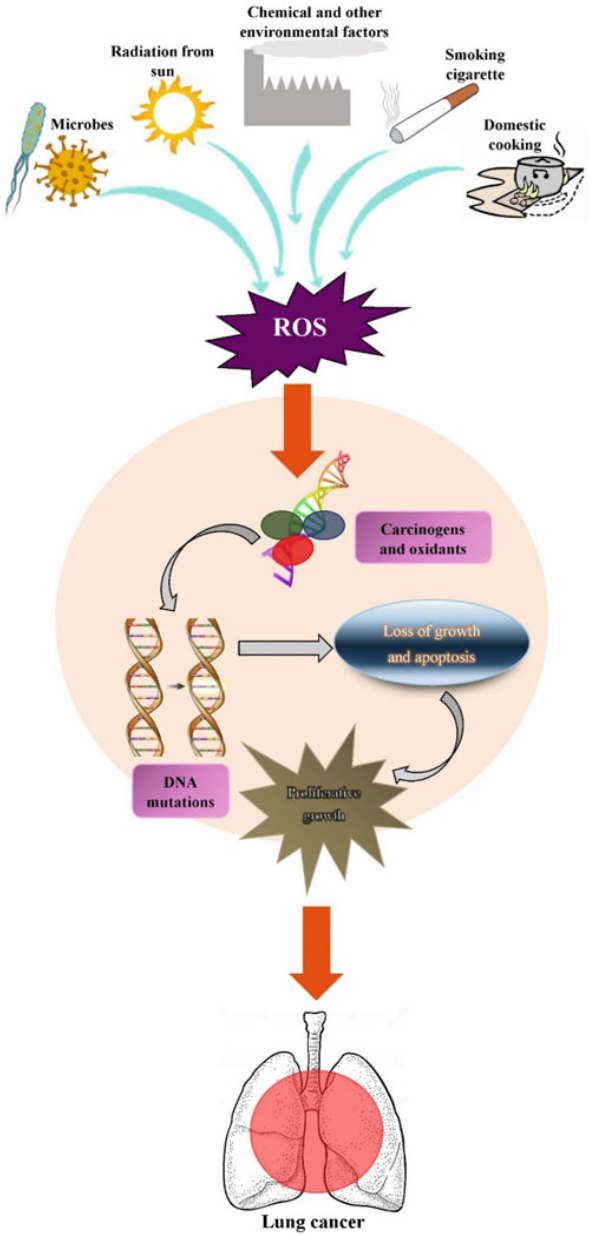

There is now very conclusive proof that OS is linked to lung cancer and that the
exogenous and endogenous sources of oxidizing agents play the leading role in
inflammatory responses to the disease. To decrease this injury, the organism reacts
with an intense immune response. However, the inflammatory process causes the
restructuring of physiological events via the replacement of wounded tissue with
scar tissue in most situations, and the perseverance of oxidizing agents in alveolar
microvascular results in chronic swelling, which intensifies ROS/NOS development.
High ROS/RNS levels lead to preneoplastic DNA alterations and stimulus of the
growth hormone, which results in cancerous evolutions. It is the most significant risk
factors for lung cancer and OS events. Smoking cigarettes is not only in itself a vital
cause of exogenous oxidative stress, but it also causes long-lasting infection in the
lung tissue, which subsidizes to improve ROS and RNS concentration. Increased
understanding of ROS/RNS in lung cancers can result in new strategies in preventing
and curing lung cancer. Future research to apprehend the cellular pathways and their
control by different antioxidants of ROS-mediated pathological processes can help
develop new treatment methods for the respective molecular pathways. This chapter
has examined the possible involvement of epigenetics in controlling oxidative stress
reactions at various levels and in different aspects. As shown in the above figures,
they are intimately connected. Eventually, we mentioned the present potential for
targeted epigenetic therapies of genes associated with this disease condition, whether
through pharmacologic or dietary chemical prevention procedures. The current information would show that further studies on epigenetic intervention strategies for
treating oxidative stress diseases are compelling.