People Aren’t Stupid: They’re Wary of False Information About COVID-19
Published in General & Internal Medicine and Arts & Humanities




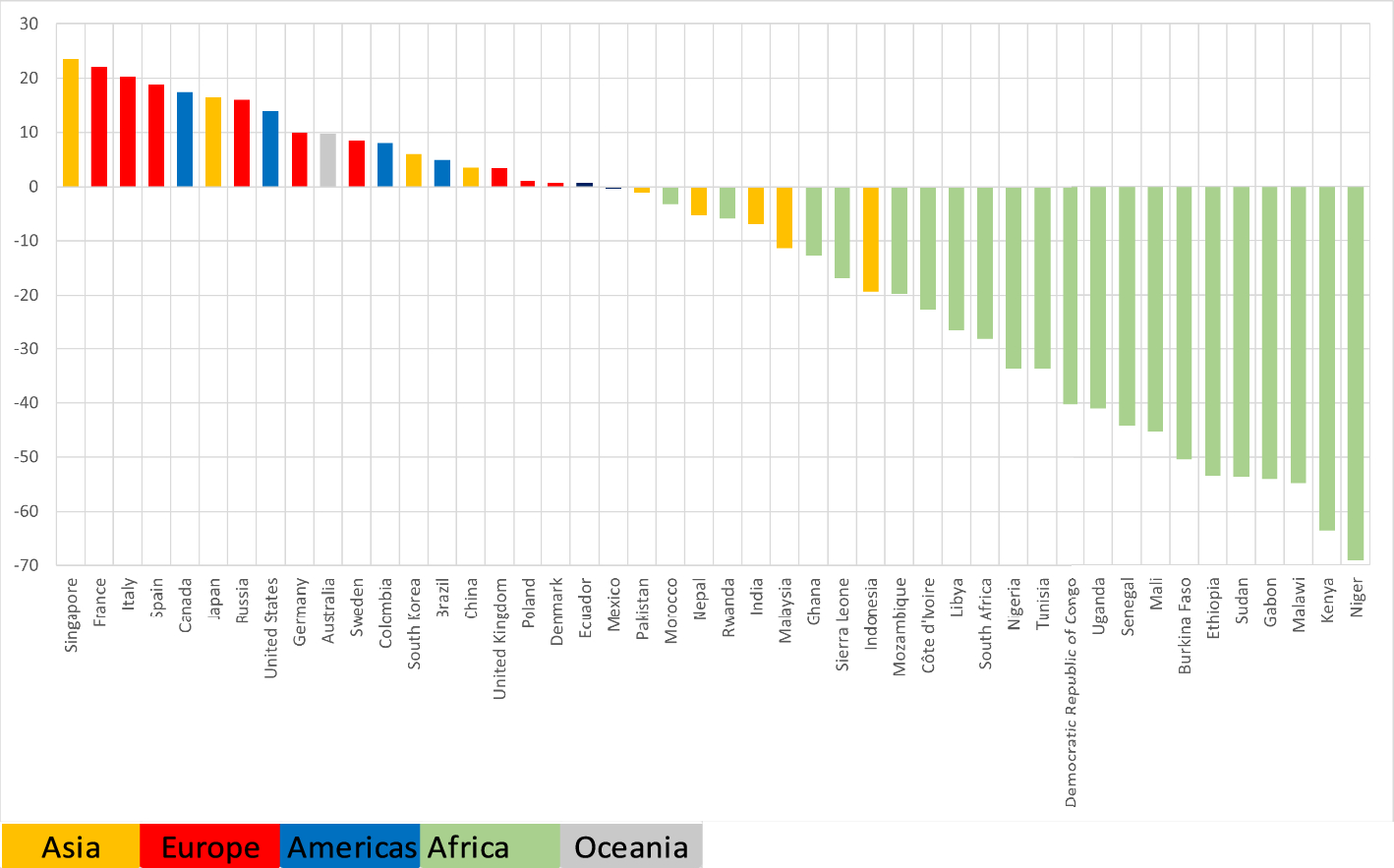

In 2021, I traveled to six West African countries to conduct a study on COVID-19 perceptions and lead training sessions on public awareness. COVID-19 vaccination, which began in March or April depending on the country, was a clear failure—very few people were showing up to get vaccinated. Since February 2020, the WHO had been repeating that an “infodemic” of false information about COVID-19 was “just as dangerous” as the pandemic itself, in the words of its Director-General. This infodemic was often said to explain the low vaccine uptake.
However, the discussions I had and the interviews I conducted did not suggest that people were particularly distrustful of COVID-19 vaccines. A large portion of the population didn’t see themselves at risk from COVID-19. Many believed it was a “white people’s disease” and thought Africans were protected either by the climate or by some kind of natural immunity. Misinformation about vaccines didn’t seem to play a role in the low uptake, even though African countries had the lowest vaccination coverage in the world.
In 2023, I conducted a study on COVID-19 vaccination in Niger, where only 22% of the population was vaccinated. The study confirmed my previous observations (https://doi.org/10.4269/ajtmh.23-0708). A high 73.3% of the population believed that COVID-19 vaccines were “a good thing,” and 83% of those who had heard vaccine promotion messages supported them. This clearly showed that, at least in Niger, low vaccine uptake wasn’t due to mistrust of vaccines.
Since 2021, it had also become clear that the alarmist narratives and articles from 2020 predicting that a wave of misinformation would prevent adequate vaccine coverage had been wrong. In industrialized countries, people rushed to get vaccinated as soon as the vaccines became available. The pessimistic forecasts proved completely off base.
That led me to compare the intention to get vaccinated expressed in 2020 with actual uptake, and to evaluate whether exposure to false information had influenced the gap between intent and uptake. In other words, to see if misinformation had dissuaded some people from getting vaccinated. The results of this study, conducted in 46 countries and published in Discover Public Health, were unequivocal: there is no connection between exposure to misinformation online or on social media and the difference between stated vaccination intentions and actual uptake.
The internet and social media carry far more accurate health information than false information. Studies have shown that, contrary to popular belief, this is even more true for COVID-19 than for other health topics. You’d have to hold the public in pretty low regard to believe they’re more influenced by false information than by accurate information.
Follow the Topic
-
Discover Public Health
This is an open access journal publishing research from all fields relevant to public health.

Related Collections
With Collections, you can get published faster and increase your visibility.
The Economics of Longevity: Health Expenditure and Societal Implications for Public Health Systems
The relationship between health investment and life expectancy has long been a focal point in public health research and policy. As nations grapple with rising healthcare costs and varying health outcomes, understanding how financial allocations influence population health becomes increasingly critical. Numerous studies have illustrated that increased spending on health services often correlates with improvements in life expectancy; however, the complexities of this relationship are not fully understood. Factors such as socioeconomic status, healthcare accessibility, and the efficiency of health systems play significant roles in determining how investments translate into health outcomes.
At the national level, health investments primarily encompass government expenditure on healthcare systems, public health initiatives, and health infrastructure. Nations that allocate substantial resources toward healthcare often experience better health outcomes and increased life expectancy among their populations. For instance, countries with robust healthcare funding tend to provide more comprehensive services, including preventive care, chronic disease management, and health promotion programs, all of which contribute to enhanced population health. However, it is crucial to consider how these investments are distributed across different segments of the population. Inequities in health spending can exacerbate existing disparities, leading to significant differences in life expectancy among various demographic groups. Effective health investment strategies must address these disparities to ensure that improvements in life expectancy are equitable and inclusive.
The motivation for this Collection arises from the urgent need to bridge the gap between health expenditures and tangible improvements in life expectancy. Recent global health crises and ongoing disparities in health outcomes across different populations have underscored the necessity for a deeper exploration of how resource allocation affects health dynamics. This Collection seeks to provide a platform for researchers and practitioners to discuss empirical evidence, theoretical frameworks, and innovative approaches to understanding these critical interactions. By fostering dialogue around effective health investment strategies, we aim to contribute to the development of more equitable and efficient health systems worldwide.
The purpose of this Collection is to gather comprehensive research that elucidates the dynamics between health investment and life expectancy across diverse contexts. We welcome contributions that analyze historical trends, comparative studies, and policy evaluations, as well as those that explore the implications of financial investments on health equity. By highlighting interdisciplinary perspectives and fostering collaboration, this Collection aspires to advance the discourse on optimizing health investments for improved population health outcomes.
Topics of interest include, but are not limited to:
- Economic evaluations of health interventions
- Policy impacts on health spending and life expectancy
- Health equity and investment disparities
- Longitudinal studies on health expenditures and population health
This Collection supports and amplifies research related to SDG 3.
Keywords: health expenditure; healthcare economics; life expectancy; economic evaluation; population health; health investment; health policy
Publishing Model: Open Access
Deadline: Dec 31, 2026
Improving Maternal and Infant Health: The Key for Future Wellness
Optimizing health across the life course begins with ensuring equitable, high-quality care during pregnancy, childbirth, and early infancy. Evidence increasingly demonstrates that early-life exposures and experiences are critical determinants of long-term health, shaping risks for chronic disease, developmental outcomes, and overall well-being. Despite progress, disparities in maternal and infant health outcomes persist globally, underscoring the need for innovative, scalable, and evidence-based public health interventions.
This Collection aims to highlight interdisciplinary research and practice-based efforts that advance maternal and infant health from a public health perspective. We welcome contributions that examine population-level strategies, health systems strengthening, community-based interventions, and policy approaches designed to improve care during pregnancy, the birth hospitalization, and early infancy.
Submissions may include original research, implementation studies, and quality improvement initiatives that address prevention, access, equity, and health outcomes across diverse settings. By emphasizing early prevention and system-level improvements, this Collection seeks to contribute to reducing the burden of chronic disease and improving health trajectories across the lifespan.
Topics of interest include, but are not limited to:
--Public health initiatives to improve maternal and pregnancy outcomes
--Community- and population-level strategies to enhance infant health and early development
--Health system and quality improvement interventions in maternal and neonatal care
--Educational and behavioral interventions targeting pregnant individuals, families, and caregivers
--Policies and programs addressing disparities in maternal and infant health
--Preventive approaches to improve early-life health and long-term outcomes
This Collection supports and amplifies research related to SDG 3: Good health and Well-Being.
Keywords: Maternal health; Infant health; Safer motherhood; Early-life health; Health services; Healthcare system; Public health
Publishing Model: Open Access
Deadline: Mar 17, 2027