Phlebectasia and phlebothrombosis after Male circumcision
Published in General & Internal Medicine, Paediatrics, Reproductive Medicine & Geriatrics, and Surgery
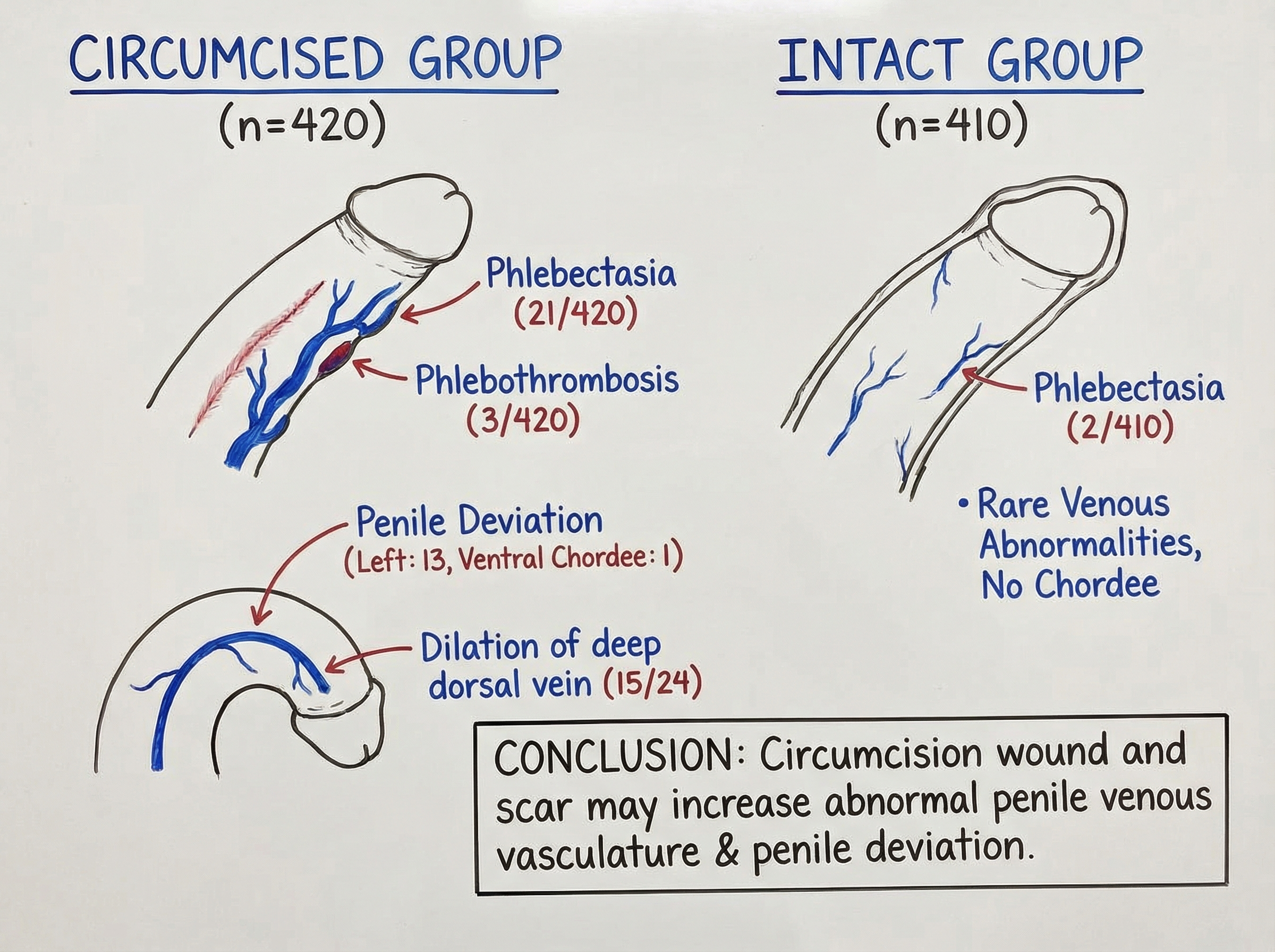
Penile phlebectasia appears as asymptomatic, abnormal dilatation and enlargement of the penile veins. When complicated by phlebothrombosis it appears either as a bluish raised and serpiginous tract or as a bluish soft nodule. They may be single or multiple, and the lesions usually measure 0.5 to 1 cm in diameter. The thrombosed area may be tender. The dilated vein usually disappears under slight pressure but refills spontaneously.
n this prospective comparative cohort study of 24 cases of pediatric penile phlebectasia were diagnosed 2-3 months after neonatal MC was done for non-medical reasons. There is significant correlation between MC and the occurrence of penile phlebectasia. Families reported that there had been no such abnormal veins noticed before MC.
Even the physician who performed the MC had not noted any pre-operative phlebectasia. Although this could be a subjective correlation, but the high frequency of phlebectasia in circumcision group as compared to the control group is highly significant. New onset penile torsion in 13 cases and chordee in 1 patient in association with abnormal veins in 69% of children is yet another point that supports our hypothesis.
We propose that post-circumcision bleeding and the use of aggressive hemostatic techniques may have a pathogenic link to the onset of post-MC phlebectasia by distorting the Buck’s fascia. Histological comparison of the penile scars shows extensive fibrosis, abundant amounts of collagen and absence or paucity of normal smooth muscle cells more often with using electro-coagulation than with using ligatures.(19) None of the patients in this series had diabetes, hormonal insufficiency or other sort of trauma except circumcision.
Post-MC penile phlebectasia with or without phlebothrombosis is infrequently reported. Its
actual incidence could be greater than what is accounted. Due to the embarrassing nature of genital symptoms, patients may not be reporting to physicians of dilated veins. Distorted Buck’s fascia following circumcision could be the common etiology of both penile phlebectasia and penile curvature.


Please sign in or register for FREE
If you are a registered user on Research Communities by Springer Nature, please sign in
Circumcision wound and the subsequent scar may increase the incidence of abnormal penile venous vasculature which is commonly associated with penile deviation.