PUMILIO Proteins in Colorectal Cancer: Important Function in Tumor Growth and Potential as Therapeutic Targets
Published in Cancer


Colorectal cancer is the third most common malignancy, accounting for 10% of all cancers, with its mortality rate ranked second1. Despite much progress, the incidence and mortality of colorectal cancer are still at the forefront of all types of cancer and have been on the rise2, 3. Therefore, there is a pressing need to investigate molecular mechanisms underlying the pathogenesis of colorectal cancer for developing more effective therapy.
The pathogenesis of colorectal cancer is closely related to chromosome instability and gene regulation. However, much less is known about post-transcriptional regulation of gene expression. To overcome this issue, we have been studying a canonical mechanism of post-transcriptional regulation mediated by the Pumilio proteins.
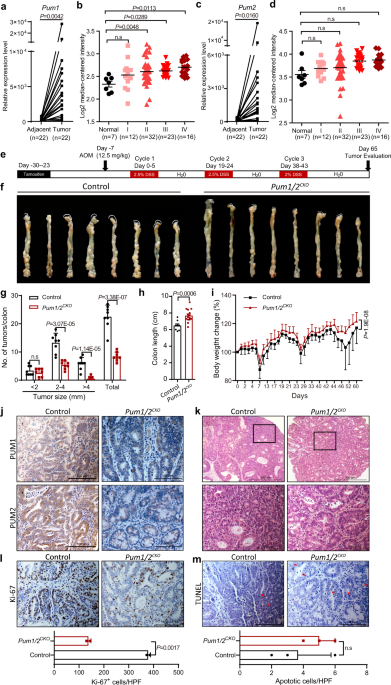
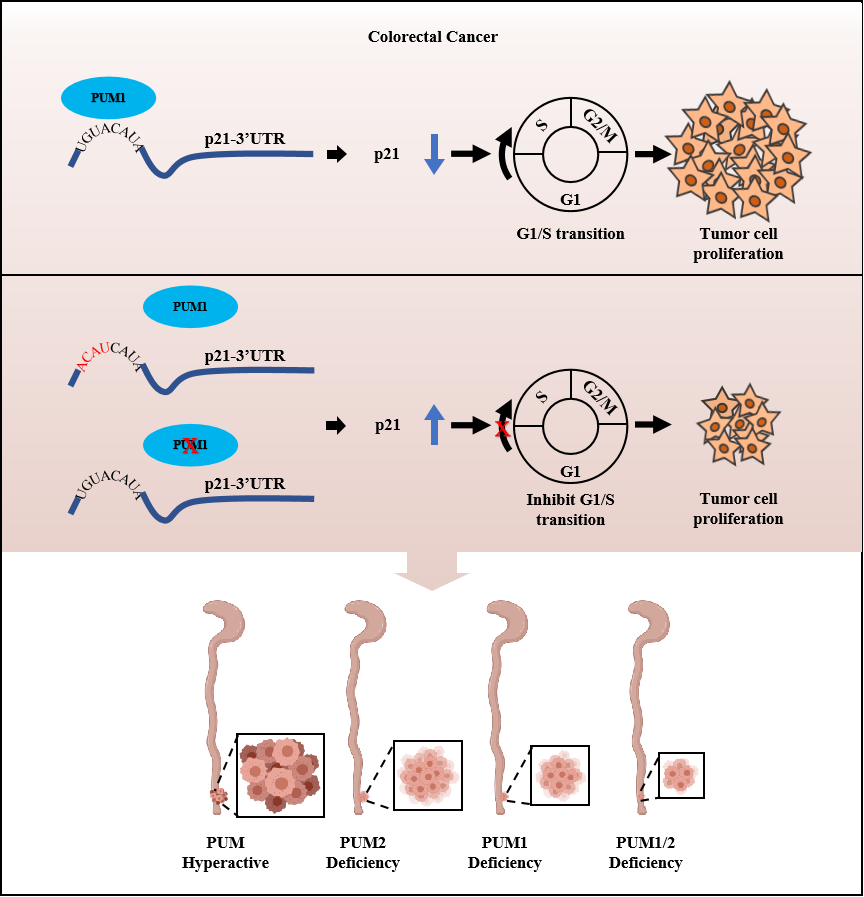
Here we report that the PUMILIO 1 (PUM1) and PUM2 post-transcriptional regulators are important promoters of colorectal cancer. We show that PUM1 and PUM2 are highly expressed in colorectal cancer to promote the proliferation of cancer cells. PUM1 and PUM2 achieve so by regulating many mRNAs, including cell cycle-related mRNAs such as p21 mRNAs. Moreover, we demonstrate that PUM1 directly binds with p21 mRNA via 3’UTR PRE (Pumilio Response Element) in colorectal cancer. Reducing PUM1 and PUM2 expression significantly inhibited the progression of colorectal cancer in vitro and in vivo. These discoveries reveal a new mechanism in promoting colorectal cancer. Finally, by using a mouse model for orthotopic implant of human colorectal cancer, we show that nanoparticle-mediated knockdown of PUM1 and PUM2 via intravenous injection is a potential therapeutic approach to colorectal cancer.
REFERENCES
1. Bray F, Ferlay J, Soerjomataram I, Siegel RL, Torre LA, Jemal A. Global cancer statistics 2018: GLOBOCAN estimates of incidence and mortality worldwide for 36 cancers in 185 countries. CA Cancer J Clin68, 394-424 (2018).
2. Fearon ER. Molecular genetics of colorectal cancer. Annu Rev Pathol6, 479-507 (2011).
3. Cancer Genome Atlas N. Comprehensive molecular characterization of human colon and rectal cancer. Nature487, 330-337 (2012).

Follow the Topic
-
Nature Communications
An open access, multidisciplinary journal dedicated to publishing high-quality research in all areas of the biological, health, physical, chemical and Earth sciences.

Related Collections
With Collections, you can get published faster and increase your visibility.
Women's Health
Publishing Model: Hybrid
Deadline: Ongoing
Tumor Microenvironment Crosstalk and Therapeutic Implications
Publishing Model: Hybrid
Deadline: Nov 02, 2026