Putting the STING in the Arresting: Novel Immune Mechanism Linking Migraine Aura and Headache
Published in Neuroscience, Protocols & Methods, and Biomedical Research

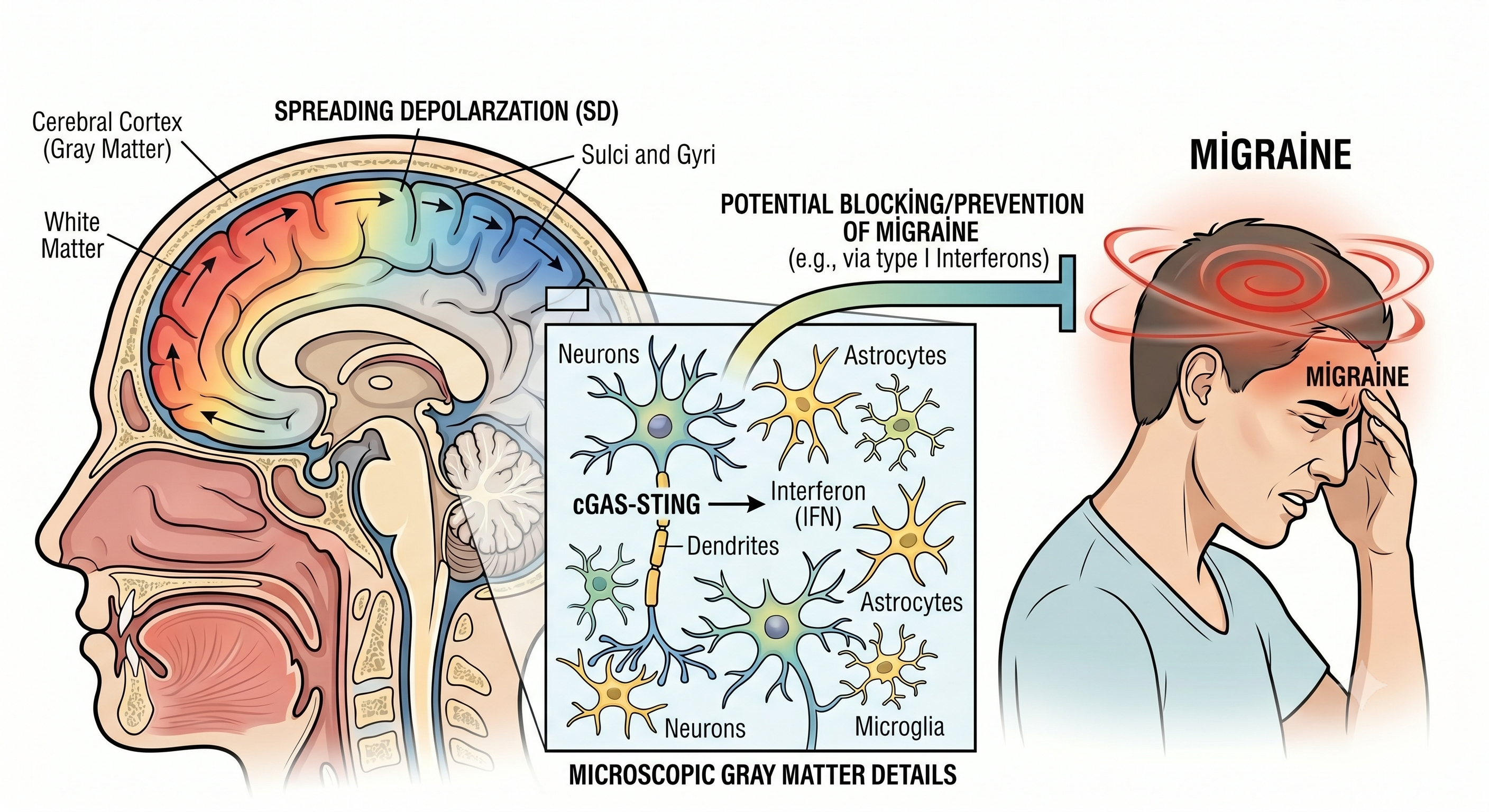


Spreading depolarization (SD) is a massive wave of cellular depolarization that propagates through the brain's gray matter at a velocity of 2–5 mm/min. Because it spreads across the cortex akin to a tsunami wave over the ocean, it is colloquially termed as a “brain tsunami”. SD can be triggered by the collective depolarization of cells within a certain brain volume. Once initiated, it wreaks havoc on the affected tissue by causing near-complete depolarization of neurons and glial cells, which leads to a severe disruption of ionic and neurotransmitter homeostasis. Consequently, this causes transient suppression in the brain activity and demands a significant amount of metabolic energy for recovery.
SD is heavily implicated in a range of neurological disorders, such as ischemic stroke and traumatic brain injury, where it plays a critical role in secondary tissue damage and lesion expansion. It is also tied to migraine pathophysiology, where it is considered the underlying cause of the migraine aura. Furthermore, experimental studies show that SD can evoke behaviors associated with head pain in rodents, suggesting it is involved in the initiation of migraine headache. One potential mechanism linking SD to headache initiation is neuroinflammation. SD has been shown to trigger a robust, sterile inflammatory response in both the brain parenchyma and the overlying meninges. This inflammatory activation is initiated and maintained by a complex interplay among neurons, astrocytes, and microglia within the parenchyma, which subsequently drives inflammation in the meninges. The resulting release of inflammatory substances in the meninges activates trigeminal nerve endings, which transmit pain signals that ultimately generate the sensation of a headache.
Our study aimed to investigate SD-associated neuroinflammation and its role in headache initiation through a previously unrecognized immune pathway: the cyclic GMP-AMP synthase (cGAS)-Stimulator of Interferon Genes (STING) pathway. The cGAS-STING pathway is a component of the innate immune system with established roles in neuroinflammation across a wide range of neurological disorders. Because this pathway is closely linked to key drivers of SD-associated neuroinflammation and has demonstrated robust modulatory effects on nociception in both acute and chronic pain conditions, we questioned whether it is also involved in SD-associated neuroinflammation and migraine-like nociceptive behaviors in rodents.
To investigate this, we employed optogenetic stimulation to non-invasively induce SD in the cerebral cortex of mice. We then assessed cGAS-STING pathway activation in the cortex and evaluated its cell-type-specific effects on neurons, microglia, and astrocytes using immunofluorescent staining and capillary Western blotting. Additionally, we pharmacologically targeted the cGAS-STING pathway to determine its effects on SD characteristics and associated nociceptive behaviors by evaluating SD susceptibility and behavioural testing with von Frey test to assess periorbital pain sensitivity.
Our results demonstrate that a single SD wave activates the cGAS-STING pathway in the cerebral cortex for up to 24 hours, with predominantly strong activation observed in neurons. This pathway activation also contributed to microglial activation, as pharmacological inhibition of the pathway prevented microglial activation following SD. Interestingly, activating the pathway with specific agonists decreased both SD susceptibility and periorbital pain sensitivity. Importantly, pathway activation prior to SD induction prevented the development of periorbital allodynia (pain response to a normally non-painful stimulus) typically observed after multiple SD waves.
In conclusion, our findings reveal the cGAS-STING pathway as a key driver of SD-associated neuroinflammation. Its robust activation in neurons and clear role in microglial activation underscore its significance in SD induced neuroinflammatory processes. Moreover, the acute modulatory effects of pathway activation on SD susceptibility and headache-like behaviors position this pathway as a promising therapeutic target for migraine and other SD-related neurological disorders. This study marks the beginning of identifying a novel neuroimmune mechanism in migraine pathophysiology. Future studies investigating the specific role of the cGAS-STING pathway in trigeminovascular system activation and employing other clinically relevant migraine models will be essential next steps to fully unraveling its role in headache mechanisms.
Follow the Topic
-
The Journal of Headache and Pain
The Journal of Headache and Pain is a peer-reviewed open access journal specifically dedicated to researchers involved in all aspects of headache and related pain syndromes, including epidemiology, public health, basic science, translational medicine, clinical trials and real-world data.

Related Collections
With Collections, you can get published faster and increase your visibility.
Focus India
Headache disorders, especially migraine, constitute a major neurological health challenge and are increasingly recognized as leading contributors to disability worldwide. Their impact extends beyond episodic pain, influencing cognitive performance, emotional well-being, and overall quality of life. India carries a substantial share of the global migraine burden, yet remains affected by significant gaps in awareness, diagnosis, access to specialist care, and research output. Although global research has clarified many aspects of headache pathophysiology, the expression of these disorders varies across populations due to genetic, environmental, cultural, and healthcare access factors in the Indian context.
Migraine, in particular, demonstrates substantial heterogeneity in symptom patterns, triggers, and response to therapy, underscoring the need for population specific data. India’s vast and heterogeneous population offers a unique opportunity to generate locally relevant epidemiological, clinical, and translational insights. In many regions, underdiagnosis and inadequate treatment remain persistent problems, often compounded by stigma and limited awareness. Understanding the burden of headache disorders within specific communities in India is essential for designing effective public health strategies, improving diagnostic pathways, and tailoring management approaches. Moreover, the chronic nature of recurrent headaches places a significant economic burden on individuals and healthcare systems through lost productivity and frequent medical consultations. Through this Collection, we aim to stimulate nationally driven research, foster collaboration across institutions and care settings, and strengthen India’s contribution to global headache and brain health science.
Topics of interest include but are not limited to:
- Epidemiology of migraine in India
- Management strategies of migraine in Indian patients
- Cultural perceptions of tension-type headache
- Treatment approaches for cluster headaches
- Trigeminal autonomic cephalalgias in diverse populations
- Chronic daily headache management strategies
- Impact of lifestyle factors on headache prevalence
- Public health initiatives for headache awareness
- Innovations in headache research methodologies
We welcome submissions from author groups with their main affiliated institution in India. Cross-international authorship groups are welcome to submit their work to The Journal of Headache and Pain outside of this Collection.
This Collection supports and amplifies research related to SDG 3, Good Health and Well-Being.
All submissions in this collection undergo the journal’s standard peer review process. Similarly, all manuscripts authored by a Guest Editor(s) will be handled by the Editor-in-Chief. As an open access publication, this journal levies an article processing fee (details here). We recognize that many key stakeholders may not have access to such resources and are committed to supporting participation in this issue wherever resources are a barrier. For more information about what support may be available, please visit OA funding and support, or email OAfundingpolicy@springernature.com or the Editor-in-Chief.
Publishing Model: Open Access
Deadline: Dec 01, 2026
Focus China
Headache disorders, particularly migraine, represent a significant and growing public health concern with a major impact on disability and quality of life. While research has advanced our global understanding, the specific manifestations, burdens, and management challenges of these conditions within unique populations require dedicated attention. In China, factors such as vast geographical disparities, rapid urbanization, diverse ethnicities, and a unique healthcare system structure present distinctive opportunities and challenges in the recognition, diagnosis, and treatment of headache disorders.
This thematic Collection, “Focus China”, aims to illuminate the landscape of headache medicine in China by exploring epidemiological patterns, clinical characteristics, healthcare access, traditional and integrative medicine approaches, and the socio-economic impact of headache disorders across the country.
We invite submissions of original research, systematic and narrative reviews, editorials, rapid reviews, and commentaries on topics including, but not limited to:
• The epidemiology, burden, and clinical features of migraine and other headache disorders in specific Chinese populations and regions.
• Advanced neuroimaging studies identifying unique endophenotypes, structural and functional brain alterations, and biomarkers of headache disorders in the Chinese cohort.
• Insights into the pathophysiology of headache disorders from a Chinese perspective, including research on epigenetics, neuron-glia interactions, and multi-omics.
• Studies on the integration of Traditional Chinese Medicine (TCM) with conventional headache management.
• Unique cultural, environmental, and genetic factors influencing headache disorders in China.
• The development and validation of diagnostic tools for the Chinese population.
This Collection provides a dedicated platform for researchers and clinicians primarily affiliated with Chinese institutions to share their insights and contribute to the global knowledge of headache science while addressing the specific needs of their region. By fostering collaboration and knowledge exchange, “Focus China” aims to drive meaningful advancements in headache research and patient care across China.
Therefore, the Collection welcomes submissions from author groups with their main affiliated institution in China. Cross-international authorship groups are welcome to submit their work to The Journal of Headache and Pain outside of this Collection.
This Collection supports and amplifies research related to SDG 3, Good Health and Well-Being.
All submissions in this collection undergo the journal’s standard peer review process. Similarly, all manuscripts authored by a Guest Editor(s) will be handled by the Editor-in-Chief. As an open access publication, this journal levies an article processing fee (details here). We recognize that many key stakeholders may not have access to such resources and are committed to supporting participation in this issue wherever resources are a barrier. For more information about what support may be available, please visit OA funding and support, or email OAfundingpolicy@springernature.com or the Editor-in-Chief.
Publishing Model: Open Access
Deadline: Oct 13, 2026