Release of k-space MRI dataset and benchmark to advance deep learning for cardiac imaging: CMRxRecon
Published in Computational Sciences
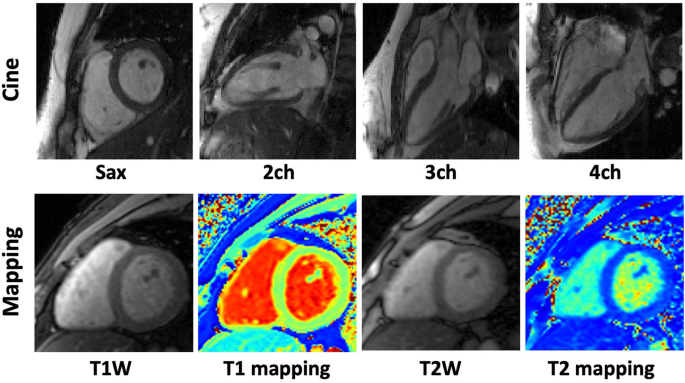

Cardiac MRI (CMR) is crucial for diagnosing heart conditions due to its detailed soft tissue imaging and non-invasive nature. Cine MRI is the standard for cardiac function assessment, with T1 and T2 mapping used to detect cardiomyocyte disturbances.
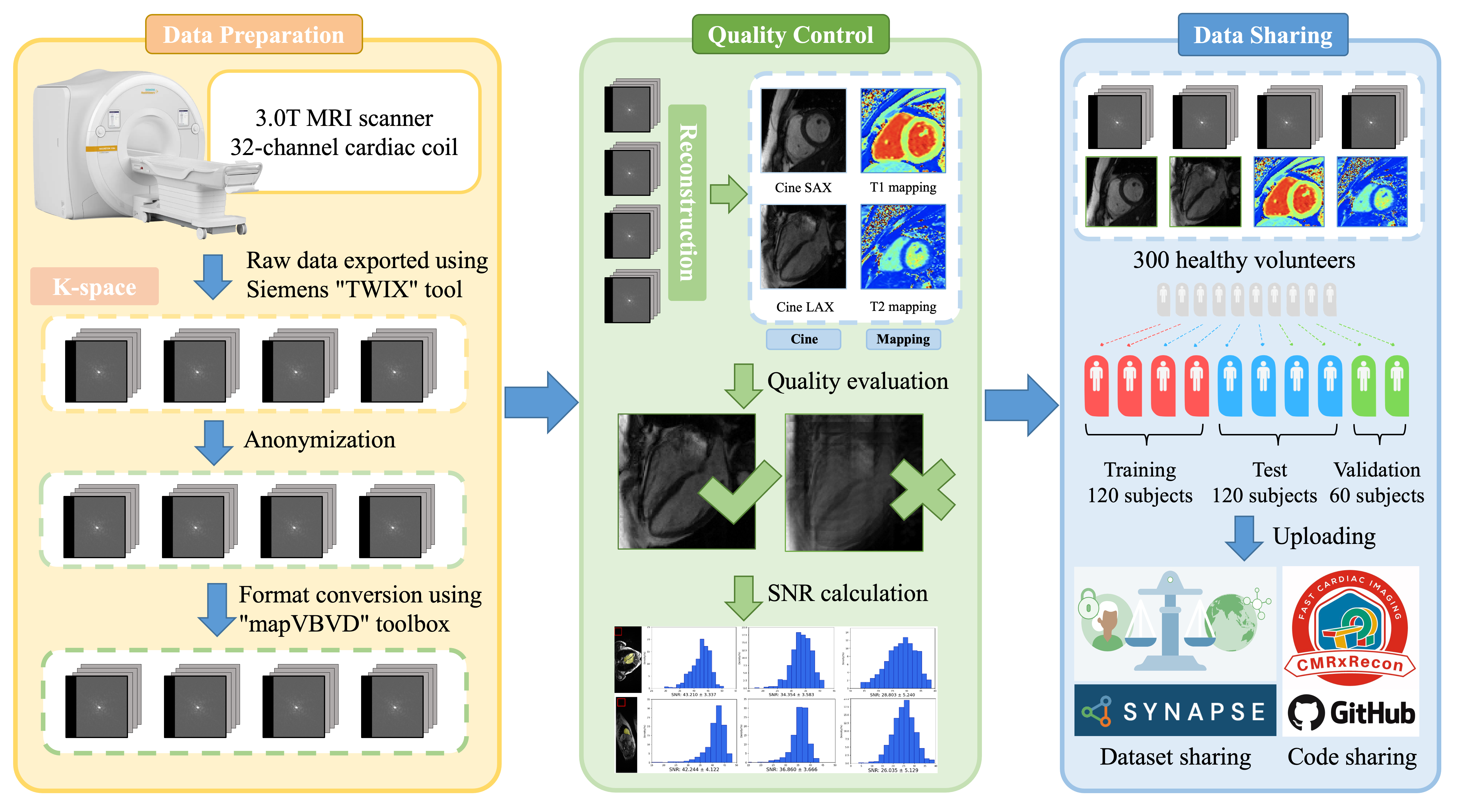
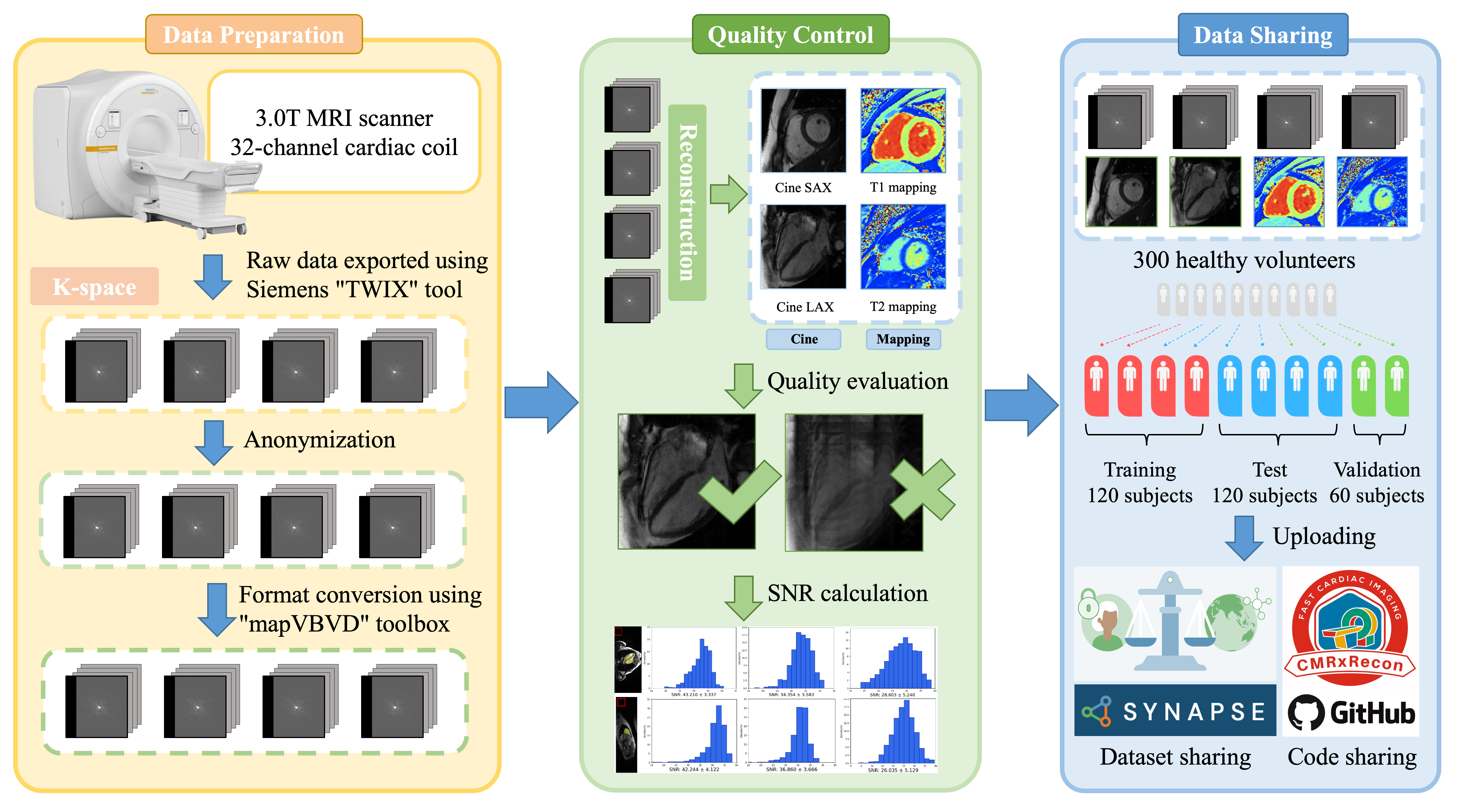
A major limitation of MRI is its slow imaging speed, which can cause patient discomfort and motion artifacts. The advent of AI in CMR image reconstruction has sparked interest in improving image quality from under-sampled data. However, the lack of standardized, high-quality CMR datasets hampers progress. The 'CMRxRecon' dataset, collected with a 3T MRI scanner and a 32-channel cardiac coil, aims to fill this gap. It provides raw k-space data from 300 healthy volunteers, including metadata and auto-calibration lines, publicly available via the Synapse repository.
Data collection involved multiple cardiac cine imaging sequences and T1 and T2 mappings with retrospective ECG-gating. Poor-quality images were discarded, and data anonymized, with high-quality cases stored in MATLAB format. Data quality control was stringent, with only top-rated images included. Benchmark reconstruction with GRAPPA and ESPIRiT methods showed promising results for the dataset's utility in AI-driven image reconstruction.
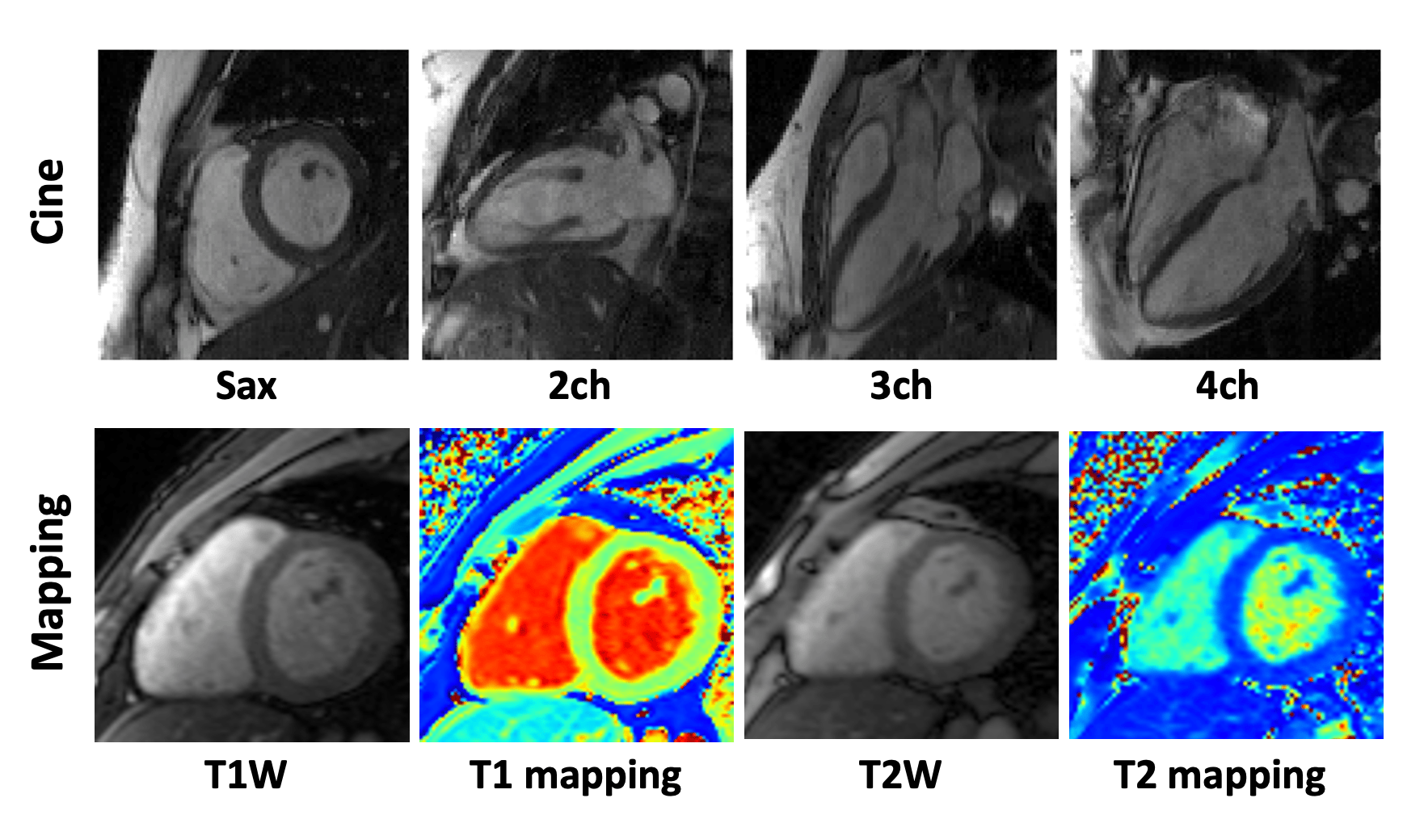
The dataset is available for download from the Synapse repository, and registered users can access the data: https://doi.org/10.7303/ syn52965326.1 . Tools and scripts for processing the k-space data are provided on GitHub https://github.com/CmrxRecon/CMRxRecon-SciData. The dataset and accompanying resources are designed to support the research community in developing and evaluating new CMR imaging techniques.
In addition, we have launched a cardiac imaging reconstruction challenge ("CMRxRecon") based on the current dataset on International Conference on Medical Image Computing and Computer Assisted Intervention (MICCAI) 2023, in collaboration with the Statistical Atlases and Computational Modeling of the Heart (STACOM) workshop (https://stacom.github.io/stacom2023/). This challenge includes two tasks, i.e., (a) cine reconstruction and (b) mapping reconstruction. It attracted over 200 teams from 22 countries worldwide, with more than 600 participants and over 1000 submissions on the leaderboard! We hope the released dataset be a valuable complement to the society in cardiac reconstruction and contribute significantly to the CMR imaging field.
See the paper: https://rdcu.be/dL8NI
Citation: Wang, C., Lyu, J., Wang, S. et al. CMRxRecon: A publicly available k-space dataset and benchmark to advance deep learning for cardiac MRI. Sci Data 11, 687 (2024). https://doi.org/10.1038/s41597-024-03525-4
Contact us:
Chengyan Wang, Ph.D.: wangcy@fudan.edu.cn
Xiaobo Qu, Ph.D.: quxiaobo@xmu.edu.cn

Follow the Topic
-
Scientific Data
A peer-reviewed, open-access journal for descriptions of datasets, and research that advances the sharing and reuse of scientific data.

Related Collections
With Collections, you can get published faster and increase your visibility.
10 years of the FAIR principles
Publishing Model: Open Access
Deadline: Nov 14, 2026
Data to support cancer treatment, diagnosis, and disease understanding
Publishing Model: Open Access
Deadline: Jan 02, 2027