Research finds global fragmentation and inconsistency in care guidance for those living with endometriosis
Published in General & Internal Medicine
Endometriosis is a chronic inflammatory condition, whereby tissue similar to the lining of the uterus grows outside the uterus. Endometriosis symptoms can include severe pelvic pain, fatigue, bowel symptoms, and infertility. The condition affects approximately 10% of people of the female sex of reproductive age worldwide, which is around 190 million individuals.
In our published review paper, Global inequities and fragmentation in guidelines for endometriosis, our team of global researchers examined existing endometriosis guidelines worldwide to evaluate their availability, target audiences and populations, methodologies, and clinical recommendations.
This review compared how guidelines varied across countries, particularly in lower-income settings, as well as the guidelines’ audience and content recommendations.
Methods
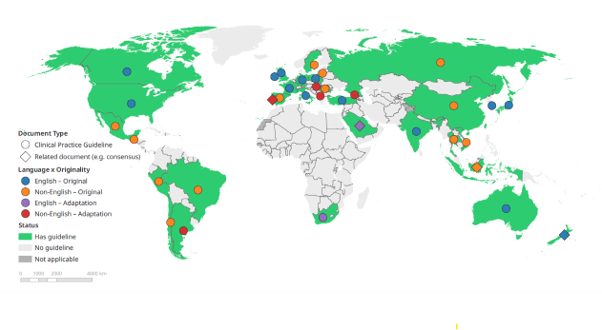
The review analysed 47 endometriosis guidelines from different countries and regions, including 19 published in languages other than English.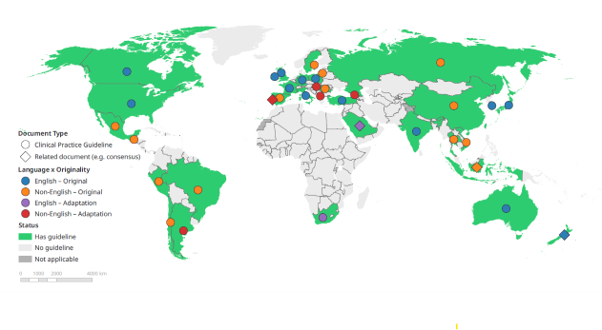
Findings
The findings demonstrate marked regional inequities. We found most guidelines originate in high-income settings, particularly in Europe and the Western Pacific. Substantial gaps, particularly in Africa, Latin America, and the Eastern Mediterranean, highlight fragmentation and inconsistency in national endometriosis care guidance.
Guideline audience
All included guidelines addressed reproductive-aged individuals, but only 77% considered adolescents, despite the known early onset of symptoms and diagnostic delays that begin in adolescence. A minority (19%) explicitly acknowledged gender-diverse individuals, highlighting persistent gaps in inclusivity. Only 30% of guidelines were informed by people with lived experience, particularly those from underserved communities.
All guidelines included gynaecologists as a key clinical care provider, and most endorsed multidisciplinary care; however, fewer than half explicitly addressed primary care clinicians, despite their pivotal role in early symptom recognition and referral. This is an important gap to reduce as highlighted by recent evidence emphasising the central importance of first-contact management pathways.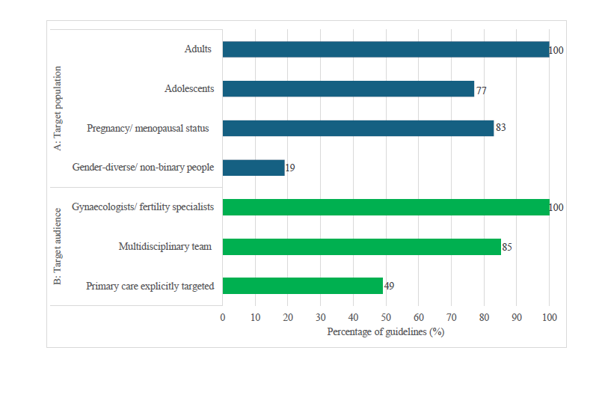
Guideline content
The guidelines highlight inconsistencies in clinical recommendations across key diagnostic and treatment pathways, including histological confirmation, biomarkers, aromatase inhibitors, repeat surgery, fertility care, and non-medical and self-care interventions.
Interestingly, we found that despite many patients with endometriosis also having adenomyosis, many guidelines did not include recommendations for this, rather treating it as a distinct condition.
European and South-East Asian guidelines recommended fertility treatments such as Assisted Reproductive Tech/In Vitro Fertilisation (ART/IVF) and promoted individualised fertility planning; however, there was variation compared to European, North American, and Western Pacific regions for this treatment. There was also variation in patient education and psychological support.
Key takeaways
The absence of national or regional endometriosis guidelines may contribute to inconsistent clinical practice, delayed diagnosis, fragmented referral pathways, and inequitable access to evidence-based care, particularly in resource-limited settings. In these contexts, clinicians often rely on international recommendations or individual clinical experience, which may not align with local healthcare infrastructure or resource availability. A global guideline adaptable to local contexts could establish minimum standards of care, strengthen training and referral pathways, and help reduce inequities in endometriosis care across diverse health systems. The findings of this scoping review may guide future efforts by identifying regions with limited guideline coverage, highlighting variations in recommendations, and informing priorities for guideline development and implementation. Greater collaboration among international professional bodies, regional organisations, policymakers and patient representatives, may support the development of harmonised, contextually appropriate guidance across diverse healthcare settings.
Acknowledgements
We thank Jennifer J. K. Rasanathan, consultant, World Health Organization for reviewing an early draft of the manuscript. The study is supported by the Medical Research Future Fund (MRF1199785). Gita Mishra is the Australian National Health and Medical Research Council Leadership Fellow (GNT2009577). The funding body has no role in the design, analysis, or preparation of the manuscript.
Gete, D. et al. (2026). Global inequities and fragmentation in guidelines for endometriosis: a scoping review, Communications Medicine https://doi.org/10.1038/s43856-026-01907-w

Follow the Topic
-
Communications Medicine
A selective open access journal from Nature Portfolio publishing high-quality research, reviews and commentary across all clinical, translational, and public health research fields.

Related Collections
With Collections, you can get published faster and increase your visibility.
Diagnosis and Care of Sepsis
Publishing Model: Open Access
Deadline: Oct 27, 2026
Healthy Aging
Publishing Model: Open Access
Deadline: Dec 31, 2026