Editor story: Dr. Mark Krumholz
Published in Astronomy


Dr. Mark Krumholz is a Professor at the Research School of Astronomy & Astrophysics, Australian National University (ANU), He is a leading computational and theoretical astrophysicist specializing in the formation of stars and galaxies, flows of interstellar and circumgalactic gas, and numerical methods for simulating these processes. Most of his research involves running large-scale simulations of astrophysical systems to understand their dynamics. His research group also produces and maintains several software packages that are widely used in astrophysics research. He joined the editorial board of Scientific Reports in May 2013.
***
We recently invited Dr. Mark Krumholz for a Q&A where they answered questions about their research and what it is to work as an Editorial Board Member at Scientific Reports. Some of the questions they answered are below:
What do you like most about being an Editorial Board Member for Scientific Reports?
Dr. Mark Krumholz appreciates the interdisciplinary nature of Scientific Reports. While most research in astronomy and astrophysics is published in domain-specific journals, Scientific Reports does not receive much “pure” astronomy research. Instead, the journal often receives studies that lie at the intersection of astronomy and other disciplines. These include areas such as astronomy and Earth sciences, or astrophysics and laboratory-based experiments. As an Editorial Board Member, Dr. Mark Krumholz appreciates the opportunity to engage with research that spans multiple fields, offering a broader and more diverse perspective. The journal provides a different view of the field than one would get from a pure astronomy journal.
What do you like most about handling manuscripts at Scientific Reports?
Handling manuscripts gives me the opportunity to engage with a wide range of research topics beyond my immediate field. The papers I find most interesting are those that combine something I know well, astronomy, with a field I know less about, and bring the two together in an interesting and insightful way.
We know that finding reviewers is one of the hardest parts of an editorial role. Do you have any tricks on finding reviewers?
I wish I did, but I don't! It’s often a bit of a shotgun approach, inviting a large number of potential reviewers and hoping for a good response rate.
How important is reproducibility in research? As an Editor, how do you help authors report reproducible results, and what are the key things journals should do to ensure scientific rigor?
This question looks a bit different in astrophysics than it does in the biological or social sciences. The key to reproducibility for us is ensuring that researchers place their data and the software tools they build to analyze those data in publicly accessible archives, so that others can see exactly what they did and how they did it. Making data and tools accessible in this way is critical.
The same principle is also important for ensuring scientific rigor. Data and software should be openly accessible so that they can be independently evaluated, verified, and checked by other researchers. Enforcing openness is therefore one of the most important ways journals can support both reproducibility and scientific rigor.
What would you like to share with your fellow researchers on publishing in an inclusive journal?
For someone in astronomy, where relatively open journals and publishing have long been the norm, the main appeal of journals like Scientific Reports is that they reach a wider audience that does not necessarily read pure astronomy journals. If you are an astronomer trying to communicate with, say, Earth scientists or laboratory plasma physicists, it is an ideal platform for that. If you are an astronomer simply trying to communicate with other astronomers, it may be less suitable.
What are responsible ways to integrate AI into the peer review process, and how can editors feel empowered to explore these new tools to provide helpful solutions for authors, editors, reviewers, and AI experts?
The old phrase, "A computer can never be held accountable; therefore, a computer must never make a management decision," applies here. AI tools are fine to use to look for potential reviewers, identify possible editors, and do exploratory work like that. But in the end, their use must take the form of having the AI make suggestions that are presented to a human who makes the decision. The AI can never be the one making the decision.
Leaning on your expertise in theoretical and computational models of astrophysics, please give a piece of advice on how to approach/assess this type of study, particularly concerning the specific research question and methodology .
I’ll go back to my comment above: computational studies invariably have a huge number of complex, moving parts, and a bug-free simulation has never yet been run. Thus, the most important thing is openness. The code used in simulations should be accessible and reviewable. Replication at scale may not be practical. If a simulation costs 10 million CPU-hours to run, no one is likely to re-run it simply to replicate an already published study. However, if you have access to the code, you can at least test it, see how it behaves, and understand its limitations.
Homepage: https://www.mso.anu.edu.au/~krumholz/
ORCiD: https://orcid.org/0000-0003-3893-854X
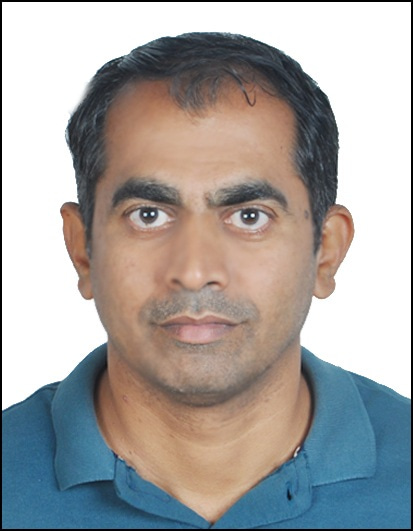
I have a research background in Machine Learning and Big Data Analytics, and I joined Scientific Reports in 2025.
Follow the Topic
-
Scientific Reports
An open access journal publishing original research from across all areas of the natural sciences, psychology, medicine and engineering.

Related Collections
With Collections, you can get published faster and increase your visibility.
Cancer Prevention and Control
Publishing Model: Hybrid
Deadline: Feb 19, 2027
Healthy Aging
Publishing Model: Open Access
Deadline: Dec 31, 2026