Research Reveals Prescribed Forest Fires Have Minimal Impact on Soil Microbial Health
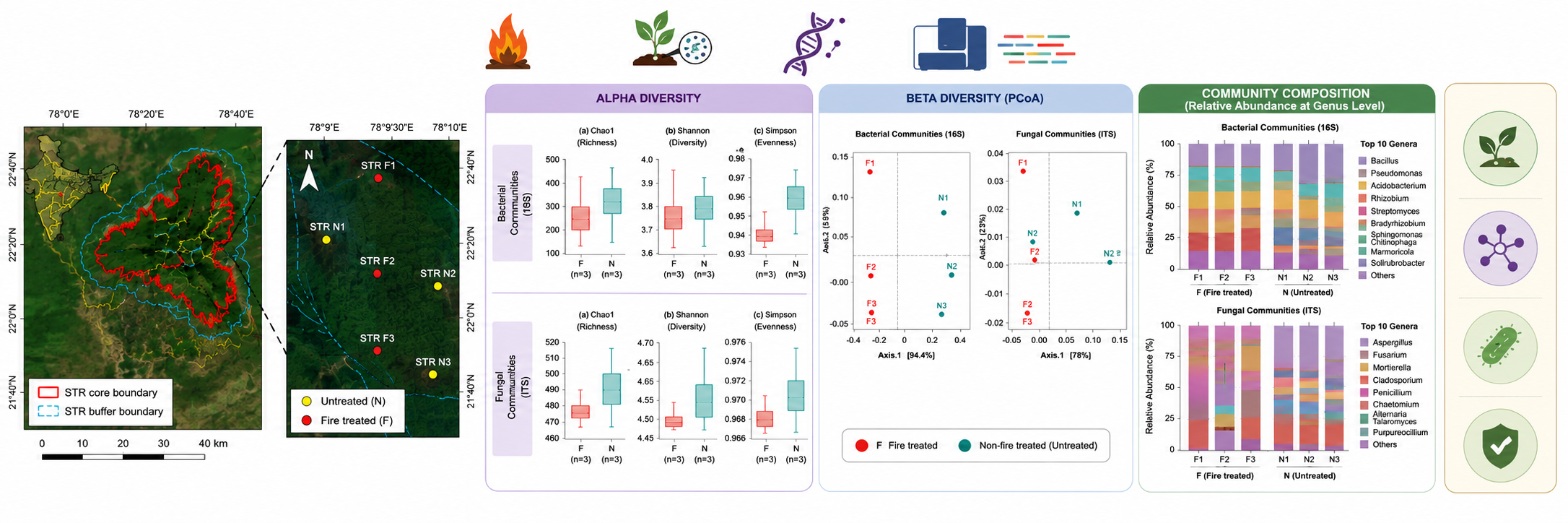
Forest fires are often viewed only as destructive events, but controlled or prescribed burning is widely used by forest departments to reduce the risk of severe wildfires and to manage forest vegetation. Despite its widespread use, little was known about how such controlled fires affect the millions of beneficial microorganisms living in forest soils.
To address this question, the research team collected soil samples from both fire-treated and untreated areas of the Satpura Tiger Reserve. Using advanced metagenomic DNA sequencing technology, the scientists analyzed thousands of bacterial and fungal species that play vital roles in nutrient cycling, soil fertility, plant growth, and overall forest ecosystem health.
The study found that prescribed fires caused only subtle changes in soil microbial communities. While bacterial populations showed slightly greater responses than fungal populations, the overall microbial diversity remained largely unchanged. The results indicate that controlled burning, when properly managed, does not significantly disturb the biological balance of tropical forest soils.
The researchers also identified specific bacterial and fungal groups that responded differently to fire, providing valuable information for future forest conservation strategies. These findings will help forest managers better understand how to use prescribed burning while protecting soil biodiversity and maintaining ecosystem resilience.
This research highlights the importance of integrating modern genomic technologies into environmental monitoring and sustainable forest management. The findings contribute to global efforts aimed at conserving biodiversity, improving ecosystem resilience, and developing science-based policies for climate-resilient forest management.
The publication demonstrates the growing contribution of AKS University to high-impact environmental and microbiome research and reinforces the University's commitment to scientific excellence and sustainable development.

Please sign in or register for FREE
If you are a registered user on Research Communities by Springer Nature, please sign in