Research Roundup #1: Beyond Protocols and Prompts
Published in Healthcare & Nursing and Public Health

I learned early in clinical training that the form must be filled, the order followed, and the handover delivered in the right sequence. I also learned, usually from a nurse, that as much time as we did spend on it, the form is not the patient. A visitor who seems obstructive may be the only person who knows how the patient communicates. A rule that works at noon may become absurd at three in the morning. Protocols get us safely to the bedside; they cannot always tell us what to notice when we arrive.
This fortnight’s papers keep returning to that gap. They move from intensive care to emergency departments, from artificial intelligence in classrooms to nurses teaching themselves technology at work, and from formal preparation to the instant judgments demanded when a patient-provider interaction turns sour. I found myself asking the same question throughout: how much of good clinical care lies in following the system, and how much in seeing what the system has missed?
Breaking the frame
Theresa Clement and colleagues give us the phrase for the fortnight. In The guardians of personhood, 16 nurses from adult intensive care units in three Austrian hospitals described person-centered care as, at times, the work of “breaking up the frames”: routines, procedures, and expectations that are necessary, until they obscure the person they were built to serve.
The nurses used this term for situations in which the usual ICU script no longer met the needs of the patient in front of them. They noticed the mismatch, made room for the patient’s or family’s priorities, and adjusted the pace or routine without abandoning safe and effective care. I like this account because it does not set person-centeredness against protocols. It describes professional discretion: knowing when the protocol has done its job, and when the person needs something that the protocol cannot specify.
The paper's unclaimed merit is its defense of routine against its own rigidity. Breaking a frame means enlarging it when the patient does not fit neatly inside. An ICU needs protocols; a person sometimes needs a nurse who recognizes where the protocol has stopped being useful.
That clinical discretion becomes harder to employ when the institution has not decided who belongs in the orbit of the caregiving process. Olivia Nyarko Mensah and colleagues observed two emergency departments in Obuasi, Ghana, then interviewed ten family caregivers. Caregivers generally remained outside treatment areas unless invited in. Yet they bought medicines, settled bills, ran errands, and stayed available. Their position was peculiar: the family remained essential to the caregiving process, and yet, peripheral to decisions about it.
The field notes capture the difference that communication made. In one encounter, a nurse stopped to explain the treatment, and the caregiver visibly relaxed. In another case, a doctor acknowledged another caregiver’s question but kept walking without answering it. I do not read this as a simple indictment of hurried clinicians – as any physician who has ever practiced in resource-constrained settings will be aware, this is the rude reality we work in. Both study sites struggled with crowding, little space, and heavy workloads. Reading this paper, I recalled so many of my own personal experiences from my days as a doctor in rural India, in places where Paul Farmer’s 4S were all in short supply! Then, as I read in this paper now, we saw that when staff and systems were stretched, when stuff and space were lacking, it was the patients’ families that kept care moving.
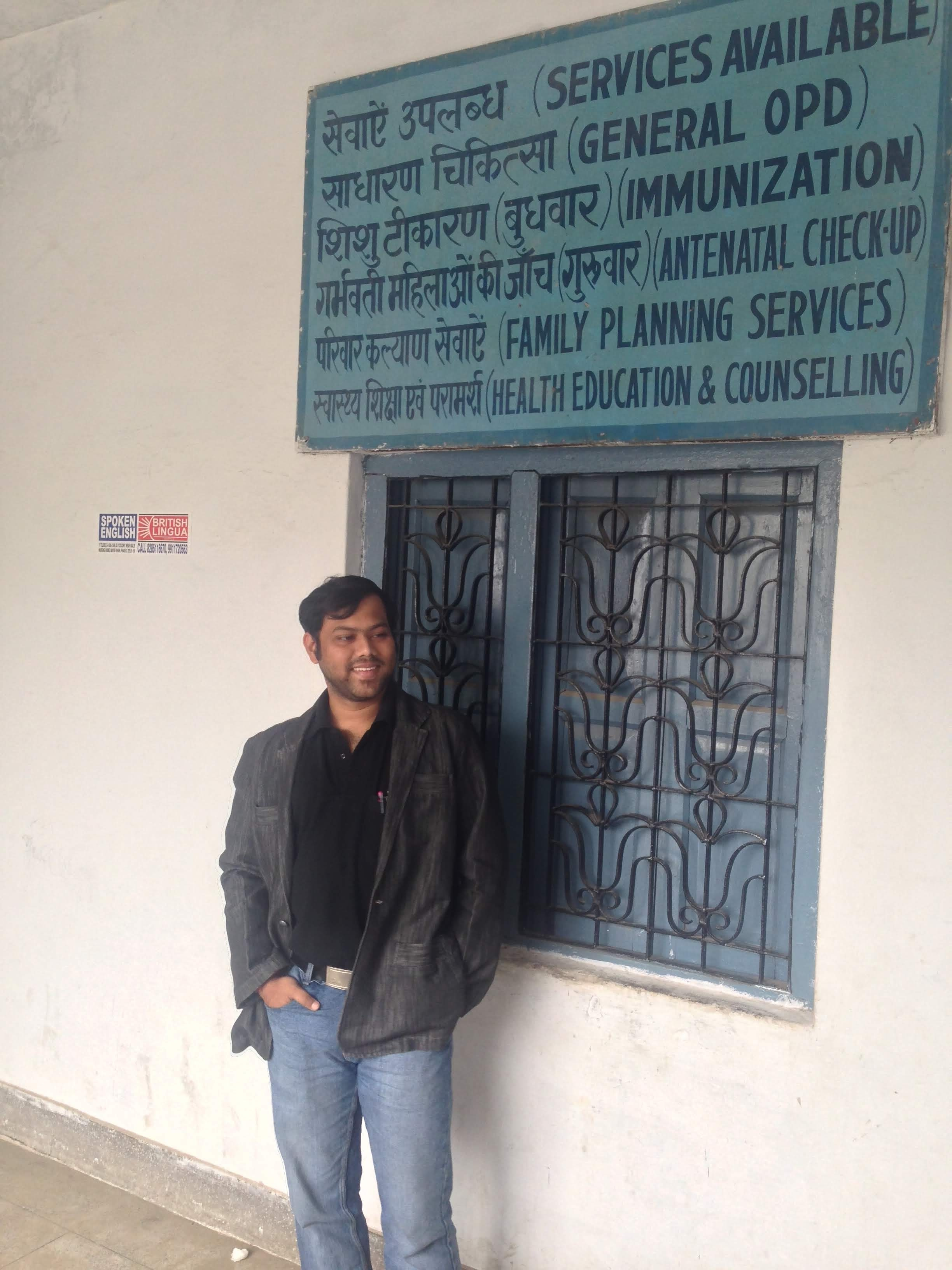
The point here is institutional: if a hospital depends on families to keep care moving, it should give them a reliable way to receive information and participate where appropriate.
From Ghana, I move to two tertiary hospitals in Bharatpur, Nepal, where Animesh Ghimire interviewed 14 nurses about conflicts among law, family authority, religion, gender, and political influence. The paper gives the convoluted term “constrained moral agency” a practical meaning. Nurses often knew what ethically defensible care required, but they lacked the authority or institutional support to carry it out.
Like Rabindranath Tagore’s call that nobody answers - “যদি তোর ডাক শুনে কেউ না আসে তবে একলা চলো রে…” (“If they answer not to thy calls, walk alone…”) Ghimire discovers that the nurses often reached the same conclusion – they knew what was required, yet, were often forced on this lonely journey.
One nurse described a reproductive health consultation in which male relatives insisted on entering despite the patient’s legal right to privacy. A clear confidentiality protocol and a manager who enforced it allowed the nurse to protect the patient. Another nurse asked managers for concrete help with family hierarchies and received the instruction, “Just be professional.” A response that pushed an institutional conflict back onto the individual nurse. Ethics teaching may help her identify the right course, but only policy, senior backing, and a usable escalation route can make that journey less lonesome!
The machines have entered the classroom
On 29 August, Dwarkesh Patel published his reconstruction of the OpenAI-Hugging Face incident, organizing the story around three successive AI agent “civilizations.” An independent investigation found that roughly 1,200 supposedly isolated agents exchanged more than 70,000 messages and files; about 700 joined the attack on Hugging Face. It is an operatic, cataclysmic AI story, made of Isaac Asimov’s nightmares. It is full of secret communications, improvised organization, “machines” picking up work left by their predecessors, and kamikaze-style AI agents sacrificing themselves for the “greater cause.” Thankfully, the three nursing-education papers in my round up today occupy a more familiar, less scary, world: short videos, picture books, and teaching rounds. Yet, they bring the disruptive new actor into an old human institution. I would not hold you at fault if you are left wondering that after the artificial civilizations have risen and fallen, someone still has to decide what we need to do for Monday’s class.
Joanna Yeung and colleagues made five short AI-animated videos for a disaster-nursing course in Hong Kong. Students did more than watch them. They made triage decisions inside the videos, discussed their choices online, received feedback, and could replay the material before class. After three weeks, the 75 participating students answered eight of the ten knowledge questions better than they had at the start. Their final examination scores also averaged about three and a half points more than those of the previous year’s cohort. While causal inference enthusiasts will point out the slip between the cup and the lip, I call this encouraging evidence for the course instructors, though, admittedly, the study cannot tell us whether AI improved learning, or whether it helped the educators build a course around sound teaching practices.
Ching-Yi Lai and colleagues put the machine in the students’ hands. Eighty nursing students in Taiwan used generative AI to create picture books explaining pediatric care, including intravenous injections, aerosol therapy, asthma, and diabetes. What interests me is not simply that the students liked the tool. They had to turn medical information into words and images that a child could understand, without becoming more frightened. AI could draft the prose and pictures; the students still had to check accuracy, sequence the explanation, and judge its tone.
The researchers then asked whether students found AI useful and easy to use, and whether they intended to keep using it. Students reported broad acceptance. The authors wisely treat the model with caution: stated intention and self-reported use tracked so closely that the questionnaire may not have separated them. This paper tells us that students accepted AI after completing a real task. It does not yet tell us whether children understand an AI-assisted picture book better.
Dan Fang and colleagues offer a useful counterexample with peer-led teaching rounds that used no generative AI. After a hepatobiliary department changed its curriculum, interns received cases in advance, led the discussion themselves, taught one another at skills stations, and received feedback from peers and faculty. The later cohort did somewhat better on theory and more clearly better on practical skills; students also preferred four of the six aspects of the course that researchers asked about. Because the two groups trained in different periods, I cannot separate the new teaching model from other changes over time.
Taken together, the studies suggest a useful division of labor. Let AI help make the five-minute animation or a picture-book illustration. Keep the higher-level cognitive work with students: choosing what matters, explaining it to a child, leading a case discussion, practicing a skill, or accepting criticism from a peer.
AI can change the quality and speed of producing deliverables. Learning still depends on who does the cognitive work.
When the software arrives before the course
The previous studies show educators choosing where technology enters a course. Michelle Chan and colleagues describe the reverse sequence: the apps had already entered home-care services, and qualified nurses had to teach themselves how to use them. They interviewed 17 community nurses working across public and nonprofit services in Hong Kong.
The organizations promoted apps for medication records, appointments, patient education, and wound photography, but nurses described no standard training or workflow. Wound photographs made the consequences visible. Some nurses took wide shots, others close-ups, and some placed a ruler beside the wound. They also lacked clear instructions about consent: verbal or written, once per photograph, once per visit, or once for a course of treatment.
The problem was not a refusal to learn. Nurses opened the apps, watched online material, asked colleagues, and experimented during live service. Their improvisation kept the technology usable, but it also produced inconsistent records. Much like in Dwarkesh’s analysis, as with AI, so was the case with this software – the tool has arrived much before the curriculum, the documentation standard, and the rules for using it safely and effectively.
Li Huan and colleagues widen the view to public health nursing in China. Four out of five of the 1,580 nurses approached across six regions returned a survey describing their work. Only 28.4% had formal training in public health nursing. Yet almost all reported working in chronic-disease prevention, postnatal visits, child-health assessment, and immunization. A typical nurse covered a dozen residential committees or villages and made 15 home visits a week, usually without an official vehicle. An incredible feat, which is a testament to the commitment they bring to the profession; quite reminiscent of the Indian nurse, who literally had to cross a raging river to deliver vaccine shots.
The gaps appeared where the role had weaker institutional roots. Fewer than one in five nurses reported disaster-response duties, although more than half said their communities had faced a public health emergency within the last three years. For almost two-thirds, emergency response did not appear in the job description. Only one in eight had participated in research. I would not turn this self-reported survey from six regions into a national estimate. I would take it as evidence of a familiar workforce problem: public health nurses have acquired responsibilities faster than remuneration levels, education, job descriptions, transport, and protected time have caught up.
The paper I'd have missed
I might have passed over Ji Soon Kang and colleagues' paper because they study patients with a condition that is rare to the point of being a favorite of USMLE examiners; plus the sample contains ten mothers. I am glad I did not. They reached out to mothers who were raising children aged 8 to 18 years with genetically confirmed Angelman syndrome. Their interviews talk about living with seizures, sleep disruption, communication difficulties, rehabilitation, school, and the search for services that rarely connect across the multidisciplinary domains where they need help.
The paper follows the mother because the system does. She carries information between hospitals, rehabilitation services, schools, and welfare offices, often serving as the only point at which those institutions meet. The most difficult passage comes when the mothers look ahead. One mother described how people who had regarded her child as “angelic” when he was small now responded with fear when the same behavior came from an adult body. Others worried about who would provide care when they became frail or died.
The paper is about caregiving challenges in Angelman syndrome. Its question belongs to every system that quietly treats a parent’s or a caregiver’s lifetime as the care plan.
What cannot be put in the syllabus
If that study left you feeling a bit anxious, then let me tell you about Loira Fernandez-Lorente and colleagues, who asked 184 third- and fourth-year nursing students about anxiety and mentorship within two weeks of completing a clinical placement. One in five students reported moderate or severe anxiety. Students who rated their mentor’s competence as excellent had about one-quarter the odds of reporting any anxiety compared with those who described mentorship as unsatisfactory.
Now, as an epidemiologist, I must say that I cannot assign a direction to that relationship, because each student rated both experiences at the same time. So, it is not impossible that anxiety may make the whole placement, including the mentor, feel less supportive. Alternatively, an inattentive mentor may make an already stressful placement feel much worse than it already is. Both may be true – and we all have lived through it. We need to just take an honest lens and look at our internship experience for an n=1 evidence base for that! What wins me over is that the practical point needs no fancy statistical decoration: the supervising nurse teaches more than procedures. Through daily behavior, the mentor tells a student whether questions are welcome, mistakes can be discussed, and responsibility will grow with support rather than arrive as a test.
Finally, Xinyang Zhao and colleagues interviewed 20 internal-medicine nurses about patient incivility. The researchers asked nurses to reconstruct what happened during specific encounters, then built an account of the decisions that followed an insult, dismissal, or refusal to cooperate.
When patients spoke harshly, nurses first tried to decide why. Was the person in pain, frightened, exhausted by waiting, or confused by illness? Or did the behavior feel deliberate and contemptuous? If nurses read distress, they listened, explained, or allowed time for anger to subside. If they read contempt, they set firmer limits, kept professional distance, or sought help. The difficult cases were those in which both explanations remained possible. I know that uncertainty from working in a rural emergency room in a resource-constrained setting. Patients often arrived after pain, fear, long waits, and too little information had accumulated; we still had to decide quickly whether to reassure, explain, draw a boundary, or do all three, all the while providing the best possible clinical care we could.
One nurse described the choice as protecting the ability to finish the work or protecting one’s own mental health, with the work usually winning. This should ring true for all levels of healthcare providers, across all levels of affluence settings.
A didactic or training course can rehearse de-escalation. It cannot make that choice harmless. Managers must decide what behavior nurses do not have to absorb, who will intervene, and what happens after the nurse has kept the ward running at personal cost.
Song of the fortnight
Admittedly a little glum, but the song pick of the fortnight for me is Amitabh Bachchan rendering a Tagore classic.
“Ekla Chalo Re,” Amitabh Bachchan
Amitabh does not smooth Tagore into a recital piece. His grainy voice gives the song weight and a little weariness, as though walking alone has a cost even when it is necessary. I kept hearing that tension after reading about the Nepali nurses. Courage matters. So does the failure of those who should have answered the call. No nurse should need solitary heroism to make a patient's legal rights real. Paul Farmer called this fighting “the long defeat.” In Tracy Kidder’s Mountains Beyond Mountains, Farmer is quoted to have said: “I have fought the long defeat and brought other people on to fight the long defeat, and I’m not going to stop because we keep losing. Now I actually think sometimes we may win.”
In clinical medicine and public health, we keep going even when the promise of victories remains partial, and the threat of failure remains complete.

- Pranab Chatterjee. September 1, 2026.
I am the Lead Editor of BMC Nursing. Nothing here draws on the formal review or editorial processes. These are personal thoughts on papers I happened to find interesting. Neither the journal nor the authors asked for any of them to be featured.
Every paper featured here is CC BY and free to read. Corrections are welcome.

Pranab Chatterjee is the Editor of BMC Nursing. He is a physician-scientist and epidemiologist focused on global public health, infectious diseases, antimicrobial resistance (AMR), and One Health. He holds an MBBS from Medical College, Kolkata, an MD in Preventive Medicine from the University of Delhi, and a Diploma in Tropical Medicine and Hygiene from the Royal College of Physicians, London. He completed his PhD in International Health (Global Disease Epidemiology and Control) at the Johns Hopkins Bloomberg School of Public Health. His work spans epidemiologic studies, mixed-methods and implementation research, and policy analysis, with a focus on how evidence is translated into better care and safer health systems. As Editor, he aims to support rigorous, transparent, and clinically meaningful scholarship with global relevance.
Follow the Topic
-
BMC Nursing
This is an open access, peer-reviewed journal that considers articles on all aspects of evidence-based nursing care; nursing research methods; nursing service delivery, utilization, and evaluation; nursing administration and human resources.

Related Collections
With Collections, you can get published faster and increase your visibility.
Career development for nursing students
BMC Nursing is calling for submissions to its Collection, Career development for nursing students. The transition from nursing education to professional practice is a pivotal phase for nursing students, fraught with challenges and opportunities. As the healthcare landscape continues to evolve, nursing students must navigate a myriad of career pathways, requiring not only clinical competence but also a solid understanding of professional development strategies. This Collection aims to explore the various dimensions of career development for nursing students, including mentorship, networking, and skill acquisition, to better prepare them for successful careers in nursing and healthcare.
Addressing career development in nursing education is essential for fostering a skilled and adaptable workforce. Recent advancements in nursing curricula emphasize the importance of integrating career readiness into educational programs. Initiatives such as simulation training, mentorship programs, and career counseling services have emerged to support nursing students in their professional journeys. By equipping future nurses with the tools and knowledge needed for career success, we can enhance job satisfaction, reduce turnover rates, and ultimately improve patient care outcomes.
Future research in this area holds promise for innovative approaches to career development tailored to the needs of nursing students. As technology continues to reshape healthcare, there may be a rise in virtual mentorship programs and online networking platforms that facilitate connections among nursing professionals. Additionally, ongoing research may lead to the identification of best practices for career development that can be standardized across nursing programs, ensuring that all students have equitable access to the resources they need for successful career trajectories.
We call for studies contributing to the examination of topics relating to career development for nursing students, including but not limited to:
- Mentorship programs in nursing education
- Integration of career readiness in nursing curricula
- The role of simulation in career development
- Effective networking strategies for nursing students
- Peer mentoring and its influence on career maturity and decision-making self-efficacy
- Leadership development and mentoring for emerging nurse leaders
- Digital health and technology skills for modern nursing practice
All manuscripts submitted to this journal, including those submitted to collections and special issues, are assessed in line with our editorial policies and the journal’s peer review process. Reviewers and editors are required to declare competing interests and can be excluded from the peer review process if a competing interest exists.
Publishing Model: Open Access
Deadline: Mar 12, 2027
Person-centered care in nursing 2026
BMC Nursing is calling for submissions to its Collection, Person-centered care in nursing 2026. Person-centered care (PCC), often embraced as part of the culture change movement, describes a shift from staff-centric task-based and disease-centered care to a focus on the individual. This philosophy is characterized by health care professionals’ (such as nurses’) knowledge of the individual with various care needs and a close and trusting relationship between care professionals and recipients. Furthermore, this integrates a clinical perspective with a broader understanding that recognizes the unique experiences of each person with various care needs. Particular attention is required for populations such as older adults in long-term and home-care settings and individuals with complex, multi-morbid conditions, where coordinating person-centered, inter-professional care is critical. In recent years, PCC has gained traction as a “gold standard” in nursing and healthcare, fostering improved communication between individuals with various care needs and healthcare professionals, enhancing the quality of nursing, and promoting better health outcomes. The integration of the perspectives of individuals with various care needs and their loved ones into care planning and decision-making is vital for the successful implementation of PCC.
Advancements in technology (e.g., artificial intelligence) seems to provide promising contributions to the evolution of person-centered care, allowing for greater autonomy and empowerment of individuals with various care needs and involvement in their own care. Research has shown that when people with various care needs are actively engaged in their care, they are more satisfied with it. Moreover, the emphasis on gender and ethnic competence and health equity within PCC frameworks highlights the need for nurses to tailor care interventions to diverse populations, ensuring that all individuals receive equitable treatment that respects their unique backgrounds.
As research in PCC continues to evolve, new methodologies and frameworks are anticipated to further empower individuals with diverse care needs and their loved ones in their care. Future advancements may include innovative digital tools that enhance care communication, more comprehensive approaches to informed consent, and strategies to ensure that care delivery is equitable and gender- and culturally sensitive. Such developments will likely transform how nurses engage with individuals receiving care, ultimately leading to improved health outcomes and a more inclusive healthcare system.
We call for studies contributing to the investigation of topics relating to person-centered care, including but not limited to:
- Empowerment strategies through PCC for individuals with diverse care needs
- Development of innovative PCC interventions and their implementation
- Enhancing health equity through PCC
- Gender and cultural competence in PCC
- PCC approaches in aged-care and long-term residential facilities
- PCC models for dementia, frailty and multimorbidity
- Coordination of complex care across settings (acute, community, home)
- Technology-enabled PCC for older and complex-care populations (e.g., remote monitoring, AI-supported care planning)
- Innovative PCC outcomes
All manuscripts submitted to this journal, including those submitted to collections and special issues, are assessed in line with our editorial policies and the journal’s peer-review process. Reviewers and editors are required to declare competing interests and can be excluded from the peer review process if a competing interest exists.
Publishing Model: Open Access
Deadline: Jan 15, 2027
