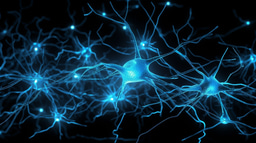
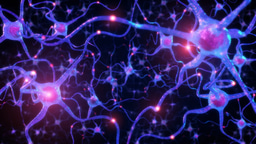
Artificial intelligence has grown powerful, but still fragile.
One noisy dataset, one unstable gradient—and the system collapses.
Biology shows us a different path.
Human neurons stay reliable for decades through homeostasis and repair. They don’t just learn; they maintain themselves.
In our latest work, we explored how this principle can reshape AI.
The BioLogicalNeuron layer introduces health monitoring and self-repair into neural networks—bringing us closer to systems that can adapt, survive, and learn continuously.
This could be a step towards:
🔹 AI that doesn’t “forget” in continual learning
🔹 Models that remain stable in noisy, real-world environments
🔹 Self-maintaining intelligence for robotics and healthcare
Read the full article here:
https://doi.org/10.1038/s41598-025-09114-8

A researcher specializing in biologically-inspired artificial intelligence and robust neural network architectures. My work bridges neuroscience principles with machine learning, focusing on developing systems that exhibit the stability and resilience characteristic of biological intelligence. I approach research with commitment to both theoretical rigor and practical impact, developing methods that are grounded in biological principles while addressing fundamental limitations in current artificial neural networks.
Research Interests
My research program centers on creating artificial intelligence systems that embody principles of biological robustness and adaptability:
Biologically-Inspired Neural Architectures
Developing neural network layers and systems that incorporate homeostatic regulation, self-repair mechanisms, and multi-scale temporal dynamics inspired by biological nervous systems.
Robust and Resilient AI Systems
Addressing the brittleness of artificial neural networks through bio-inspired stability mechanisms that enable consistent performance under perturbations, distribution shifts, and adverse conditions.
Multi-Scale Temporal Coordination
Investigating how coordination across multiple temporal scales—from milliseconds to hours—can enhance the efficiency, stability, and recovery capabilities of artificial neural systems.
Neuromorphic and Brain-Inspired Computing
Translating principles from neuroscience and evolutionary biology into computational frameworks that advance the capabilities of artificial intelligence.
General AI Agent Systems
Building integrated platforms combining LLMs, computer vision, and researching multi-agent collaboration, developing cross-domain knowledge transfer, and creating benchmarks for general AI capabilities.
Follow the Topic
-
Scientific Reports
An open access journal publishing original research from across all areas of the natural sciences, psychology, medicine and engineering.

Related Collections
With Collections, you can get published faster and increase your visibility.
Cancer Prevention and Control
Publishing Model: Hybrid
Deadline: Feb 19, 2027
Healthy Aging
Publishing Model: Open Access
Deadline: Dec 31, 2026