Rethinking Chronic Disease Through Systems Biology, Microbiome Science, and AI Integration
Published in Bioengineering & Biotechnology, Chemistry, and Biomedical Research
Modern biomedical research is producing data at an unprecedented scale. Multi-omics platforms, microbiome sequencing, and artificial intelligence now allow scientists to observe biological systems with extraordinary precision. Yet a central challenge remains: how to translate this expanding data universe into coherent explanations of disease.
Much of chronic disease research still operates within reductionist boundaries. Diabetes, metabolic disorders, and cancer are frequently examined through isolated pathways—single genes, glucose levels, or discrete biomarkers. These approaches have generated valuable knowledge, but they often overlook the dynamic interactions linking host biology, microbial ecosystems, nutrition, and environmental exposures.
This gap between data abundance and conceptual integration is increasingly visible.
Systems-oriented perspectives attempt to address this fragmentation. Within this context, the Polybiome Systems Medicine (PSM) framework explores health as an emergent property of interacting biological networks. Microbial fermentomics, nutrigenomic modulation, immune signaling, metabolic regulation, and environmental pressures are considered not as separate variables, but as components of a continuously interacting system.
The NexDi concept extends this thinking to metabolic disease. Rather than interpreting diabetes strictly as fixed clinical categories, the framework examines metabolic instability and β-cell vulnerability through integrated multi-omics analysis. Artificial intelligence becomes a tool for pattern recognition across these biological layers, revealing relationships that remain invisible within conventional analytical boundaries.
Importantly, these ideas are not purely theoretical. Population contexts experiencing rapid environmental and nutritional transitions provide important observational settings for systems research. Countries such as Egypt illustrate how dietary shifts, environmental stressors, and microbiome dynamics can intersect in complex ways that challenge classical disease classifications.
From a research perspective, the significance of integrative frameworks lies less in proposing definitive models and more in expanding the analytical horizon of biomedical science. The goal is not to replace established clinical knowledge, but to connect fragmented domains—microbiology, nutrition science, environmental health, and computational biology—within a unified research dialogue.
If biomedical science is entering an era of biological complexity, then the central question becomes clear: how can interdisciplinary systems thinking transform data into understanding?
That conversation has only begun.
Reference
Reyed, R. M., Prabhakar, P., & Haghi, A. (Eds.). (2026). Advancing Personalized Medicine With AI-Driven Microbiome and Nutrigenomics: Innovations and Future Perspectives. IGI Global Scientific Publishing. https://doi.org/10.4018/979-8-3373-3121-8
Reyed, R. M. (2026). Advancing diabetes reclassification using the NexDi AI system with multi-omic insights: Egypt’s living laboratory. In R. Reyed, P. Prabhakar, & A. Haghi (Eds.), Advancing Personalized Medicine With AI-Driven Microbiome and Nutrigenomics: Innovations and Future Perspectives (pp. 1–92). IGI Global Scientific Publishing. https://doi.org/10.4018/979-8-3373-3121-8.ch001
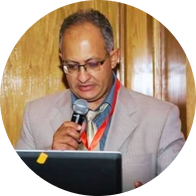
I am an Associate Professor and interdisciplinary researcher working at the intersection of microbial biotechnology, oncology, artificial intelligence, and precision nutrition. My academic journey has been shaped by a long-standing interest in understanding complex biological systems not as isolated components, but as interconnected, dynamic networks that influence health, disease, and therapeutic response.
My core expertise lies in microbiome science, particularly gut microbiota, host–microbe interactions, and their implications for metabolic disorders, cancer, and immune regulation. Over the years, my work has expanded to include AI-driven systems medicine, where I apply machine learning and multi-omic integration to translate complex biological data into clinically and nutritionally actionable insights.
I am the originator of the Polybiome Systems Medicine framework, an integrative conceptual and methodological model that connects oncology, microbiome ecology, nutrition, environmental exposure, and artificial intelligence into a unified translational architecture. This framework underpins much of my current research, editorial work, and academic writing, and is designed to bridge the gap between discovery science and real-world clinical and public health applications.
My research interests include:
-
Microbiome–cancer interactions and immunometabolism
-
AI and multi-omics for precision oncology and nutrition
-
Probiotics, functional foods, and microbial therapeutics
-
Drug–microbiome interactions and treatment response modulation
-
Systems biology approaches to complex, multifactorial diseases
In addition to my research activities, I am deeply involved in academic publishing and scientific leadership. I serve as editor, corresponding editor, or editor-in-chief for several international book projects with major publishers, focusing on emerging fields such as precision medicine, nanobiotechnology, One Health, and AI-enabled biomedical innovation. I am also committed to mentoring early-career researchers and fostering ethically grounded, conceptually coherent scientific work.
My professional philosophy is grounded in rigor, transparency, and integration—valuing deep scientific reasoning over superficial trends, and long-term intellectual contribution over short-term output. I see research not only as a means of generating data, but as a responsibility to build frameworks that others can test, challenge, and extend.
I welcome collaboration with researchers, clinicians, data scientists, and institutions interested in advancing next-generation medicine, nutrition, and systems-level health solutions through interdisciplinary and translational science.
Please sign in or register for FREE
If you are a registered user on Research Communities by Springer Nature, please sign in