Rethinking Water as a Coolant: How Nanoparticles Are Reshaping Thermal Management
Published in Materials, Physics, and Mechanical Engineering

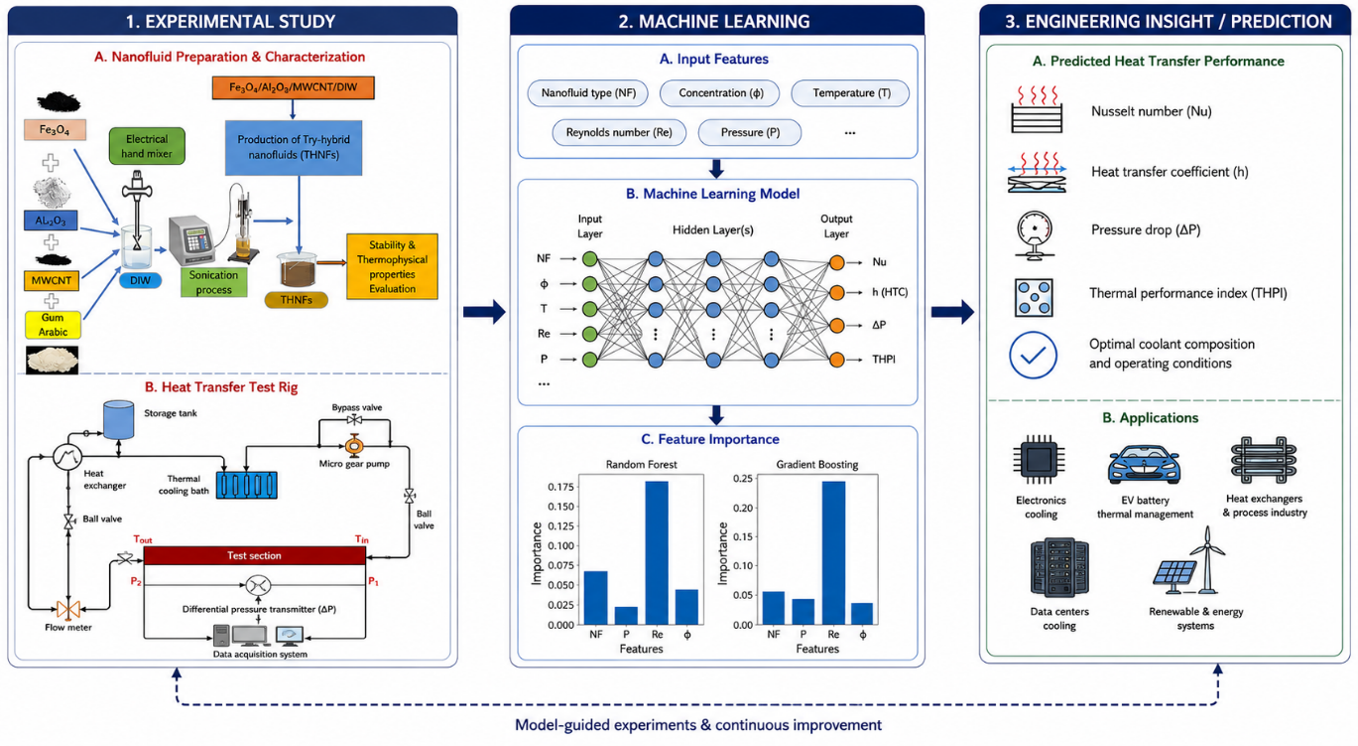
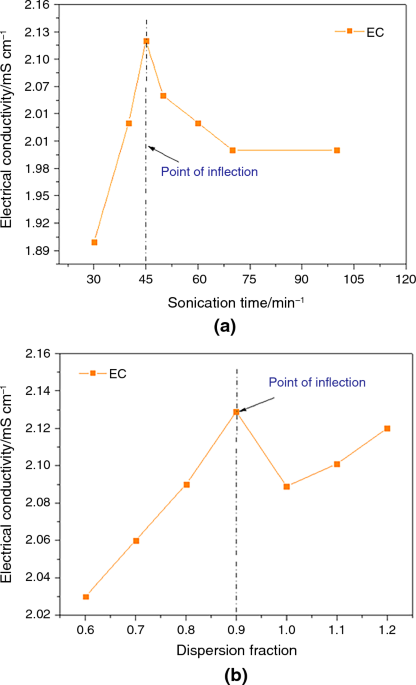

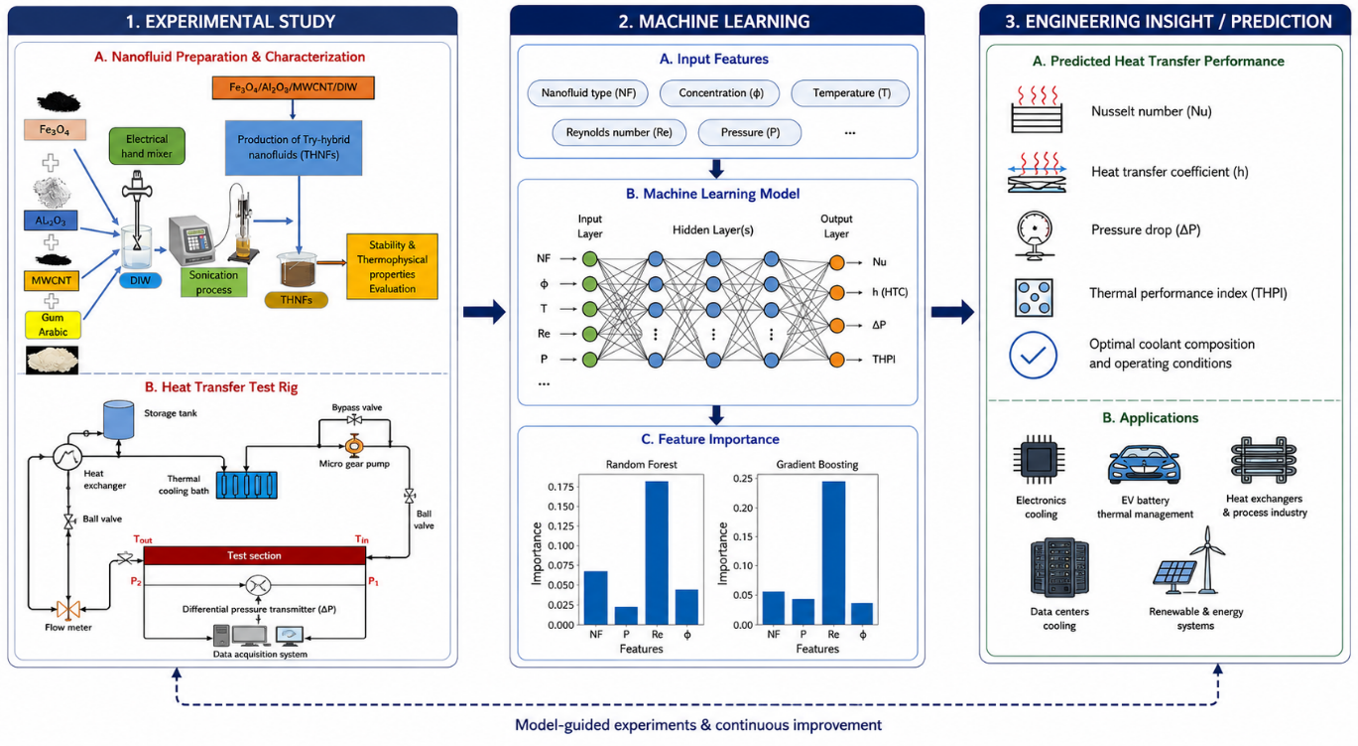
Water has been the default coolant in engineering for well over a century, and for good reason: it is cheap, safe, abundant, and has a reasonably high specific heat capacity. But water alone is running out of headroom. As electronics get denser, batteries get more energy-hungry, and heat exchangers are asked to shrink while doing more work, the humble thermal conductivity of water; around 0.6 W m⁻¹ K⁻¹ at room temperature, is becoming a bottleneck. Over the past few years, our group has been asking a simple question: what happens if we don't replace water, but upgrade it, by dispersing carefully chosen nanoparticles into it to form a "nanofluid"?
This post pulls together several of our recent, peer-reviewed studies to give a behind-the-scenes look at what we found, why it matters, and where this line of work is heading, particularly for applications like electronics cooling, compact heat exchangers, and high-heat-flux systems where a smaller, more efficient cooling loop can make a real engineering difference.
Why bother with nanofluids?
The idea is not new, it goes back to Choi and Eastman's original proposal in the 1990s, but the engineering payoff has become much clearer as measurement techniques, machine learning, and materials characterisation have matured. Suspending nanometre-scale particles (metal oxides, carbon nanomaterials, magnetic particles) in a base fluid like deionised water can raise thermal conductivity, and in some cases electrical conductivity, while keeping viscosity increases manageable. That last point matters: a fluid that transfers heat brilliantly but is too thick to pump efficiently is not actually useful. Much of our work has focused on finding formulations that strike a workable balance between the two.
From single nanoparticles to ternary hybrids
Our earliest work in this series looked at binary and ternary combinations to see whether mixing nanoparticle types could do better than any one type alone.
In one study, we combined graphene nanoplatelets (GNP), aluminium oxide (Al₂O₃), and ferric oxide (Fe₂O₃), separately, in pairs, and all three together, in deionised water at a fixed 0.10% volume concentration, and tracked electrical conductivity, thermal conductivity, and viscosity from 15–60 °C. The ternary blend outperformed the single- and two-component versions across the board: one formulation showed a 394.72% jump in electrical conductivity and a 37.50% rise in viscosity, while another achieved a 27.46% improvement in thermal conductivity at 60 °C. We also worked out empirical correlations and performance indicators (a thermo-electrical conductivity ratio and a "figure of merit") to help translate these lab numbers into design guidance for heat exchangers, microchannel coolers, and solar thermal systems (full paper: Comparative thermophysical and thermo-electrical performance of single, binary, and ternary (GNP–Al₂O₃–Fe₂O₃) hybrid nanofluids for heat transfer applications).
A related tri-hybrid study went a step further, dispersing Fe₃O₄, Al₂O₃, and multi-walled carbon nanotubes (MWCNT) together across five different mixing ratios and looking not just at heat transfer performance but at stability, pH behaviour, and sedimentation over time, because a nanofluid that settles out within a week is not going to survive in a real cooling loop. We found that the mixing ratio mattered enormously: higher Al₂O₃ content improved dispersion stability, while more Fe₃O₄ and MWCNT boosted electrical conductivity but pushed up viscosity. One balanced formulation (equal parts of all three nanoparticles) came out as the best all-round compromise between thermal conductivity, stability, and flow resistance. We also flagged a less glamorous but practically important finding: these nanofluids trended acidic as temperature and concentration rose, which raises corrosion questions for metallic cooling systems, and we discuss mitigation strategies like surfactants and buffering agents (full paper: Tri-hybrid nanofluids for thermal applications: stability, magneto-hydrodynamics, and machine learning prediction).
Bringing in machine learning
Once you have a reasonably large experimental dataset, the next question is: can you predict how a nanofluid will behave under conditions you haven't tested yet, without running the experiment all over again? This is where machine learning has become a genuinely useful tool in our recent work, rather than just a buzzword.
For an Al₂O₃/MWCNT hybrid nanofluid, we compared classical linear correlations against Artificial Neural Networks (ANN) and an ANFIS model combined with fuzzy c-means clustering (ANFIS-FCM). At the higher end of the concentration range tested (0.25 vol%, 60 °C), electrical conductivity exceeded 2400 µS cm⁻¹ and thermal conductivity improved by roughly 35–50% relative to plain deionised water. The ANFIS-FCM models consistently beat both the linear correlations and the standard ANN models, and even outperformed more elaborate hybrid optimisation approaches (PSO-ANFIS, GA-ANFIS), suggesting that for this kind of nonlinear, multi-variable thermophysical data, a well-tuned fuzzy-clustered model can be both more accurate and more interpretable than throwing more computational firepower at the problem (full paper: Experimental characterization and predictive modelling of Al₂O₃/MWCNT hybrid nanofluid thermophysical properties using ANN, ANFIS, FCM and hybrid techniques).
We used a related approach for magnetic hybrid ferrofluids, Fe₃O₄ paired separately with TiO₂, MgO, and ZnO, at different hybridisation ratios. Across the board, the 80:20 (Fe₃O₄-rich) ratio gave the best combination of stability and thermal conductivity. The standout result was the Fe₃O₄/ZnO combination, which delivered the best balance of thermal conductivity enhancement (31.28% at 50 °C) and low viscosity, along with the strongest thermoelectric conductivity values, a property that matters directly for cooling proton-exchange-membrane (PEM) fuel cells, where the coolant also needs favourable electrical characteristics. Feature-importance analysis from the machine learning models consistently pointed to temperature as the dominant driver of thermal behaviour, ahead of the specific nanoparticle mixing ratio (full paper: Experimental investigation and machine learning modeling of the effects of hybridization mixing ratio, nanoparticle type, and temperature on the thermophysical properties of Fe₃O₄/TiO₂, Fe₃O₄/MgO, and Fe₃O₄/ZnO-DI water hybrid ferrofluids).
Don't forget density
Thermal conductivity and viscosity tend to get most of the attention, but density is just as fundamental, it governs mass flow rate, pressure drop, and pump sizing in any real cooling system. We've also worked on experimental measurement and machine learning modelling of hybrid nanofluid density, applying similar data-driven techniques to this often-overlooked property, as part of a broader effort to build a complete thermophysical picture rather than optimising one property in isolation (conference paper: Experimental Measurement and Machine Learning Modelling for the Density of Hybrid Nanofluids).
Related work from our research group
The five studies above sit within a broader research programme on nanofluid heat transfer. Readers interested in going deeper may find these directly related papers by our research team:
- Nanofluids for heat transfer enhancement: a holistic analysis of research advances, technological progress and regulations for health and safety
- Nanofluids flow boiling and convective heat transfer in microchannels: a systematic review and bibliometrics analysis
- Magnetohydrodynamics of nanofluid internal forced convection: a review and outlook for practical applications
- Pulsating nanofluid-jet impingement cooling and its hydrodynamic effects on heat transfer and Hydrodynamic effects of hybrid nanofluid jet on the heat transfer augmentation
- Experimental and machine learning study on the influence of nanoparticle size and pulsating flow on heat transfer performance in nanofluid-jet impingement cooling
- Numerical Investigation of Heat Transfer Performance of Hybrid Nanofluid in Porous Substrate in Microchannel Heat Sink. Among others listed in the references
Where this leaves us
Taken together, this body of work points toward a fairly consistent set of design principles for engineered nanofluid coolants:
- Hybridization beats single nanoparticles; but the ratio of components matters more than simply adding more nanoparticle types.
- Stability and viscosity cannot be an afterthought; a fluid with excellent thermal conductivity is worthless if it settles out in a week or demands too much pumping power.
- Machine learning, particularly fuzzy-clustered ANFIS models, is proving genuinely useful for capturing the nonlinear coupling between temperature, concentration, and composition, often outperforming both simple correlations and more computationally expensive hybrid algorithms.
- Application context should drive formulation choice; A fluid optimised for PEM fuel cell cooling (where electrical properties matter) looks different from one optimised purely for electronics heat sinks.
The long-term motivation behind all of this is straightforward: if water-based nanofluids can reliably deliver these kinds of thermal conductivity gains without unmanageable viscosity or stability penalties, the payoff is smaller, lighter, more energy-efficient cooling hardware; for data centres, electric vehicle battery packs, solar collectors, and high-heat-flux electronics alike. There is still work to do on longer-term stability, corrosion behaviour, cost-effective large-scale production, and validation in real flow systems, and that is where our ongoing research is headed next.
Author, Co-authors and affiliations
This chain of work has its roots at the University of Pretoria, Nanofluid Research Group, and has been genuinely collaborative, spanning several institutions. Recurring co-authors across the studies featured in this post include Mohsen Sharifpur, Josua P. Meyer, Victor O. Adogbeji, Modaser Momin, Solomon O. Giwa, Saheed Adio, Stephen Oladipo, Devendra Vishwakarma, Christopher Enweremadu, Luke Ajuka, Chris Govinder, Saad F. M. Noraldeen, and Emmanuel O. Atofarati.
Disclosure:
This post was drafted with the assistance of Claude aIl based on the author's own published research, and the image was modified using Dalle; the content has been reviewed and verified by the author prior to publication.
References
[1] V. O. Adogbeji, E. O. Atofarati, M. Sharifpur, and J. P. Meyer, “Experimental investigation and machine learning modeling of the effects of hybridization mixing ratio, nanoparticle type, and temperature on the thermophysical properties of Fe3O4/TiO2, Fe3O4/MgO, and Fe3O4/ZnO-DI water hybrid ferrofluids,” J. Therm. Anal. Calorim., vol. 150, no. 13, pp. 10549–10573, Jul. 2025, doi: 10.1007/S10973-025-14399-Y/FIGURES/16.
[2] M. Momin et al., “Experimental characterization and predictive modelling of Al2O3/ MWCNT hybrid nanofluid thermophysical properties using ANN, ANFIS, FCM and hybrid techniques,” J. Therm. Anal. Calorim., vol. (In Press), pp. 1–31, Jun. 2026, doi: https://doi.org/10.1007/s10973-026-15698-8 1.
[3] V. O. Adogbeji, E. O. Atofarati, K. Govinder, M. Sharifpur, and J. P. Meyer, “Tri-hybrid nanofluids for thermal applications: stability, magneto-hydrodynamics, and machine learning prediction,” Multiscale Multidiscip. Model. Exp. Des., vol. 8, no. 9, pp. 1–29, Sep. 2025, doi: 10.1007/S41939-025-00968-Z/FIGURES/16.
[4] V. O. Adogbeji, E. O. Atofarati, M. Sharifpur, and J. P. Meyer, “Magnetohydrodynamics of nanofluid internal forced convection: A review and outlook for practical applications,” Results Phys., vol. 68, p. 108082, Jan. 2025, doi: 10.1016/J.RINP.2024.108082.
[5] M. Momin, · Saad, F. M. Noraldeen, E. O. Atofarati, · M Sharifpur, and M. Sharifpur, “Comparative thermophysical and thermo-electrical performance of single, binary, and ternary (GNP–Al2O3–Fe2O3) hybrid nanofluids for heat transfer applications,” J. Therm. Anal. Calorim. 2026, pp. 1–18, Aug. 2026, doi: 10.1007/S10973-026-16017-X.
[6] E. O. Atofarati, M. Sharifpur, and J. Meyer, “Hydrodynamic effects of hybrid nanofluid jet on the heat transfer augmentation,” Case Stud. Therm. Eng., vol. 51, p. 103536, Nov. 2023, doi: 10.1016/J.CSITE.2023.103536.
[7] S. A. Adio, E. O. ATOFARATI, O. A. Muritala, Z. Huan, and V. V. Rao, “Nanofluids Flow Boiling and Convective Heat Transfer in Microchannels : A Systematic,” J. Therm. Anal. Calorim., 2025.
[8] E. O. Atofarati, M. Sharifpur, Z. Huan, O. O. Awe, and J. P. Meyer, “Experimental and machine learning study on the influence of nanoparticle size and pulsating flow on heat transfer performance in nanofluid-jet impingement cooling,” Appl. Therm. Eng., vol. 258, p. 124631, Jan. 2025, doi: 10.1016/J.APPLTHERMALENG.2024.124631.
[9] E. O. Atofarati et al., “Life cycle assessment of nanomaterials and laboratory consumables: toward safer and sustainable nanotechnology,” J. Nanoparticle Res. 2026 284, vol. 28, no. 4, pp. 94-, Mar. 2026, doi: 10.1007/S11051-026-06621-1.
[10] V. O. Adogbeji and T. Lagouge, “Synergistic effects of spiral tape inserts and magnetic hybrid nanofluids on heat transfer and entropy generation in transition flow regime,” Multiscale Multidiscip. Model. Exp. Des., vol. 8, no. 10, pp. 1–29, Nov. 2025, doi: 10.1007/S41939-025-01012-W/FIGURES/12.
[11] V. O. Adogbeji and T. Lagouge, “Effect of Fe3O4/ZnO hybridization ratios on heat transfer and transition behavior in the transition flow regime,” Int. J. Therm. Sci., vol. 220, p. 110238, Feb. 2026, doi: 10.1016/J.IJTHERMALSCI.2025.110238.
[12] V. O. Adogbeji, M. Sharifpur, and J. P. Meyer, “Experimental investigation of heat transfer, thermal efficiency, pressure drop, and flow characteristics of Fe3O4-MgO magnetic hybrid nanofluid in transitional flow regimes,” Int. J. Therm. Sci., vol. 209, p. 109515, Mar. 2025, doi: 10.1016/J.IJTHERMALSCI.2024.109515.
[13] S. A. Adio et al., “Thermal and hydraulic performance of pulsating hybrid nanofluid in a straight and helical-twist rectangular microchannel heat sinks,” Therm. Sci. Eng. Prog., vol. 68, p. 104338, Dec. 2025, doi: 10.1016/J.TSEP.2025.104338.
[14] E. O. Atofarati, M. Sharifpur, and J. P. Meyer, “Pulsating nanofluid-jet impingement cooling and its hydrodynamic effects on heat transfer,” Int. J. Therm. Sci., vol. 198, p. 108874, Apr. 2024, doi: 10.1016/J.IJTHERMALSCI.2023.108874.
[15] E. O. Atofarati, “Investigation into heat transfer enhancement using AL2O3-MWCNT hybrid nanofluids in jet cooling,” University of Pretoria, Hatfield, South Africa, 2024.
[16] E. O. Atofarati, S. Mohsen, and J. P. Meyer, “Parametric influences on nanofluid-jet cooling heat transfer,” vol. 1, Elsevier, 2024, ch. 12, pp. 351–398. doi: 10.1016/B978-0-443-13625-2.00014-0.
[17] E. O. Atofarati and C. Enweremadu, “Experimental Measurement and Machine Learning Modelling for the Density of Hybrid Nanofluids,” in Proceedings of the 11th World Congress on New Technologies (NewTech’25), 2025, pp. 142-1-142–27. doi: 10.11159/icert25.142.
[18] V. O. Adogbeji, M. Sharifpur, and J. P. Meyer, “Experimental investigation of heat transfer, thermal efficiency, pressure drop, and flow characteristics of Fe3O4-MgO magnetic hybrid nanofluid in transitional flow regimes,” Int. J. Therm. Sci., vol. 209, p. 109515, Mar. 2025, doi: 10.1016/J.IJTHERMALSCI.2024.109515.
[19] V. O. Adogbeji and T. Lagouge, “Effect of Fe3O4/ZnO hybridization ratios on heat transfer and transition behavior in the transition flow regime,” Int. J. Therm. Sci., vol. 220, p. 110238, Feb. 2026, doi: 10.1016/J.IJTHERMALSCI.2025.110238.
[20] V. O. Adogbeji and T. Lagouge, “Synergistic effects of spiral tape inserts and magnetic hybrid nanofluids on heat transfer and entropy generation in transition flow regime,” Multiscale Multidiscip. Model. Exp. Des., vol. 8, no. 10, pp. 1–29, Nov. 2025, doi: 10.1007/S41939-025-01012-W/FIGURES/12.
[21] I. U. Ibrahim, M. Sharifpur, O. Manca, and J. P. Meyer, “Nanofluid’s convective heat transfer for laminar, transitional, and turbulent flow,” Nanofluid Appl. Adv. Therm. Solut., pp. 151–192, Jan. 2023, doi: 10.1016/B978-0-443-15239-9.00006-0.
[22] I. U. Ibrahim, M. Sharifpur, J. P. Meyer, and S. M. S. Murshed, “Experimental investigations of effects of nanoparticle size on force convective heat transfer characteristics of Al2O3 - MWCNT hybrid nanofluids in transitional flow regime,” Int. J. Heat Mass Transf., vol. 228, p. 125597, Aug. 2024, doi: 10.1016/J.IJHEATMASSTRANSFER.2024.125597.
[23] I. U. Ibrahim, M. Sharifpur, and J. P. Meyer, “Experimental investigations of particle sizes effects on exergy and entropy characteristics of AL2O3 - MWCNT hybrid nanofluid along the transitional flow regime,” Case Stud. Therm. Eng., vol. 51, p. 103575, Nov. 2023, doi: 10.1016/J.CSITE.2023.103575.
[24] I. Umar Ibrahim, M. Sharifpur, and J. P. Meyer, “Nanofluids mixed convection, heat transfer characteristics and effects of volume concentrations in the thermally developing region,” Exp. Therm. Fluid Sci., vol. 172, p. 111626, Jan. 2026, doi: 10.1016/J.EXPTHERMFLUSCI.2025.111626.
Follow the Topic
-
Journal of Thermal Analysis and Calorimetry
Journal of Thermal Analysis and Calorimetry publishes high quality papers covering all aspects of thermal analysis, calorimetry, thermodynamics, heat and energy.

Related Collections
With Collections, you can get published faster and increase your visibility.
Uncertainty Modeling of Thermal Fields in Underground Cable Networks Using Fuzzy Inference Systems
The study titled "Uncertainty Modeling of Thermal Fields in Underground Cable Networks Using Fuzzy Inference Systems" presents a novel approach to analyzing and predicting the thermal behavior of underground power cables in non-homogeneous soils. By employing fuzzy inference systems, this work captures the inherent variability in soil thermal properties, cable loading conditions, and environmental influences. The proposed model integrates expert knowledge and linguistic variables to offer a more flexible and adaptive method for estimating thermal fields around buried cables. This approach enhances the accuracy of temperature predictions and improves the decision-making process for optimizing cable layout and material selection. The fuzzy system accommodates imprecise data without relying solely on deterministic values, enabling more resilient thermal management. Simulation results demonstrate the system’s capability to deliver robust temperature forecasts, aiding in the prevention of overheating and prolonging the operational life of underground electrical infrastructure. This framework is a valuable contribution to smart power grid design and thermal optimization.
The implementation of fuzzy inference systems (FIS) for uncertainty modeling in underground cable networks presents several challenges. One of the primary issues lies in accurately defining membership functions for soil properties, cable loading, and environmental conditions, which are often site-specific and influenced by seasonal variability. Another challenge is the integration of expert knowledge into the fuzzy rule base, which can be subjective and may introduce inconsistencies if not carefully validated. Additionally, the lack of high-resolution field data can limit the calibration and validation of the FIS model, affecting prediction accuracy. Computational complexity also arises when dealing with large-scale cable networks and multiple interacting variables. Moreover, translating the fuzzy model outputs into actionable insights for real-time thermal management can be difficult, especially in systems where quick responses are critical. Finally, aligning fuzzy-based models with conventional engineering design standards and regulatory frameworks remains a key hurdle for widespread adoption in practical underground cable system planning. This theme encompasses advanced fuzzy inference techniques, soft computing approaches, and intelligent systems for addressing uncertainties in the thermal analysis and optimization of underground cable networks. It invites contributions that explore modeling, simulation, predictive diagnostics, and decision support systems under variable soil, environmental, and load conditions. Potential topics included, but not limited to:
1. Fuzzy logic-based thermal simulation for underground power cables in heterogeneous soils
2. Hybrid fuzzy-neural models for predicting cable temperature under load variability
3. Application of type-2 fuzzy systems in soil thermal property estimation
4. Uncertainty quantification in cable ampacity calculations using soft computing
5. Fuzzy rule-based systems for dynamic thermal rating of underground cables
6. Integration of fuzzy inference with finite element models for subsurface heat transfer
7. Modeling the impact of soil moisture uncertainty on cable thermal behavior
8. Fuzzy logic controllers for real-time thermal monitoring of underground cables
9. Multi-criteria decision analysis using fuzzy sets for thermal backfill material selection
10. Risk assessment of underground cable overheating using fuzzy probability models
Publishing Model: Hybrid
Deadline: Nov 30, 2026
Calorimetry and Thermal Characterization of Inorganic, Hybrid, and Nanostructured Materials for Energy and Environmental Applications
The accelerating demand for clean energy, sustainable manufacturing, and environmentally resilient technologies has placed unprecedented emphasis on the thermal behaviour of inorganic, hybrid, and nanostructured materials. Calorimetry and advanced thermal analysis have become indispensable for uncovering the energetic, structural, and kinetic signatures that govern material stability, conversion efficiency, and long-term performance. As next-generation energy systems-from solid-state batteries and hydrogen storage media to catalytic platforms and high-temperature ceramics-grow increasingly complex, understanding heat transfer, phase evolution, interfacial processes, and thermal degradation is crucial for optimizing their real-world functionality. At the same time, environmental applications such as pollutant remediation, CO₂ capture, water treatment, and photocatalysis require materials capable of maintaining robust performance under wide thermal and chemical gradients. Recent advances in nano-engineered architectures, hybrid organic–inorganic frameworks, and multifunctional composites enable unprecedented control over thermal transport pathways and energy exchange mechanisms. Coupled with emerging high-resolution calorimetric tools, machine-learning-driven thermal modelling, and operando characterisation techniques, researchers can now map dynamic thermal events with remarkable precision.
Energy and environmental systems face demanding operational conditions where materials must withstand cyclic heating, reactive atmospheres, nanoscale confinement, and complex multiphase interactions. Correlating calorimetric data with real functional behaviour remains complicated because heat signatures often arise from overlapping chemical, structural, and transport phenomena. Nanostructures further complicates this interpretation by introducing size-dependent thermodynamics and unconventional phase transitions. Environmental materials such as sorbents, catalysts, and adsorbents also exhibit dynamic thermal responses influenced by moisture, pollutant loading, and surface reactions, requiring refined analytical methodologies. Yet the global shift toward renewable energy technologies and circular-material strategies has intensified the need for reliable thermal characterization to guide design decisions. Recent advancements, including micro- and nano-calorimetry, in situ thermal analysis under controlled atmospheres, and high-throughput calorimetric screening, are rapidly expanding the field’s capabilities. Integrating thermal analysis with spectroscopy, electron microscopy, computational simulations, and AI-assisted interpretation is enabling deeper insights into reaction energetics, stability windows, and degradation mechanisms of emerging materials. These developments are critical for optimizing energy storage efficiency, enhancing thermal management in electrochemical systems, improving catalyst lifetime, and designing environmentally compatible materials.
This Special Issue seeks innovative research that tackles emerging scientific and technological challenges while advancing calorimetry and thermal analysis to drive progress in energy conversion, environmental sustainability, and the development of next-generation thermally enabled materials and systems.
• AI-assisted thermal modelling for environmentally resilient and sustainable material design
• Reactive heat signatures and kinetic mapping of inorganic materials under extreme thermal cycling
• Calorimetric profiling of ion transport and redox energetics in solid-state and hybrid electrochemical systems
• Thermo-responsive behaviour of inorganic–organic interfaces in hybrid functional materials
• Heat-flow characterization of nanostructured adsorbents during pollutant capture and release
• Thermal transport modulation in nano-architecture materials for energy harvesting
• Exothermic and endothermic pathways in photocatalytic or electrocatalytic reaction systems
• Calorimetric evaluation of thermal runaway suppression strategies in next-generation batteries
• Thermodynamic assessment of phase stability in multi-component oxide or chalcogenide systems
• Energetics of structural reconfiguration in porous frameworks under gas or vapor uptake
• Coupled thermal–chemical processes in materials for CO₂ conversion and environmental remediation
• Operando calorimetry for monitoring real-time transformations in catalytic or energy devices
• Thermo-oxidative resistance studies on high-temperature environmental barrier materials
• Machine learning-driven prediction of phase transitions in energy materials
Publishing Model: Hybrid
Deadline: Oct 10, 2026