SDG3 Newsletter: Women's Health
Published in Sustainability, General & Internal Medicine, and Public Health

This SDG 3 Newsletter supports SDG targets 3.1 & 3.7
In the blogs, find answers to the 3 quiz questions & comment your answers below to be named in the December newsletter! 📢
Use these links to navigate to a section:
- World Breastfeeding Week
- Journal highlight: Contraceptive and Reproductive Medicine
- Women's Health in Britain and America: book Q&A with Dr April Patrick
- Reducing maternal mortality in rural communities
- Affordable Medical Devices for Women's Health in LMICs
- Behind the paper: Effects of air quality and social stress on birthweight
- Special issue: Gender-specific differences in radiation oncology treatment
- Gender disparities in cancer care
- AI for breast cancer prevention
- Podcast: Racial Inequity in Black Maternal Mental Health
In other news...
- World Sexual Health Day
- Stem Cell Awareness Day Q&A
- Webinar: Gender Identities in Indigenous Communities
- Webinar: Recent Advances in Alzheimer’s and Neurodegeneration Research
World Breastfeeding Week🤱
To celebrate World Breastfeeding week, Prof Lisa Amir, Editor-in-Chief of International Breastfeeding Journal, discusses how breastfeeding-friendly environments support sustainable infant feeding. Learn more in this blog about the environmental, economic and health benefits of breastfeeding and the importance of having strong support systems.
Contraception and Reproductive Medicine📒
Read this journal highlight where Editor-in-Chief Dr Donna Shoupe explains how Contraception and Reproductive Medicine addresses critical issues affecting contraception, family planning and sexual health across diverse populations, particularly in LMICs.

Women's Health in Britain and America: book Q&A with Dr April Patrick🖊️
Read this Q&A where Dr Patrick discusses how she sought to connect her research and teaching with social issues that matter to her. Her book provides an unparalleled record of women’s health in the UK and the US since 1750.
Reducing maternal mortality in rural communities 🏠
Don't miss this blog that explains how we can reduce maternal mortality in rural communities and what research is in the pipeline.
♀️Q1: How much more likely is maternal mortality in rural areas vs urban settings? x2, x3 or x5 more likely?
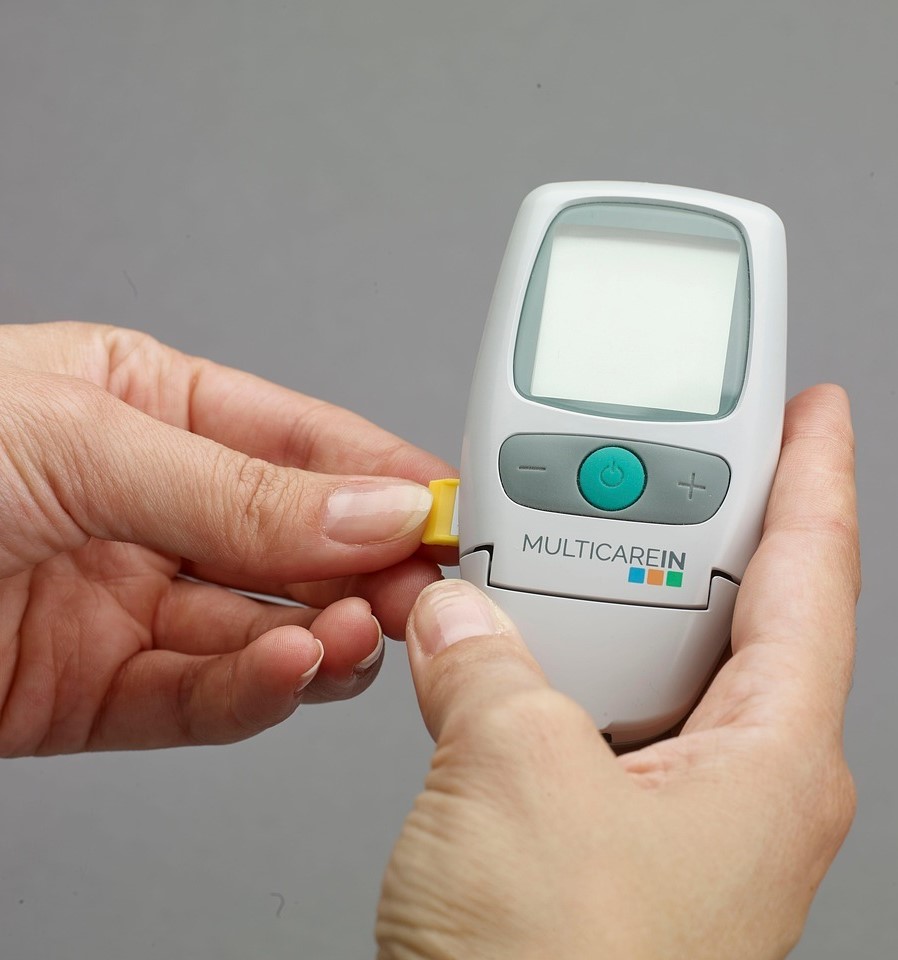
Affordable Medical Devices for Women’s Health in Low-Income Countries🩺
Learn how affordable medical devices for low-income countries can significantly improve women's health by enabling early diagnosis and accessible care.
Behind the paper: Effects of air quality and social stress on birthweight📄
Don't miss this blog where Drs Remigio and Clougherty explain how air pollution and social disadvantage interact to influence birth weight in New York City. Read their article published in Environmental Health!
♀️Q2: Did the authors find higher residential NO2 was associated with higher or lower birth weights?
Special issue: Gender-specific differences in radiation oncology treatment🔍
Read this blog to learn why addressing gender-specific differences in radiation oncology is vital for achieving equitable, effective cancer treatment outcomes. Discover more in this special issue by Strahlentherapie und Onkologie.
 Gender disparities and bias in cancer care and research🎗️
Learn how we can improve the experience of women with cancer, and why we need more research into the reasons for potential gender disparities to ensure we achieve SDG3.8 universal health coverage.
AI for breast cancer prevention
Published during Breast Cancer Awareness Month, this article offers a timely expert perspective on how AI is shaping the future of breast cancer prevention.

Podcast: Racial Inequity in Black Maternal Mental Health🤱🏽
Listen to this podcast where Dr Irene Aninye, Chief Science Officer, Society for Women's Health Research discusses the unique challenges faced by Black mothers trying to access mental health support and how we can drive meaningful change. This podcast was produced in collaboration with Biology of Sex Differences and Springer Nature's Black Employee Network, in honour of Black Mental Health Week UK 2025.
♀️Q3: What week is Black Mental Health Week UK: is it 22-28 September or 12-18 October?

In other news...
World Sexual Health Day 🌍
In celebration of World Sexual Health Day in September, keep up-to-date with current research and projects surrounding sexual and reproductive health.
Stem Cell Awareness Day Q&A 🔬
Ever wondered why stem cell research is so important across medical disciplines? Editorial Board members at Stem Cell Research & Therapy explain why in this blog!
Gender identity in Indigenous Communities: meet the speakers ⚧️
Watch this readily available webinar where Courtney Ryder and Ebenezer Durojaye discuss colonial legacies, LGBTIQ+ phobia and transphobia, and discrimination.
Webinar: Recent Advances in Alzheimer’s and Other Neurodegeneration Research 🗣️
Watch this webinar which presents present recent research, efforts, and initiatives put forward by top Springer Nature journals to publish and promote research on Alzheimer's and Neurodegeneration. The speakers cover disciplines such as genomics, genetics, biophysics, and more.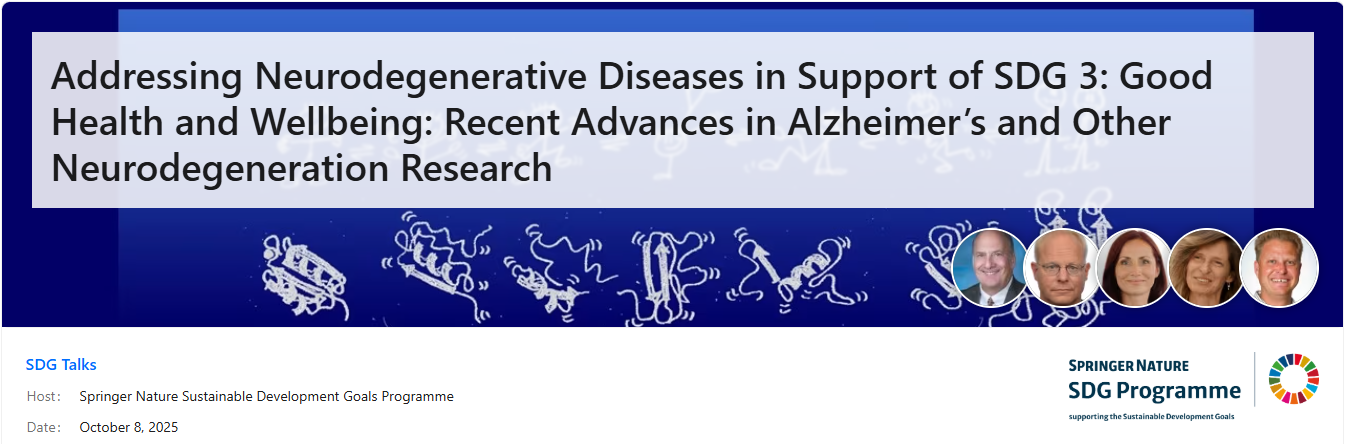
Get involved!
If you would like to be involved with our SDG 3 initiatives, contact me. Follow me, Alice Coe, on Research Communities to be notified of future SDG 3 newsletters.
With special thanks to those who contributed to this newsletter: Tamara May, Virginia Mercer, Dr April Patrick, Amy joint, Shital Bonde, Rita Moreira, Lorena Verduci, Esinu Abadjivor, Satvinder Kaur, Clelia Petracca, Dr Richard Remigio, Dr Jane E. Clougherty, Vicky Brewis, Mariangela Aloj, India Sapsed-Foster, Dr Irene Aninye, Tovah Aronin, Dr Ichiro Sekiya
Comment your 3 quiz answers to be featured in the December newsletter. The next newsletter will include a roundup of Springer Nature's SDG 3 activities in 2025!
Follow the Topic
-
International Breastfeeding Journal
This journal encompasses articles about breastfeeding, focusing on nursing, midwifery, paediatric, obstetric, family medicine, public health, immunology, physiology, sociology and many other topics.
-
Contraception and Reproductive Medicine
This journal is designed to promote the advancement of contraceptive technology and general reproductive medicine particularly in the areas of education, effectiveness, safety, research interest, improved or new technologies, non-contraceptive benefits, and long-term health.
-
Strahlentherapie und Onkologie
Strahlentherapie und Onkologie covers all aspects of oncology, with a focus on radiooncology, radiation biology and radiation physics.
-
Stem Cell Research & Therapy
The major forum for translational research into stem cell therapies. An international peer-reviewed journal, it publishes high-quality open access research articles with a special emphasis on basic, translational and clinical research into stem cell therapeutics and regenerative therapies.
-
Biology of Sex Differences
This journal is unlike any other scientific journal: articles focus on sex differences in all aspects of an individual or organism. Everything from molecules to behavior and from studies of cellular function to clinical research studies are reported in this journal.
-
Environmental Health
This journal publishes manuscripts on important aspects of environmental and occupational medicine and related studies in toxicology and epidemiology that elucidate the human health implications of exposures to environmental hazards.






📢 Introducing: # Mental Health
Mental Health is a Topic created to increase visibility and impact of research in this area and facilitate exchange amongst researchers.
Continue reading announcementRelated Collections
With Collections, you can get published faster and increase your visibility.
Implementing the International Code of Marketing of Breast-milk Substitutes: Legislation, monitoring, enforcement, advocacy
Breastfeeding is the most cost-effective intervention available to protect and promote health and well-being of children, women and populations worldwide. The evidence shows that breastfeeding save lives, reduces the burden of infectious and chronic diseases, supports optimal cognitive development, and contributes to maternal health by reducing the risk of breast and ovarian cancer, type 2 diabetes, and postpartum depression. The 2023 Lancet Breastfeeding Series has documented that scaling up breastfeeding to near universal levels could prevent over 800,000 child deaths annually and avert an estimated 20,000 maternal deaths from breast cancer each year. Beyond its individual health benefits, breastfeeding carries implications for planetary health. It is a sustainable, zero-waste, low-carb food system that requires no packing, no supply chains, and no manufacturing.
Yet despite the strong evidence, breastfeeding rates remain far below recommended levels in almost every region of the world. Among the main and well-documented barriers to optimal breastfeeding are the inappropriate marketing practices of the breastmilk substitutes (BMS). Aggressive, misleading, and pervasive commercial promotion of the commercial milk formula and related products, targeting mothers, families, and health workers through advertising, free samples, sponsorships, and increasingly through digital and social media, systematically undermines breastfeeding initiation, exclusivity, and duration.
The World Health Organization responded to this challenge more than four decades ago with the adoption of the International Code of Marketing of Breastmilk Substitutes (the Code) by the World Health Assembly (WHA) in 1981, subsequently strengthened through multiple WHA resolutions. The Code and resolutions establish a framework to restrict inappropriate BMS marketing, protect health systems from commercial influence, and ensure that parents and caregivers receive accurate, unbiased information about infant feeding. Most recently, WHA resolution reaffirmed the urgency of regulating digital marketing of BMS and commercial foods for infants and young children.
Despite this international regulatory framework, frequent and continuous violations of the Code and of local legislation have been extensively documented globally. The 2026 WHO/UNICEF/IBFAN status report confirms that while 148 countries have enacted at least some Code-related legal measures, only 37 countries are substantially aligned with the Code, and 46 still have no legal measures. More critically, even among countries with legislation in place, implementation remains insufficient. One of the most significant and persistent gaps is the absence of clear, functional mechanism for monitoring compliance with the Code and local legislation. Equally concerning is the widespread lack of meaningful sanctions for violations. While 95 countries define sanctions, enforcement remains weak, inconsistent, and in many cases absent, allowing the BMS industry to operate with impunity. These structural failures allow unethical marketing practices to persist, undermine breastfeeding practices, and contravene obligations under international human rights instruments, including the Convention of the Rights of the Child.
The International Breastfeeding Journal invites submissions for this special collection dedicated to advancing the science, and practice of Code implementation and enforcement globally. The central purpose of this special collection is to build a comprehensive knowledge base that documents real-world experiences of Code implementation: what has been attempted, what has worked, what has failed, and what lessons can be drawn for strengthening regulatory and enforcement framework worldwide.
This special collection seeks contributions from all global regions, with particular interest in experiences from low-and-middle income countries and from context that are frequently underrepresented in international literature. We are interested not only in success experiences but also in the challenges, barriers, and setbacks that countries, institutions, and advocates have faced in their efforts to implement and enforce the Code.
We welcome original research articles, systematic and narrative reviews, and countries case studies addressing, but not limited, to the following themes:
- National legislative processes: Experiences of the Code enactment, strengthening, and reform including political, legal, and industry-related barriers and facilitators.
- Monitoring and enforcement mechanisms: Design, implementation, effectiveness, and outcome of compliance monitoring systems.
- Sanctions and accountability: Experiences with the application of sanctions for Code violations, and their impact on industry behavior and breastfeeding outcomes.
- Conflicts of interest in health systems: Evidence of industry influence on health workers, professionals’ associations, and health facilities, and strategies for protecting against commercial interference.
- Civil society, community, and media roles in Code monitoring, reporting, and advocacy.
- Health system protections: Implementation and enforcement of bans on free supplies, gifts, and incentives to health workers, and industry sponsorship of professional and scientific meetings.
- Digital and social media marketing surveillance and regulation: Scope, strategies, and methodologies for detecting and documenting online and social media Code violations, and regulatory responses.
This Collection supports and amplifies research related to SDG 3, Good Health and Well-Being and SDG 2, End hunger, achieve food security and improved nutrition and promote sustainable agriculture.
All submissions in this Collection undergo the journal’s standard peer review process. Similarly, all manuscripts authored by a Guest Editor(s) will be handled by the Editor-in-Chief. As an open access publication, this journal levies an article processing fee. We recognize that many key stakeholders may not have access to such resources and are committed to supporting participation in this issue wherever resources are a barrier. For more information about what support may be available, please visit OA funding and support, or email OAfundingpolicy@springernature.com or the Editor-in-Chief.
Publishing Model: Open Access
Deadline: Apr 30, 2027
Immune re-programming and long-term effects mediated by mesenchymal stromal cell therapy
A significant body of evidence suggests that culture expanded mesenchymal stromal cells (MSCs) are short-lived, paracrine signalers that briefly calm inflammation following in vivo administration before disappearing. However, emerging preclinical and early clinical evidence suggests that MSCs may also induce longer-term immunological changes through mechanisms such as trained immunity and epigenetic imprinting of hematopoietic or precursor stem cells in the bone marrow.
This Collection welcomes original research or review articles describing novel findings and insights on immune re-programming mediated by MSCs and evidence of long-term effects in vivo.
All submissions in this Collection undergo the journal’s standard peer review process. Similarly, all manuscripts authored by a Guest Editor(s) will be handled by the Editor-in-Chief. As an open access publication, this journal levies an article processing fee (details here). We recognize that many key stakeholders may not have access to such resources and are committed to supporting participation in this issue wherever resources are a barrier. For more information about what support may be available, please visit OA funding and support, or email OAfundingpolicy@springernature.com or the Editor-in-Chief.
Publishing Model: Open Access
Deadline: Dec 02, 2026