Sexual dimorphism shapes the plasma metabolome of the endangered Iberian lynx
Published in Protocols & Methods and Anatomy & Physiology
The Iberian lynx (Lynx pardinus) is one of the most endangered felid species in the world and is an important target for conservation efforts. Understanding its physiology is essential to improve health monitoring and conservation strategies. However, the factors influencing its metabolism, particularly the differences between males and females, are still not fully understood.
Metabolomics is a useful tool to study these differences, as it allows us to analyze many small molecules in a biological sample at the same time. These molecules provide information about different metabolic processes, including lipid metabolism, energy production, and amino acid turnover.
This study aimed to investigate the effect of sex and age on the plasma metabolome of the Iberian lynx, and to identify the metabolic pathways responsible for the differences observed between males and females.
To achieve this objective, plasma samples from 37 Iberian lynxes were analyzed using untargeted metabolomics. The researchers studied the metabolic profiles of males and females and evaluated whether age could also explain the differences observed. They then investigated which metabolites and metabolic pathways contributed most to the separation between sexes.
First Objective: Are there differences in the metabolome of male and female Iberian lynxes?
First, we analyzed the plasma metabolomic profiles to determine whether males and females showed different metabolic patterns. The results were quite clear: sex was the main factor explaining the differences in the metabolome. Male and female Iberian lynxes showed distinct metabolic profiles, with differences involving several metabolic pathways rather than just a few individual metabolites.
These differences were mainly associated with lipid remodelling, taurine metabolism, fatty acid β-oxidation, amino acid turnover, and endocrine-related pathways (Figure 1).
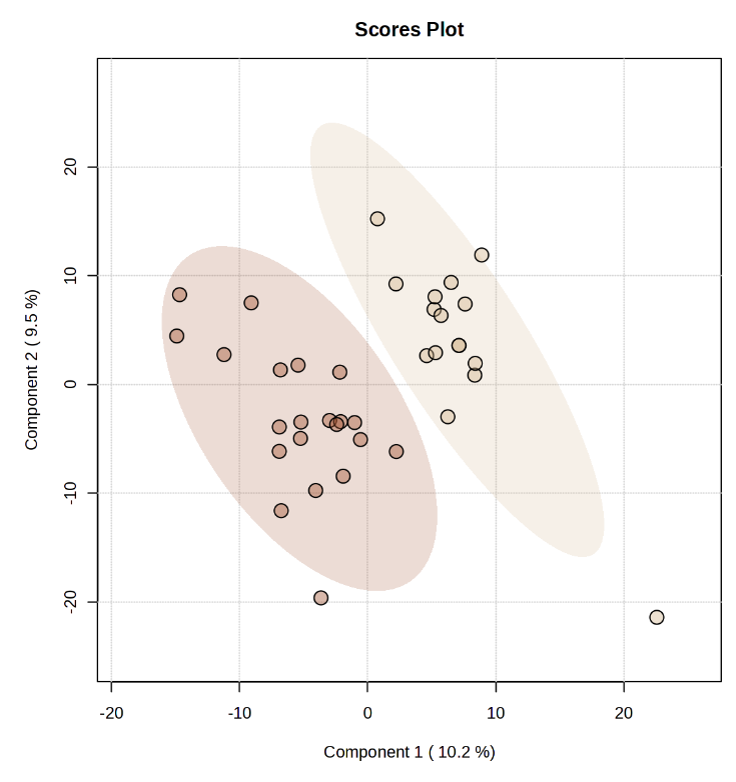
Figure 1: Metabolomic profiles showing the differences between male and female Iberian lynxes.
Therefore, we can answer the first question: yes, sex has a clear effect on the plasma metabolome of the Iberian lynx. But what about age? Could these differences simply be due to the fact that males and females have different age distributions?
This brings us to the next question: Does age influence these metabolic differences?
To investigate this, we examined the contribution of age to the observed metabolic profiles. Interestingly, age explained much less of the variation than sex and did not show a clear metabolic pattern. More importantly, the differences between males and females remained when the analysis was restricted to adult animals.
This means that the separation between sexes cannot simply be explained by differences in age. Instead, the results suggest that sex-related metabolic differences persist after sexual maturation.
Second Objective: Which metabolic pathways explain the differences between sexes?
Once we established that males and females have different metabolomic profiles, the next step was to understand which metabolic processes were involved.
The analysis highlighted several pathways, particularly those related to lipid remodelling, taurine metabolism, fatty acid β-oxidation, amino acid turnover, and endocrine-related processes. The researchers also identified a metabolic network connecting lipid and taurine-associated metabolism, suggesting that the differences between males and females involve interconnected metabolic processes.
In other words, the effect of sex is not limited to one specific metabolite. Instead, it appears to influence how several metabolic pathways are organized and connected.
These findings are particularly interesting because they show that sex should be considered when interpreting metabolic data in the Iberian lynx. Otherwise, differences between males and females could be mistaken for changes associated with health or other physiological conditions.
Overall, this study shows that sex is the main factor associated with variation in the plasma metabolome of the Iberian lynx, while age has a more limited effect. Although further studies are needed to understand the biological implications of these differences, the results provide useful information about the physiology of this endangered species and may help improve the interpretation of metabolic data in future health and conservation studies.
The full study can be found in Communications Biology (2026), DOI: 10.1038/s42003-026-11107-w.