Soluble urokinase plasminogen activator receptor (suPAR) is a potential biomarker of stage III-IV, grade C periodontitis through the impact of post-radiotherapy on head and neck cancer patients
Published in Chemistry


Abstract
Background The urokinase-type plasminogen activator receptor (uPAR) plays an essential function in leukocytes and
endothelial homeostasis and, therefore, in the development of chronic periodontitis.
Methods The study enrolled 150 participants, 50 chronic periodontitis with head and neck cancer post radiotherapy
(CP+HNC post-RT) patients, 50 chronic periodontitis (CP) without HNC patients, and 50 healthy controls. Clinical
Attachment Loss (CAL), Probing Pocket Depth (PPD), Plaque Index (PI), and Gingival Bleeding Index (GBI) were
recorded. An enzyme-linked immunosorbent assay (ELISA) was constructed to quantify serum (suPAR) levels.
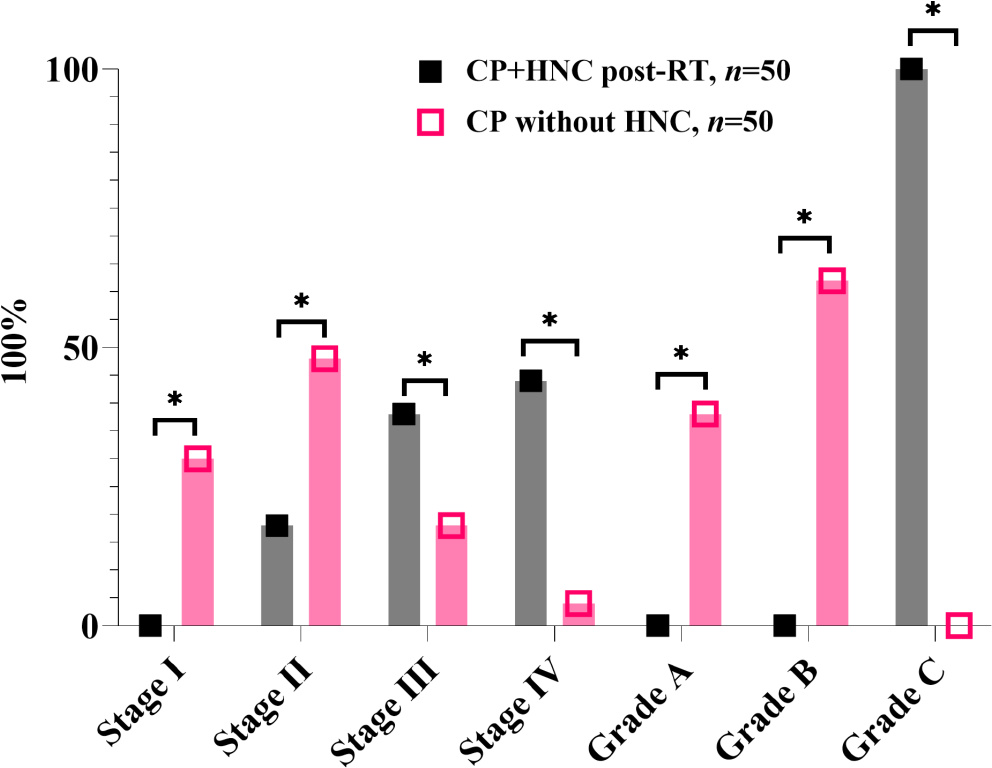
Results Stage and grade of periodontitis were stage III-IV, grade C in patients (CP+HNC post-RT), stage I-III, grade
A/B in patients (CP without HNC), and absent in (healthy). Chronic periodontitis with HNC post-RT patients presented
a significantly higher proportion of suPAR levels (506.7 pg/ml) compared to chronic periodontitis without HNC and
healthy controls (423.08 pg/ml and 255.9 pg/ml), respectively. A significant positive correlation was found between
serum suPAR levels and CAL, PPD, PI, and GBI in the periodontal disease groups. ROC results of suPAR (AUC=0.976
for CP+HNC post-RT, AUC=0.872 for CP without HNC). Hyposalivation appeared in patients (CP+HNC post-RT; 0.15
[0.11–0.23] ml/min, P=0.001) and (CP without HNC; 0.30 [0.25–0.41] ml/min, P=0.001), compared to healthy controls;
0.35 [0.28–0.54] ml/min, P=0.001).
Conclusion The study showed a significant elevation in serum suPAR levels in CP+HNC post-RT patients compared
to the CP without HNC and control groups.
Clinical trial registration The study was registered retrospectively; clinicaltrials.gov identifier: NCT06529588. Date of
registration: July 31, 2024 https://clinicaltrials.gov/study/NCT06529588.
Keywords Chronic periodontitis, Head and neck cancer, Radiotherapy, suPAR
Follow the Topic
-
BMC Oral Health
This is an open access, peer-reviewed journal that considers articles on all aspects of the prevention, diagnosis and management of disorders of the mouth, teeth and gums, as well as related molecular genetics, pathophysiology, and epidemiology.

Related Collections
With Collections, you can get published faster and increase your visibility.
Pregnancy and oral health
The relationship between pregnancy and oral health is an area of growing interest within dental and medical research. Pregnancy induces significant hormonal changes that can affect oral health, leading to conditions such as gingivitis and periodontitis. Additionally, pregnant individuals may face unique challenges in maintaining oral hygiene due to physical, emotional, and social factors. Understanding these interactions is crucial for developing targeted interventions that promote oral health during pregnancy, ultimately benefiting both the mother and the developing fetus.
Research has shown that poor oral health can lead to systemic complications, including adverse pregnancy outcomes such as preterm birth and low birth weight. Recent advances in this field include the development of tailored dental care guidelines and evidence-based interventions aimed at improving oral hygiene practices among pregnant individuals. Continued research can help bridge gaps in knowledge and practice, leading to better health outcomes for mothers and infants alike.
Ongoing exploration of the connections between oral health and pregnancy holds the promise of enhancing preventive strategies and interventions. By integrating dental care into prenatal healthcare, future studies may reveal innovative approaches to managing oral health concerns, ultimately contributing to healthier pregnancies and improved health outcomes.
We invite submissions on a range of topics that include, but are not limited to:
- Interventions for improving oral hygiene during pregnancy
- Impact of gingivitis on pregnancy outcomes
- Oral-systemic complications during pregnancy
- Importance of dental care in prenatal health
This Collection supports and amplifies research related to SDG 3: Good Health and Well-being.
All manuscripts submitted to this journal, including those submitted to collections and special issues, are assessed in line with our editorial policies and the journal’s peer review process. Reviewers and editors are required to declare competing interests and can be excluded from the peer review process if a competing interest exists.
Publishing Model: Open Access
Deadline: Jan 05, 2027
Advanced dental implants
Dental implantology is undergoing a profound transformation driven by advances in biomaterials science, digital technologies, regenerative approaches, and personalized treatment strategies. Dental implants are a critical component of modern dentistry, enabling the replacement of missing teeth and improving the quality of life for individuals with tooth loss. Recent innovations in materials science, surgical techniques, and prosthetic designs have enhanced the success rates and longevity of dental implants, making them a viable option for a broader range of patients.
The significance of research in modern implantology is underscored by the growing need for effective solutions to combat tooth loss, driven by factors such as aging populations, periodontal diseases, and lifestyle factors. Advances in biocompatible dental materials and implant designs have led to improved osseointegration and reduced complications. Moreover, the integration of digital technologies, such as 3D printing and guided surgery, has optimized the planning and execution of implant placement, ensuring more predictable outcomes and more personalized care.
We invite submissions on a range of topics, including, but not limited to:
- Innovations in biocompatible dental materials
- State-of-the-art research on osseointegration
- Digital technologies in implant dentistry
- Customization of dental prostheses
- Advances in implant surface modifications
- Clinical outcomes and long-term implant performance
All manuscripts submitted to this journal, including those submitted to collections and special issues, are assessed in line with our editorial policies and the journal’s peer review process. Reviewers and editors are required to declare competing interests and can be excluded from the peer review process if a competing interest exists.
Publishing Model: Open Access
Deadline: Feb 22, 2027

Please sign in or register for FREE
If you are a registered user on Research Communities by Springer Nature, please sign in