Farmers’ questions changed my research agenda: the case of knowledge sources in regenerative agriculture
Published in Social Sciences, Sustainability, and Agricultural & Food Science
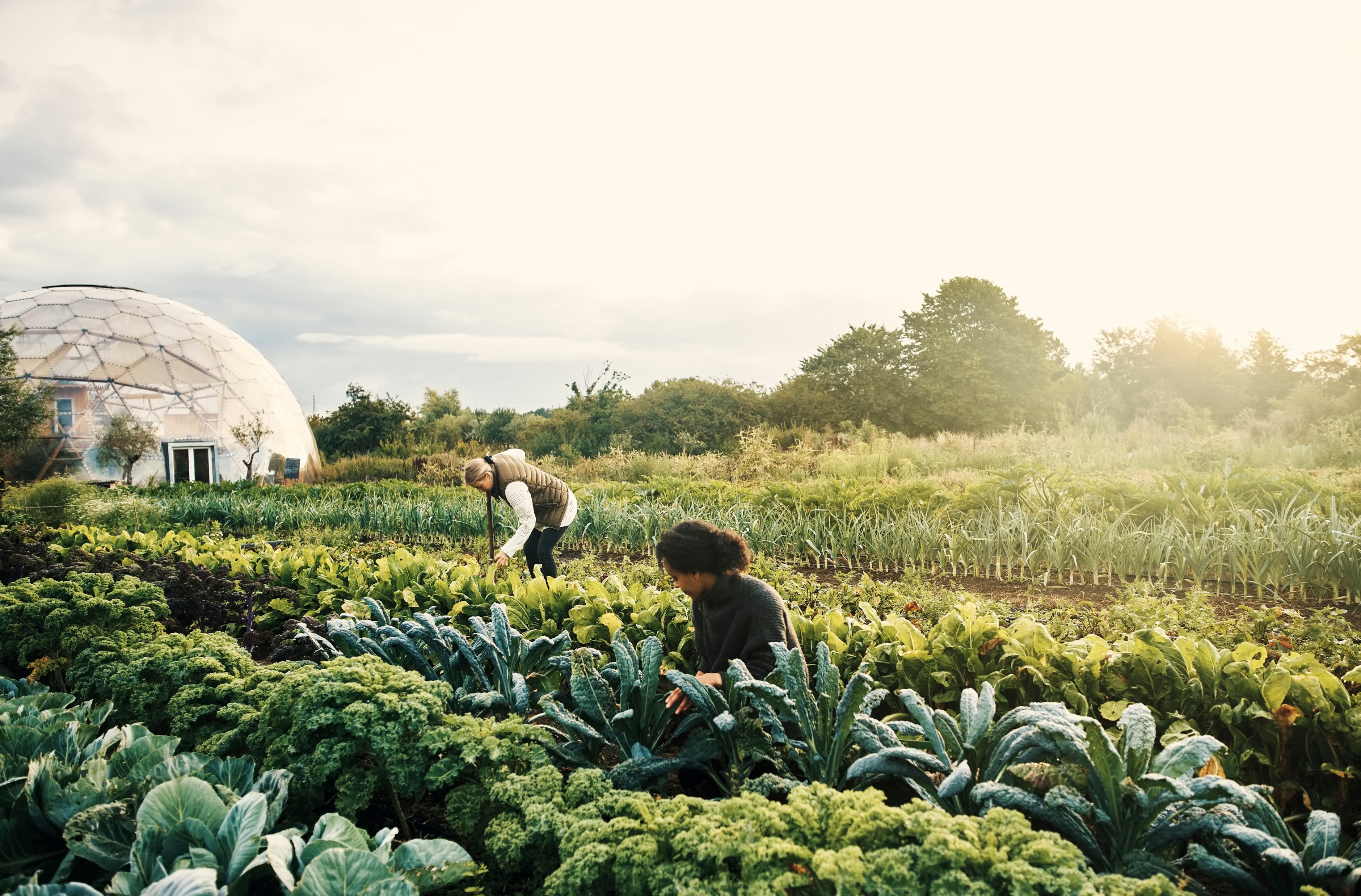

For years, I found myself in debates about regenerative agriculture. Depending on whom I spoke to, regenerative agriculture was either a grassroots movement led by innovative farmers or a concept increasingly appropriated by industry. Some saw it as a pathway towards sustainable food systems; others dismissed it as little more than greenwashing. What struck me most was that everyone seemed to have an opinion, but nobody had a clear overview of who was actually involved in regenerative agriculture. To address this gap, we previously mapped the actors that promote regenerative agriculture in Europe and identified farmers who explicitly described themselves as regenerative1. We then aimed to interview these self-identified regenerative farmers across Europe to better understand what regenerative agriculture meant in practice.
Among the many questions we asked, one stood out: what can science do to support your transition?
I expected a wide range of answers. Instead, many farmers highlighted a remarkably similar challenge. They were motivated to experiment with regenerative practices, but often struggled to find trustworthy and practically relevant knowledge. Who could they learn from? Which sources could they trust? And how could knowledge about regenerative agriculture become more accessible? Those conversations fundamentally shaped my research agenda. Rather than starting from academic debates, I decided to follow a question raised repeatedly by farmers themselves. If access to knowledge was a major barrier to transition, then understanding how regenerative farmers acquire and exchange knowledge became a research priority. The study behind this “behind the paper” post was our attempt to support that question.
The challenge of research fatigue among regenerative farmers
We began with a straightforward plan. We would ask self-identified regenerative farmers which practices they used and where they obtained information about those practices. Working with a multilingual team of researchers, we contacted these self-identified regenerative farmers across several European countries. Very quickly, however, the interviews revealed something unexpected. Before answering our questions, many farmers had a question of their own: What will happen to the results?
Again and again, farmers described being approached by students, researchers, NGOs, consultants and companies asking the same questions. They wanted farm data, interviews about barriers and motivations, or insights into regenerative practices. Most farmers were willing to contribute. What frustrated them was that they rarely heard back. One farmer summarized it bluntly: “Will you take my knowledge, turn it into a dataset, and then I never see the results or get anything back?”
The concern was not about participating in research. It was about the extractive nature of research interactions. Farmers felt that they continuously provided information while receiving little in return. That feedback forced us to reflect on our own role as researchers. If this study originated from farmers' questions, then the results should also be returned to farmers in a form that was useful to them.
Making science useful beyond academia
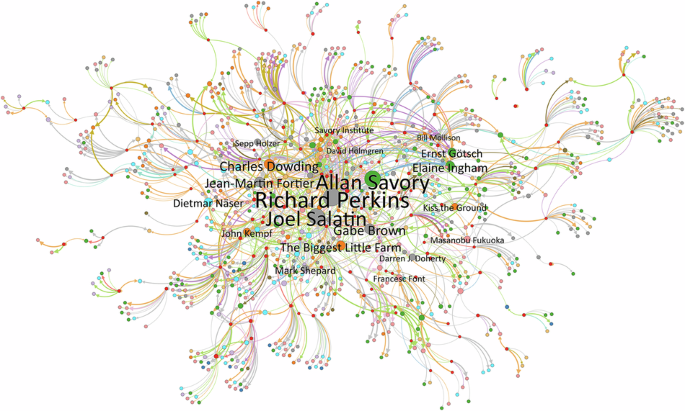
Throughout the project, we kept asking ourselves how the results could be useful for both academics and farmers. One challenge was how to present the findings. From an academic perspective, tables would have been sufficient. They could summarize which actors were associated with which practices, in which countries, and to what knowledge sources. Farmers, however, wanted something different. They wanted a practical overview that could help them quickly identify potential sources of knowledge. This led us to network visualizations.
As soon as we started experimenting with network approaches, both researchers and farmers immediately understood their value. At a glance, it became possible to see which actors were most frequently associated with particular regenerative practices and where they were located within broader knowledge networks. The visualizations transformed a complex dataset into something intuitive and actionable. However, they also created a new challenge. In many network studies, participants and organizations are anonymized. For the farmers involved in our study, anonymization would have removed much of the practical value. Their message was clear: if the names disappear, the usefulness disappears.
The farmers had provided informed consent for their own names and responses to be used. However, the organizations and knowledge sources appearing in the networks had not. Following journal guidelines, we therefore contacted these actors and gave them the opportunity to object before publication. It was a nerve-racking stage of the process. After nearly two years of work and a peer-review process, there was the sudden possibility that key elements of the analysis would need to be revised in this final stage. Fortunately, the response was overwhelmingly positive. Those who replied recognized the value of the study and supported publication.
Looking back, this experience reinforced an important lesson. Research that aims to be useful beyond academia often requires additional effort, dialogue, responsibility, and funding structures. Yet it can also generate outputs that people can immediately apply in practice. The project began with farmers asking where they could find knowledge about regenerative agriculture. It seems fitting that the final result provides an answer - not only for researchers interested in agricultural transitions, but also for the farmers who inspired the work in the first place.
The regenerative agriculture giants missing from regenerative farmers' networks
Our previous mapping study1 revealed a large and rapidly growing ecosystem of actors promoting regenerative agriculture, including major food processors, retailers, agribusinesses, and consultancy organizations. Many of these actors have become highly visible in public discussions and are often at the centre of debates about the commercialization of regenerative agriculture and concerns over greenwashing. Given their extensive advisory networks and relationships with thousands - sometimes hundreds of thousands - of farmers, we expected many of these organizations to emerge as important knowledge sources in our interviews.
The results surprised us.
Many of the large corporations and advisory organizations that featured prominently in our 2025 mapping exercise1 were rarely mentioned by the self-identified regenerative farmers in this study. Instead, farmers more frequently referred to peer networks, trusted advisors, and a smaller group of organizations actively engaged in knowledge exchange. This finding raises an intriguing question: why is there a mismatch between the corporate actors that are most visible in the regenerative agriculture landscape and those that regenerative farmers identify as influential sources of knowledge?
Several explanations are possible. Some organizations may be promoting regenerative agriculture primarily as a strategic or branding concept without yet establishing themselves as trusted knowledge providers among practitioners. Alternatively, their influence may simply not have reached many of the farmers who currently self-identify as regenerative. Another possibility is that the discrepancy reflects the complexity of agricultural knowledge networks and the boundaries of our study. For example, farmers participating in corporate regenerative agriculture programmes may not necessarily describe themselves as "regenerative farmers" and therefore would not have been captured by our sampling approach, even though their practices and objectives may align closely with regenerative principles.
Regardless of the explanation, the findings highlight the importance of asking farmers directly whom they trust and learn from, rather than assuming which actors are driving agricultural transitions. Therefore, visibility in the regenerative agriculture debate does not necessarily translate into influence within farmers' day-to-day learning networks.
References
- Schreefel, L., Steenman, E. & van Zanten, H. Beyond the Buzz: analysing actors promoting regenerative agriculture in Europe. (2025).

Follow the Topic
-
Communications Earth & Environment
An open access journal from Nature Portfolio that publishes high-quality research, reviews and commentary in the Earth, environmental and planetary sciences.

What are SDG Topics?
An introduction to Sustainable Development Goals (SDGs) Topics and their role in highlighting sustainable development research.
Continue reading announcementRelated Collections
With Collections, you can get published faster and increase your visibility.
Ecological resistance and resilience under global change
Publishing Model: Open Access
Deadline: Apr 07, 2027
Hazards in Mountain Regions
Publishing Model: Open Access
Deadline: Nov 02, 2026