Reading oral cancer’s molecular warning signs without a biopsy
Published in Cancer and Protocols & Methods


Oral cancer is often seen too late.
By the time a lesion looks clinically suspicious, a long chain of molecular events may already have occurred. Cells may have changed their metabolism. The local immune environment may have shifted. Oxidative stress may have increased. The epithelial surface may already be reorganizing itself toward malignancy. Yet in routine practice, much of this early biology remains invisible until the disease becomes advanced enough to demand a biopsy.
Biopsy is indispensable. It remains the basis of definitive diagnosis. But it is also invasive, uncomfortable, and difficult to repeat regularly in large high-risk populations. This creates a practical problem: how do we monitor an exposed, accessible tissue like the oral mucosa without repeatedly cutting it?
Our study began from that tension.
The oral cavity is not a passive surface. It is a dynamic biological interface. Saliva continuously carries small molecules, lipids, proteins, inflammatory mediators, microbial products, and host-derived signals. The mucosal surface constantly sheds cells. A lesion-surface swab can collect exfoliated epithelial material from the local disease environment. Together, saliva and mucosal swabs offer a clinically attractive option: a way to repeatedly sample oral biology gently and with a low procedural burden.
We asked whether these non-invasive samples could help detect molecular changes across the oral cancer continuum.
The focus was oral squamous cell carcinoma, or OSCC, and oral submucous fibrosis, or OSMF. OSMF is a chronic oral potentially malignant disorder strongly linked to areca nut and related chewing habits. It can restrict mouth opening, impair oral function, and increase the risk of malignant transformation. In high-burden regions, especially in South Asia, identifying molecular changes during the premalignant-to-malignant transition is not only scientifically important but also a public health need. GLOBOCAN 2022 estimated 389,846 new lip and oral cavity cancer cases worldwide, and the India fact sheet estimated 143,759 new cases in India in 2022.
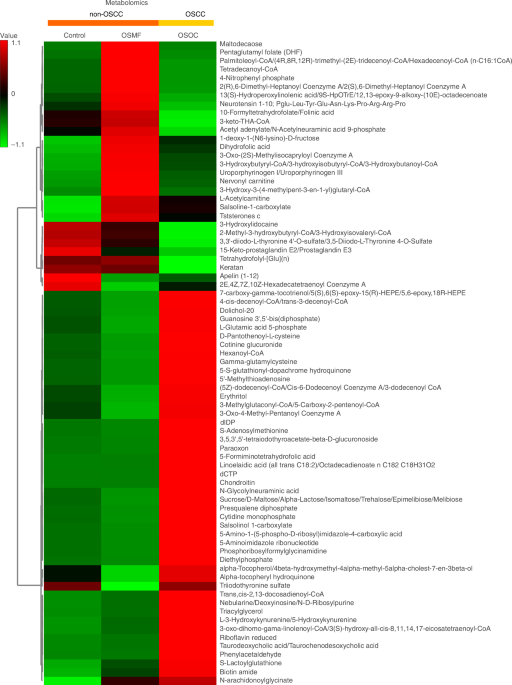
We designed the study around three clinical groups: healthy controls, patients with OSMF, and patients with OSCC. After quality control, the final analytical cohort included 27 healthy controls, 20 OSMF patients, and 15 OSCC patients. Saliva was used for metabolomics, and mucosal lesion swabs for proteomics. In simple terms, we asked two linked questions: what small-molecule changes appear in saliva, and what protein-level changes can be captured from the lesion surface?
Liquid chromatography-mass spectrometry allowed us to read both layers. For saliva, we separated polar and non-polar metabolites to capture a broader biochemical landscape. For swabs, we profiled proteins from exfoliated mucosal epithelial cells. The study then compared molecular patterns across four clinically relevant contrasts: OSCC versus non-OSCC, OSCC versus OSMF, OSMF versus healthy controls, and OSCC versus healthy controls.
The strongest insight was that oral cancer progression did not appear as a single-marker event. It appeared as a coordinated molecular drift.
In the salivary metabolome, several discriminatory molecules pointed toward lipid remodeling, altered linoleic acid metabolism, glutathione-linked redox imbalance, and fatty acid β-oxidation. Linoelaidic acid or octadecadienoate, gamma-glutamylcysteine, and 3-hydroxybutyryl-CoA emerged among the major signals. These are not isolated biochemical curiosities. Together, they suggest that the transition toward OSCC may involve a reprogrammed oral environment, including altered membrane and lipid signaling, increased oxidative stress, and altered energy metabolism.
The proteomic findings added another layer. From lesion-surface swabs, we observed disease-associated protein signatures involving histone variants, cytoskeletal keratins, and BPI-fold-containing proteins. These categories are biologically informative. Histone changes point toward chromatin-level remodeling. Keratin changes point toward epithelial restructuring. BPI-fold and immune-associated proteins suggest local host-defense and inflammatory changes. The swab, therefore, did not just collect surface debris; it captured a molecular imprint of the lesion microenvironment.
This is where multi-omics became useful. Metabolomics describes the biochemical state. Proteomics describes the cellular and structural state of a cell. When read together, they suggested that oral malignant transformation is not merely a visible change in tissue architecture. It is a layered process involving metabolism, redox biology, epithelial identity, chromatin organization, and immune interaction.
We also evaluated biomarker panels. The aim was to identify candidate signatures that could move toward targeted validation. The OSMF-versus-OSCC comparison was especially important. It asks a harder and more clinically meaningful question than “cancer versus healthy”: can we identify signals associated with malignant progression within an oral potentially malignant disorder? The work also exposed practical challenges. Saliva is easy to collect, but it is biologically variable. Diet, oral hygiene, circadian timing, contamination, hydration, and local inflammation can affect the sample. We therefore used morning unstimulated saliva collection and excluded samples with visible contamination or insufficient volume. Swab proteomics posed a different challenge: protein yields from mucosal swabs can be low. This required careful sample handling and sensitive mass spectrometry, but it also underscores the need for larger-scale individual-level validation.
This is the point that matters most for translation. A saliva-and-swab strategy should not be framed as a replacement for a biopsy. It is better understood as a potential triage and monitoring tool. It could help identify high-risk individuals who need closer examination. It could support longitudinal monitoring of OSMF patients. It could complement clinical examination, imaging, cytology, and histopathology. In resource-constrained or high-incidence settings, this kind of repeatable sampling could be particularly useful.
The study was also a collaboration across disciplines. Clinical examination and recruitment required expertise in oral medicine and dentistry. Sample processing required molecular biology and analytical chemistry. Mass spectrometry requires metabolomics and proteomics workflows. Interpretation required cancer biology, bioinformatics, and statistical modeling. The final study was not only about detecting biomarkers; it was about building a bridge between clinic-facing oral cancer screening and high-resolution molecular profiling.
The next phase is clear. These signatures need testing in larger, independent, and more diverse cohorts. Candidate metabolites and proteins need targeted quantitative validation. Stage-specific performance must be assessed, especially for early OSCC. Models must account for sex, age, tobacco exposure, areca nut use, oral habits, and lesion characteristics. Eventually, the most robust markers should be converted into simpler assays suitable for clinical workflows rather than remaining limited to discovery-stage mass spectrometry.
For us, the central message is that the oral cavity may be more readable than we have assumed. It is visible, accessible, and molecularly active. By listening to saliva and the mucosal surface, we may be able to detect disease biology earlier, monitor risk more gently, and design oral cancer screening strategies that fit the populations that need them most.

Follow the Topic
-
British Journal of Cancer
This journal is devoted to publishing cutting edge discovery, translational and clinical cancer research across the broad spectrum of oncology.



Please sign in or register for FREE
If you are a registered user on Research Communities by Springer Nature, please sign in