Stroy behind my research

Time-series forecasting for political violence targeting women
Like

Share this post

Choose a social network to share with, or copy the URL to share elsewhere

This is a representation of how your post may appear on social media. The actual post will vary between social networks

Explore the Research

SpringerLink
SpringerLink SpringerLink

Time-series forecasting for political violence targeting women - International Journal of Data Science and Analytics

Political violence, including targeted attacks on women, presents significant threats to global stability and human security, yet remains an underexplored domain in time-series forecasting research. This research studies the applicability of state-of-the-art time-series forecasting methods for predicting Political Violence Targeting Women (PVTW) events and fatalities. Leveraging deep learning advancements, we evaluate state-of-the-art methods, including transformer-based architectures, traditional multi-layer perceptron models, and linear approaches such as DLinear, in the context of PVTW data. The analysis highlights the unique temporal patterns of low-intensity and high-intensity events, demonstrating that while transformer-based models outperform linear models overall, simpler architectures, such as the vanilla transformer, often match or exceed the performance of more advanced models like AutoFormer. Building on these insights, we propose a magnitude-decomposition Transformer designed to incorporate domain-specific characteristics of conflict dynamics. The proposed model effectively captures both the smaller, regular patterns and the rarer, high-intensity events in PVTW data. The findings underscore the importance of adapting deep learning architectures to domain-specific challenges and provide critical insights for designing targeted interventions and policies to address societal challenges.

As International Women’s Day approaches, and as the world continues to face intense conflicts and wars, I feel compelled to share the story behind this research and why I began this work.

I was originally an educator and a technical practitioner who understood the importance of data. Yet, for a long time, I paid little attention to datasets related to political violence. Like many people working in technology, I was focused on methods, models, and systems, often disconnected from the realities that data represents.

Everything changed when my country, Myanmar, descended into conflict. As the violence escalated, I witnessed devastating news: thousands of people losing their lives, communities being torn apart, and many women becoming direct targets of violence. These events were no longer distant statistics. They were part of my daily life. 

That experience made me begin asking questions.

What could the data reveal about these patterns of violence?

Could we observe signals within the data that might help us better understand or even anticipate such events?

This curiosity became the starting point of my research.

  • Political violence, including targeted attacks on women, presents significant threats to global stability and human security, yet remains an underexplored domain in time-series forecasting research.
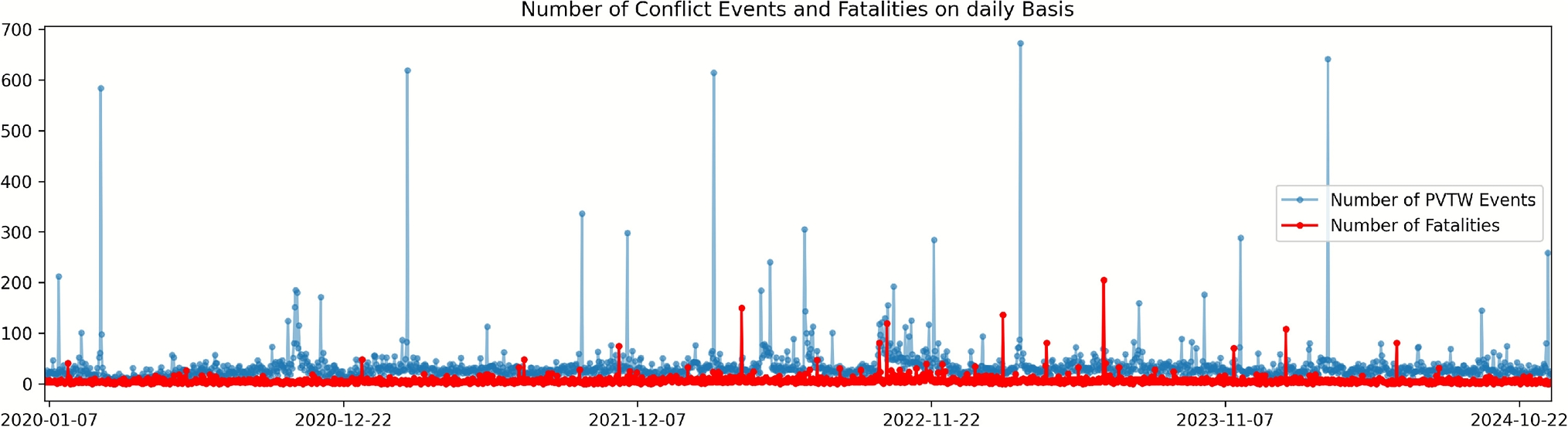
  • One of the most striking observations in this work is the coexistence of low-intensity and high-intensity violence events. Many conflict datasets are dominated by smaller, more regular incidents, while the most devastating events occur rarely but carry immense human impact. 
  • While the model proposed in this research is designed specifically for forecasting Political Violence Targeting Women (PVTW), studying these patterns helps me better understand how violence unfolds over time and how targeted violence against women manifests within broader conflict dynamics.

On this International Women’s Day, I hope more of us in data and technology choose to work with real-world data that helps us better understand and address the challenges women face in our societies.
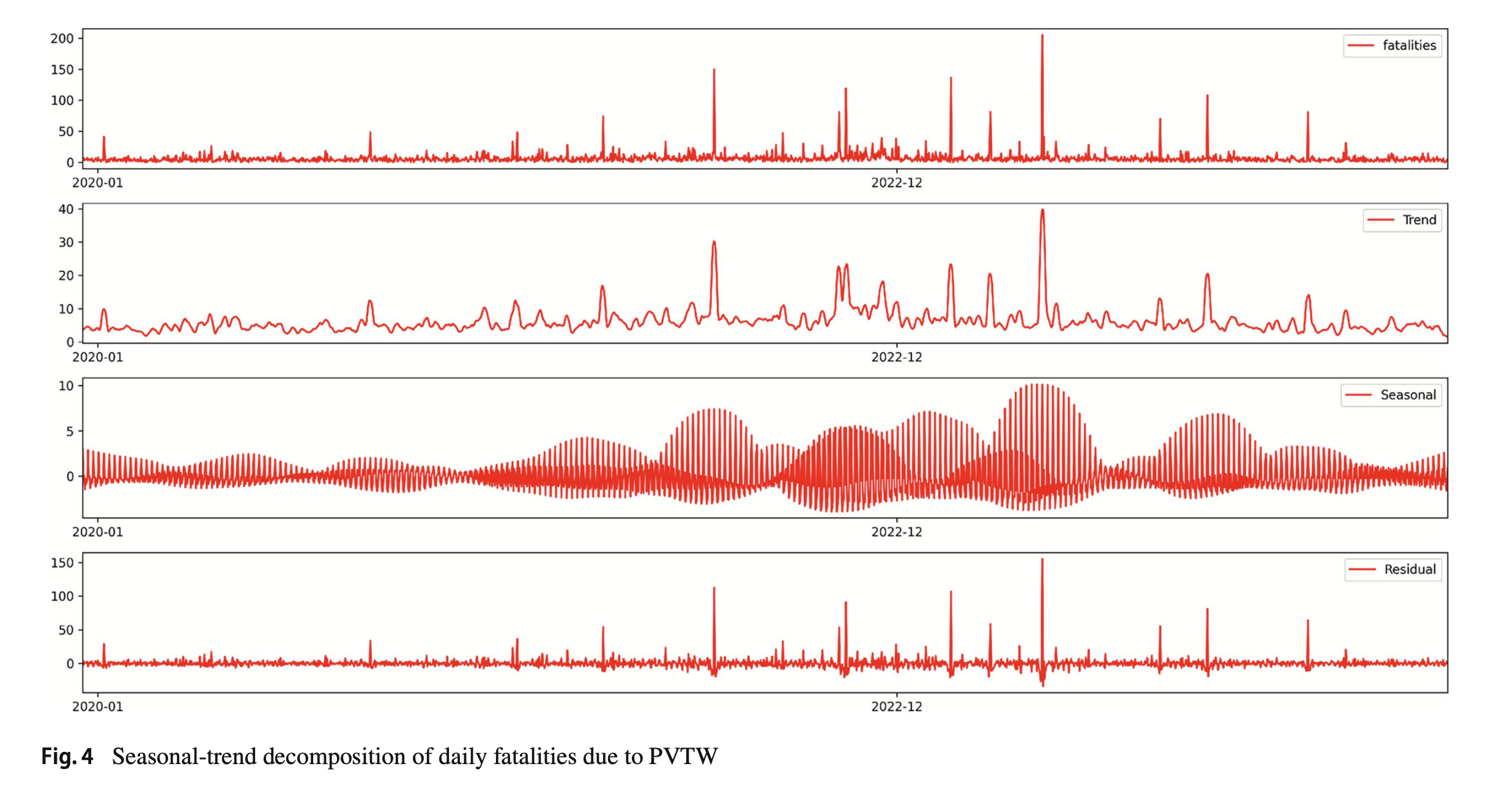
Season-Trend Decomposition of daily fatalities due to Political Violence Targeting Women

Please sign in or register for FREE

If you are a registered user on Research Communities by Springer Nature, please sign in

Follow the Topic

Data Science
Mathematics and Computing > Computer Science > Artificial Intelligence > Data Science
Political Science
Humanities and Social Sciences > Politics and International Studies > Political Science

Related Collections

With Collections, you can get published faster and increase your visibility.

Special Issue on Data Science and AI in Finance

Data Science and AI play increasingly critical roles in transforming economic and financial businesses, services and technologies and driving the surge of new-generation financial technologies (FinTech for short). This special issue at the International Journal of Data Science and Analytics (JDSA) aims for publishing up-to-date high-quality research and innovation results in all areas related to AI and data science in economics and finance and in driving the new-generation economy, society, and government services.

Publishing Model: Hybrid

Deadline: Ongoing
CCF BigData conference Journal Track on ‘Data Science in China’

Our full call for papers page can be found here: https://www.springer.com/journal/41060/updates

Publishing Model: Hybrid

Deadline: Ongoing