T3 Talk2Text - A model for near real-time voice transcription in virtual group meetings
Published in Electrical & Electronic Engineering, Computational Sciences, and Education


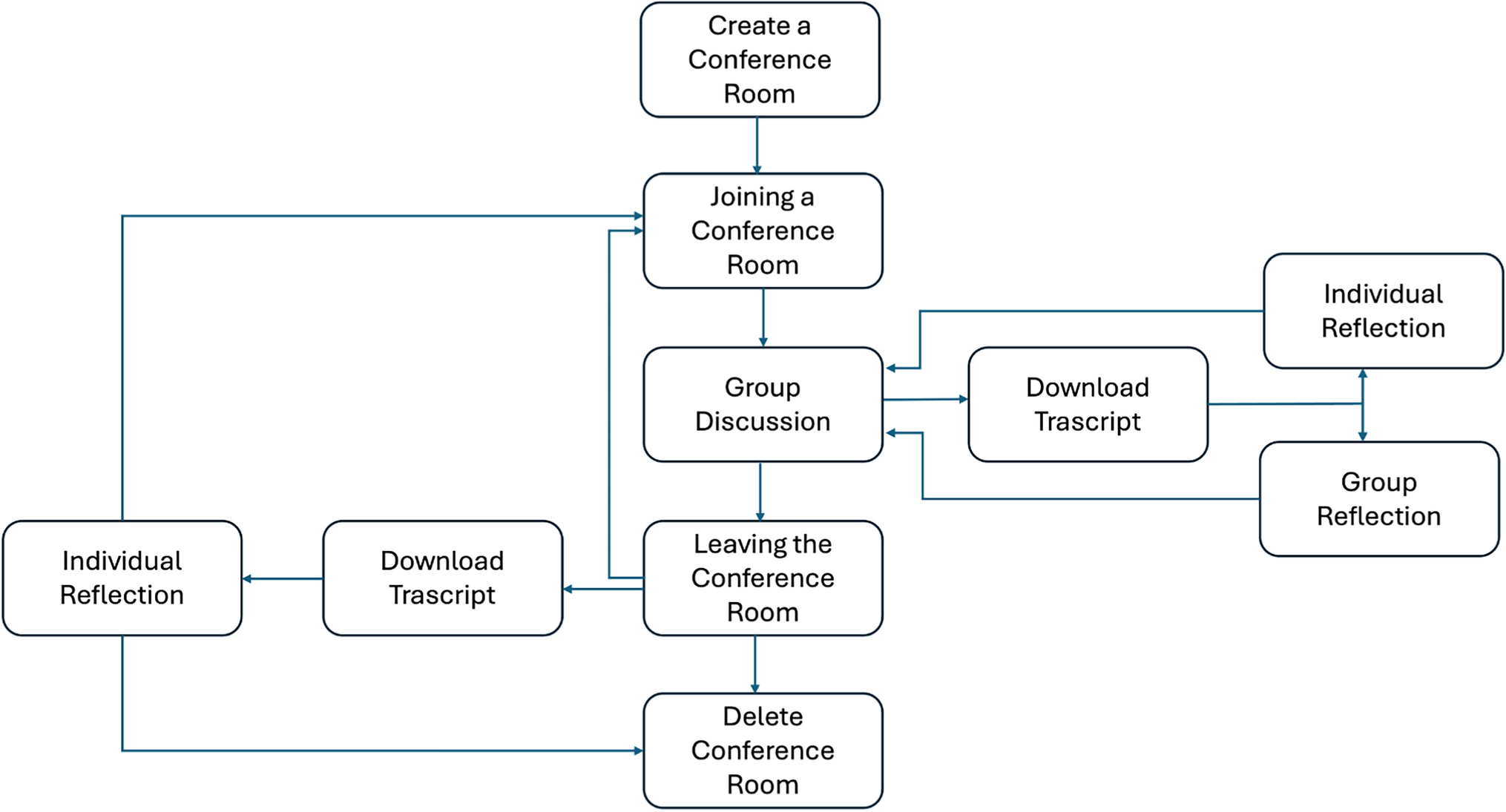

The Challenge: Capturing Group Discussions for Reflection
Group projects are a cornerstone of modern education, but remote collaboration introduces challenges like unequal participation, miscommunication, and the difficulty of recalling past discussions. While video conferencing tools facilitate real-time interaction, they lack built-in support for documenting conversations. Manual note-taking is cumbersome, and post-meeting transcriptions from recordings are time-consuming.
We asked: How can we provide students and educators with an effortless way to capture and reflect on group discussions in near real-time?
Introducing T3 Talk2Text

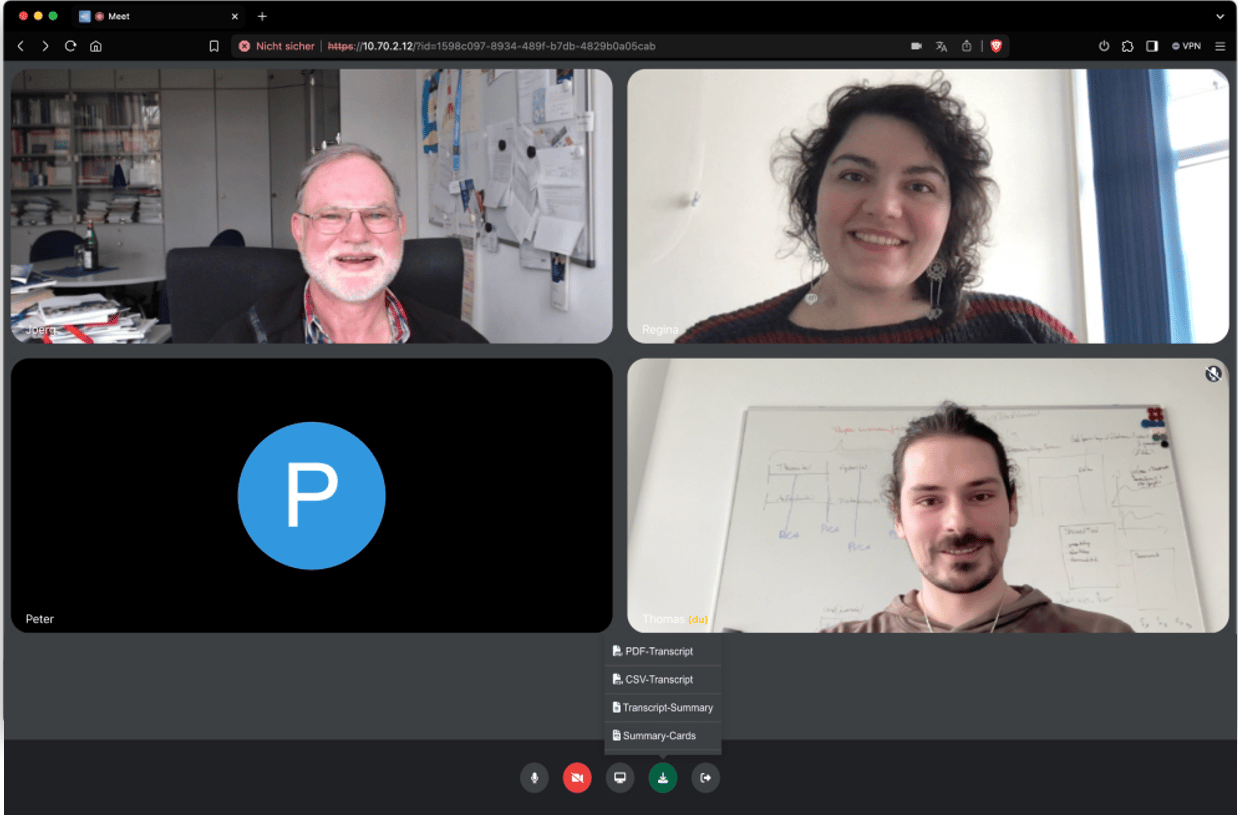
Our solution, T3 Talk2Text, is an open-source web application that integrates:
- WebRTC-based video conferencing (peer-to-peer, no expensive licenses)
- Automatic Speech Recognition (ASR) and Real-time transcription via OpenAI’s Whisper model
- On-demand summaries (using Llama3 for AI-generated insights)
Unlike commercial tools (e.g., Microsoft Teams), T3 prioritizes privacy (self-hosted), multilingual support, and accessibility (works on any device with a browser).
Key Innovations
-
Voice Activity Detection (VAD) Pipeline
-
Filters background noise and segments speech for accurate ASR input.
-
Achieves 8.04% Word Error Rate (WER) in German—comparable to human transcribers.
-
-
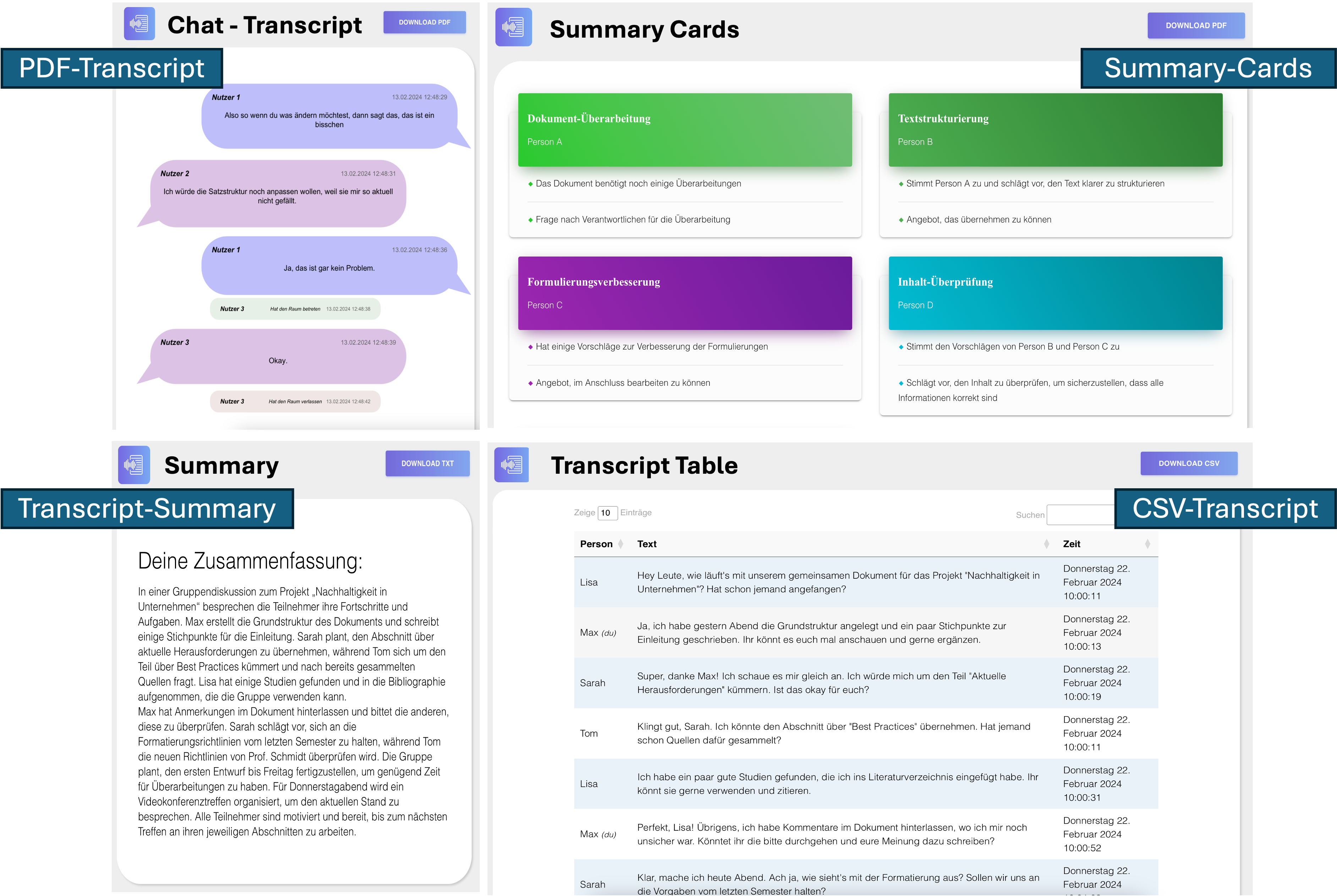
Dynamic Transcript Formats
Users can download transcripts as:-
PDFs (messenger-style, with speaker alignment)
-
CSVs (structured for analysis)
-
AI summaries (condensed key points)
-
-
Scalable Architecture
-
Lightweight SQLite storage for transcripts.
-
Peer-to-peer media streaming reduces server load.
-
Behind the Scenes: Overcoming Technical Hurdles
Challenge 1: Real-Time Processing
WebRTC’s low-latency streams were ideal for video chat but required careful buffering to feed Whisper ASR without delays. Our VAD component ensured only speech segments were processed, optimizing resource use.
Challenge 2: Multilingual Support
Whisper’s multilingual capabilities let T3 adapt to diverse classrooms, though future work will explore fine-tuning for non-native accents.
Challenge 3: Privacy-First Design
All data stays on institutional servers, and temporary audio files are deleted post-transcription, which is critical for GDPR compliance.
Impact and Future Directions
Initial tests with student groups showed T3 seamlessly integrated into discussions without disrupting collaboration. Educators highlighted its potential for:
-
Identifying participation gaps (via speaker-labeled transcripts).
-
Conflict resolution (revisiting past dialogue).
-
Research (analyzing communication patterns across courses).
Next steps include:
-
Deploying Whisper Large Turbo for faster, even more accurate transcriptions.
-
Longitudinal studies in university courses to measure learning outcomes.
Try It Out!
T3 is open-source and available for institutions to adapt. We welcome collaborations to explore its use in classrooms and beyond.
Read the full paper: The Paper
Code repository: Github
Contact: Thomas.Kasakowskij@fernuni-hagen.de

Follow the Topic
-
Discover Education
An international, peer-reviewed open access journal that publishes original work in all areas of education, serving the community as a broad-scope journal for academic trends and future developments in the field.

Related Collections
With Collections, you can get published faster and increase your visibility.
Advancing Teaching & Learning: Integrating AI, Emerging Technologies, and Pedagogical Innovation
Collection "Advancing Teaching & Learning: AI, Emerging Technologies and Pedagogical Innovation" addresses a major challenge in education today. There is a lack of resources that bring advanced technologies and innovative teaching together. AI, digital tools and emerging technologies are transforming classrooms. Yet many teachers and education leaders struggle to use these tools effectively. This Collection fills that gap. It offers expert insights, practical strategies and real-world examples for modern teaching and learning.
The Collection is linked to the United Nations Sustainable Development Goal 4 on quality education. It shows how to make learning more accessible, inclusive and effective for all. AI, adaptive learning platforms and immersive technologies can personalise instruction. They can engage students and support diverse needs. At the same time, the human element of teaching remains central.
Readers will find practical guidance on curriculum design, digital literacy and evidence-based teaching methods. The approaches can be applied in classroom, blended and online learning. Beyond tools, the Collection inspires educators to rethink traditional methods. It encourages them to embrace innovation while keeping learning meaningful and student-focused.
By addressing the lack of comprehensive resources on advanced technologies, Advancing Teaching & Learning helps teachers, school leaders and instructional designers navigate the digital age. It equips them to create engaging, future-ready learning experiences. Students are prepared for a connected, digital world. Educators gain the confidence to unlock the full potential of every learner.
This Collection supports and amplifies research related to the United Nations Sustainable Development Goal 4 on quality education. It shows how to make learning more accessible, inclusive and effective for all. AI, adaptive learning platforms and immersive technologies can personalise instruction. They can engage students and support diverse needs. At the same time, the human element of teaching remains central.
Keywords: Teaching and Learning; AI in Education; Emerging Technologies; Digital Tools in Classrooms; Pedagogical Innovation; Adaptive Learning Platforms; Immersive Technologies; Quality Education (SDG 4); Classroom Innovation; Blended and Online Learning; Student Engagement; Teacher Professional Development; Future-Ready Learning; Instructional Design; Educational Technology Integration.
Publishing Model: Open Access
Deadline: Apr 15, 2027
Advancing Health Professions Education: Innovations, Strategies, and Global Perspectives
Health Professions Education (HPE) plays an important role in preparing competent, ethical, and compassionate healthcare professionals capable of responding to the complex demands of contemporary healthcare systems. In recent years, the field of HPE has witnessed a paradigm shift towards learner-centred, competency-based, and interprofessional education models that prioritize not only clinical expertise but also communication, professionalism, teamwork, and leadership skills.
This Collection invites original research, systematic or scoping reviews, case studies and brief reports and that critically examine the evolving landscape of HPE across medicine, dentistry, nursing, pharmacy, and other allied health disciplines. Key areas of interest include curriculum design and reform, innovative teaching and assessment methods, integration of digital and blended learning technologies, interprofessional education (IPE), faculty development, educational management, student support and well-being, and strategies to promote equity, diversity, and inclusivity in HPE.
We also welcome contributions that explore challenges and best practices in clinical training, rural and underserved community placements, global health education, policy development, accreditation, and institutional leadership in health education. Studies from low- and middle-income countries are strongly encouraged to enhance global representation and to promote scholarly exchange on scalable and contextually relevant innovations.
By consolidating scholarly work in this Collection, we aim to advance the discourse on high-quality, evidence-informed HPE that supports the achievement of Sustainable Development Goals (SDG 3 and SDG 4) and ultimately contributes to improved healthcare outcomes worldwide.
Publishing Model: Open Access
Deadline: Nov 30, 2026