The interaction of vortex light with boron hydrides
Published in Physics




In recent years, efforts to realize commercially viable nuclear fusion have intensified. Among the most widely studied fusion reactions is that of deuterium and tritium nuclei (two heavy isotopes of hydrogen, containing one or two additional neutrons, respectively). This deuterium-tritium (DT) reaction is favored because its cross-section is comparatively large, meaning the fusion process can occur "rather easily".
However, DT fusion presents a significant drawback: the generation of energetic neutrons that damage reactor walls and complicate particle confinement in strong magnetic fields.
An alternative, aneutronic reaction is proton-boron fusion,
p + 11B → 3 4He ,
which produces three alpha particles and no neutrons. This feature renders proton-boron (pB) fusion particularly attractive for clean fusion energy concepts. Nonetheless, its fusion cross-section is much smaller than that of DT fusion, requiring substantially higher plasma temperatures.
Chemistry to the rescue: boron hydrides for nuclear fusion
Typical pB fusion targets are composed of boron and hydrogen, often accompanied by impurities such as carbon, nitrogen, or silicon, resulting in a reduced boron concentration. The development of chemically pure boron-hydrogen compounds - boron hydrides or boranes - therefore provides a promising pathway to purer and more controllable target materials.
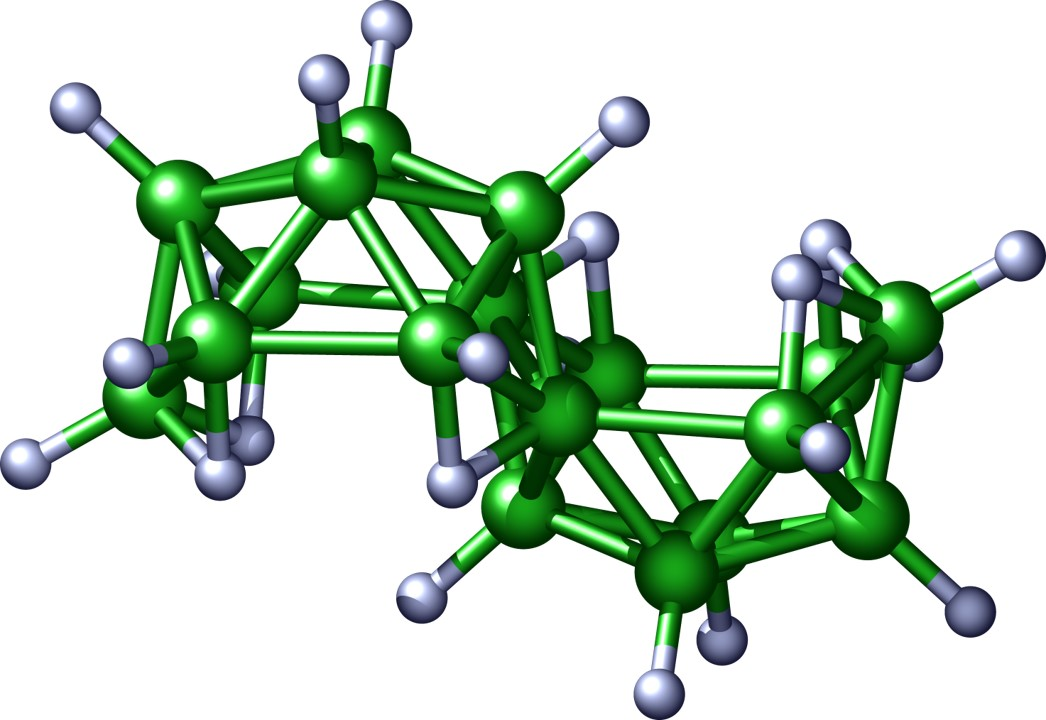
Boron hydrides can be synthesized with various stoichiometries, for example gaseous diborane (B2H6), or solid decaborane (B10H14) and octadecaborane (B18H22). The latter has recently been employed in a first fusion experiment at the Institute of Plasma Physics iby the group of Miroslav Krůs together with Michael Londesborough from the Institute of Inorganic Chemistry of the Czech Academy of Sciences. Within the scope of the Vortex-4-Fusion (V4F) project, alpha-particle yields of 1.7×10⁹/sr/shot were obtained - comparable to leading results from other approaches using alternative target materials.
Present work is focused on the chemical tunability of borane-based targets that enable control over their laser–plasma interaction properties, offering potential improvements in fusion yield.
Tuning axial field generation and proton acceleration
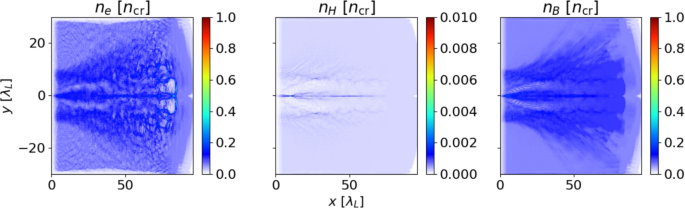
Researchers at Forschungszentrum Jülich have investigated the laser-plasma interaction using particle-in-cell (PIC) simulations. This computational approach represents large ensembles of physical particles by macro-particles. The electromagnetic fields in the simulation domain are solved across a discretized grid according to Maxwell’s equations.
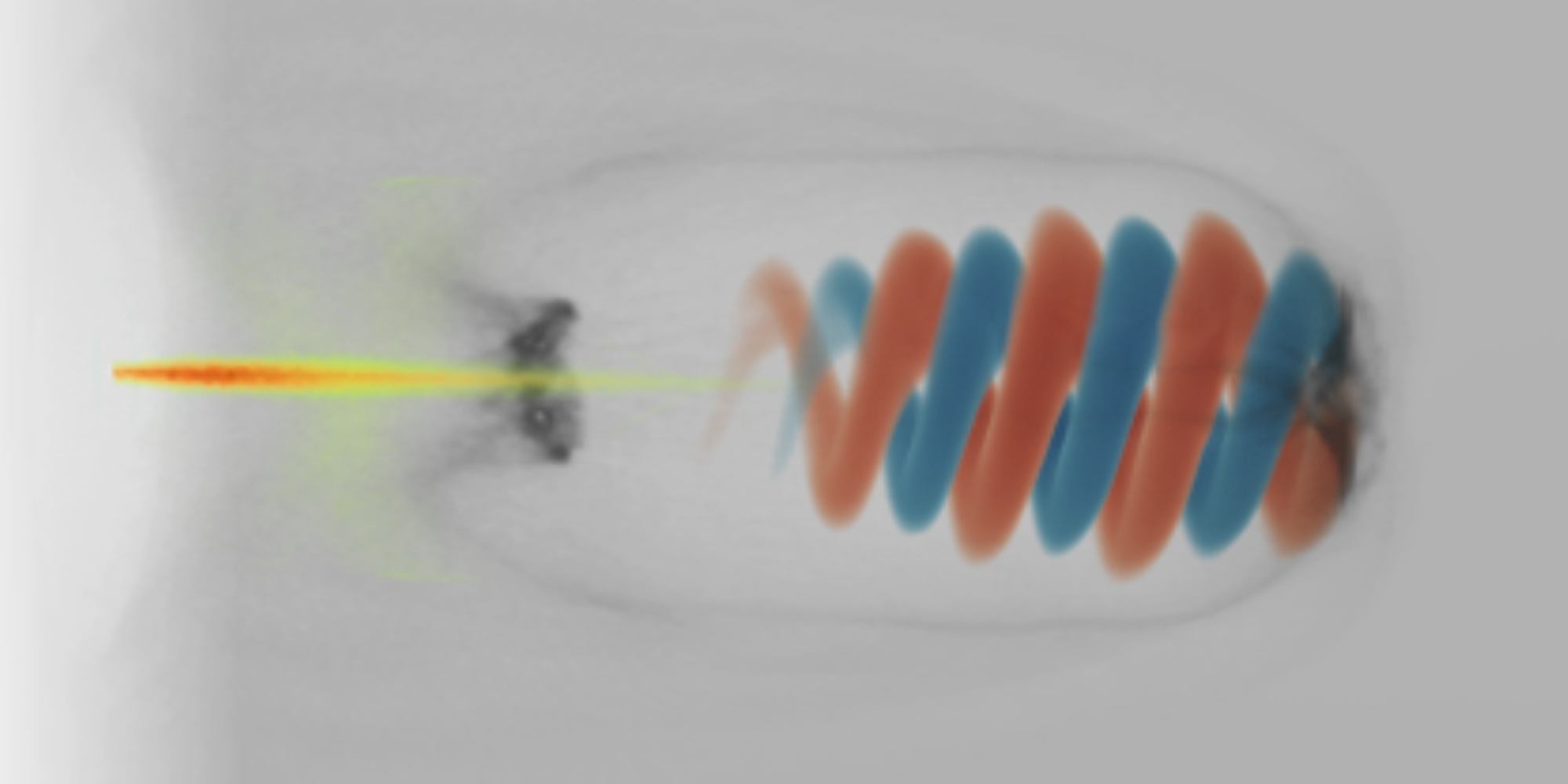
To enhance particle confinement, the V4F collaboration studies the generation of strong axial magnetic fields through the interaction of Laguerre-Gaussian (LG) laser pulses with plasma. These laser modes possess helical phase structures that carry orbital angular momentum (OAM). During laser-plasma interaction, OAM transfer to electrons induces solenoidal currents that generate axial magnetic fields via the Inverse Faraday effect.
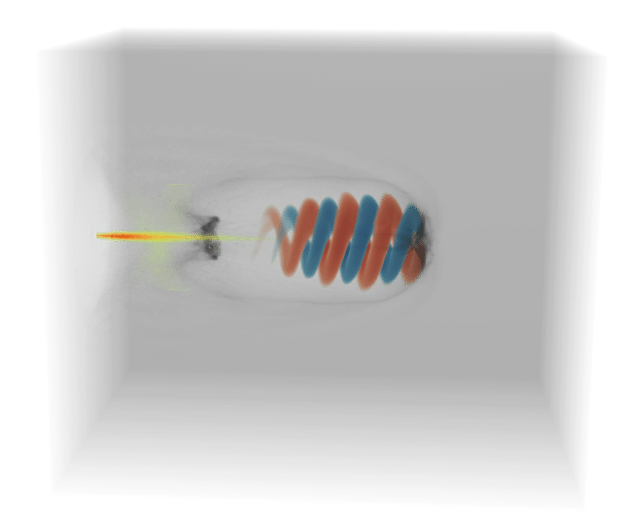
The extent of this field generation depends sensitively on the borane composition. The leading edge of the laser pulse ionizes only a fraction of the electrons, and since higher boron charge states (B2+-B5+) require substantially greater ionization energies than H+ or B1+, the number of participating electrons varies with molecular stoichiometry. The present simulations suggest that the strongest axial fields are generated for boron-rich target compositions.
Conversely, for proton acceleration - typically achieved via Target Normal Sheath Acceleration (TNSA) from thin solid foils -hydrogen-rich targets perform more effectively. In this process, the laser pulse rapidly heats and displaces electrons, establishing a sheath field that accelerates protons. PIC simulations of borane foils show that increasing the hydrogen fraction enhances sheath-field formation and yields higher proton energies relative to boron-dominated targets.
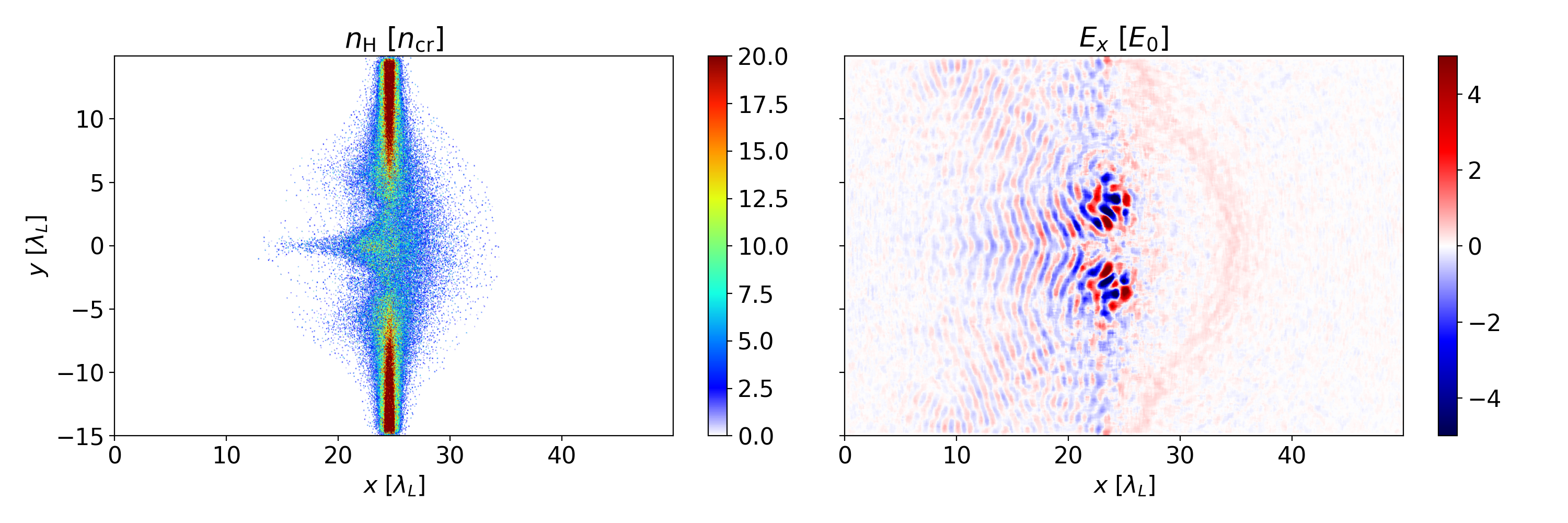
The next stage of the V4F project involves experimental verification of these findings through systematic laser irradiation of synthetically tailored borane targets. By correlating molecular composition with measured alpha-particle and proton yields, the team aims to establish optimal target formulations for enhanced pB fusion performance.

Lars is a postdoctoral researcher at Forschungszentrum Jülich in the group of Markus Büscher. His research is in the field of theoretical plasma physics, mostly focusing on spin-polarized particle beams and wakefield acceleration.
Follow the Topic
-
Scientific Reports
An open access journal publishing original research from across all areas of the natural sciences, psychology, medicine and engineering.
-
A Collection of original research articles on structured light, exploring its creation, manipulation, and deployment in timely applications.

Related Collections
With Collections, you can get published faster and increase your visibility.
Cancer Prevention and Control
Publishing Model: Hybrid
Deadline: Feb 19, 2027
Healthy Aging
Publishing Model: Open Access
Deadline: Dec 31, 2026