The Pyramid of Khufu
The Great Pyramid of Khufu has naturally survived millennia of seismic activity due to its immense mass, broad base, low center of gravity, and a structural frequency mismatch that prevents destructive seismic wave amplification
Published in Arts & Humanities
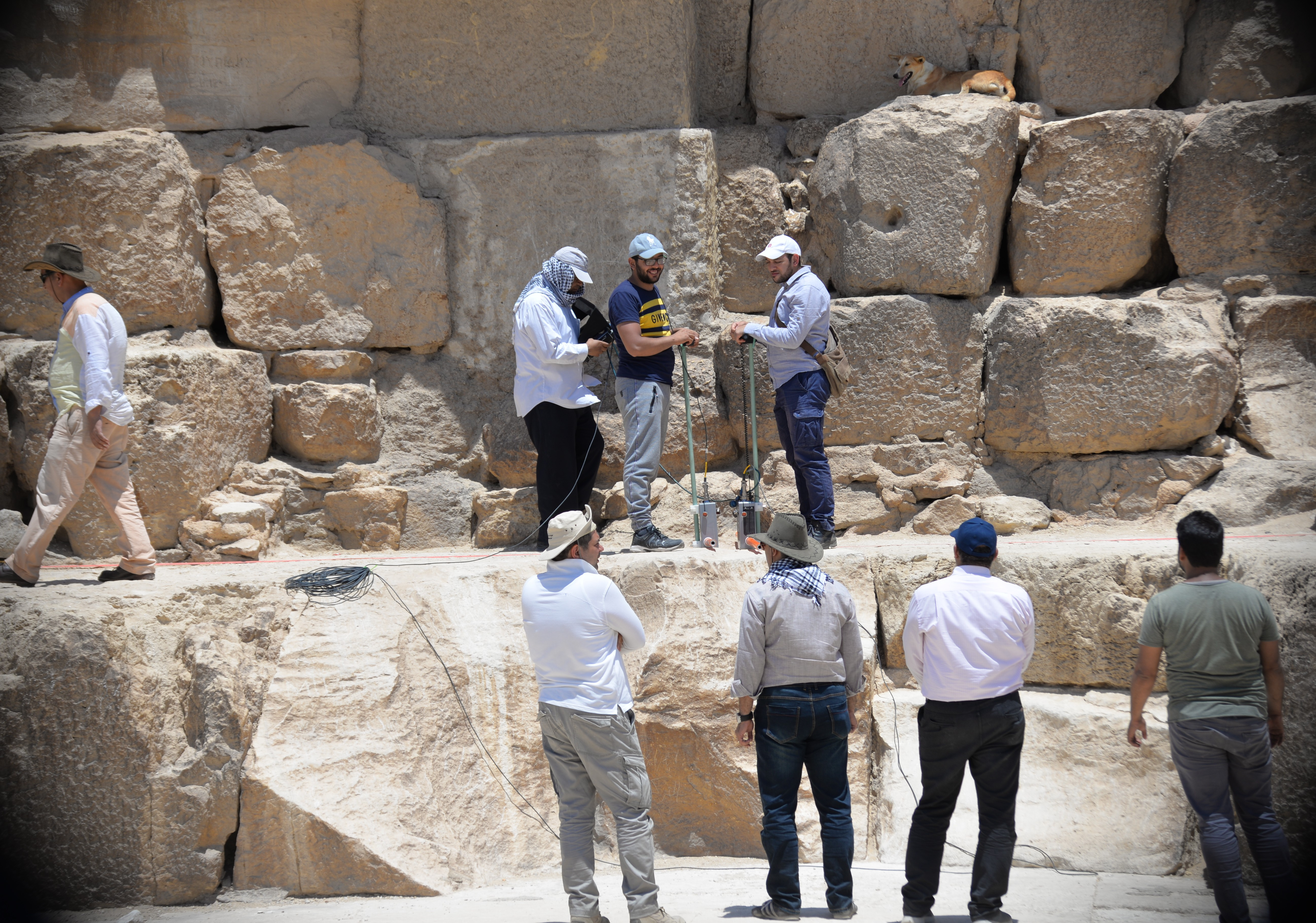
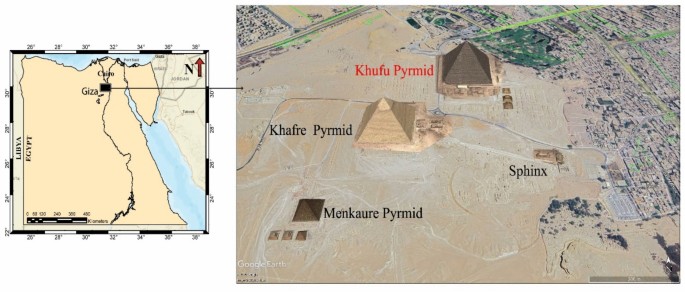

Research published in Scientific Reports highlights several structural and geotechnical aspects that allow the pyramid to resist earthquakes:
ELGabry, M., Hamed, A., Yoshimura, S. et al. Architectural and geotechnical aspects affecting earthquake resilience for the antique Egyptian Khufu pyramid. Sci Rep 16, 14032 (2026).
Research outputs
- Frequency Mismatch: Ambient vibration tests show the pyramid resonates at a frequency between 2.0 to 2.6 Hz, whereas the surrounding limestone bedrock and soil vibrate at roughly 0.6 Hz. This substantial difference stops energy from transferring efficiently from the ground into the main body of the pyramid.
- Pressure-Relieving Chambers: The unique labyrinth of relieving chambers situated directly above the King's Chamber act as stress dampeners. Seismic amplification peaks in the King's Chamber but notably drops within these specific upper chambers, absorbing kinetic energy and protecting the central burial vault.
- Geometry and Mass: A wide, square base tapering up to a low center of gravity provides supreme stability against lateral shaking.
- Millions of Block Joints: The sheer friction and gaps between the 2.3 million limestone and granite blocks dissipate kinetic energy mechanically, acting similarly to dry-masonry dampening systems.
- Rigid Bedrock Foundation: The monument rests firmly upon a thick, dense plateau of well-cemented limestone bedrock, preventing soil liquefaction or amplified foundational shifting.
Historical Resilience
- 1847 El-Fayoum Earthquake: Shook the region with an estimated magnitude of 6.8, located just 70 km from the site, with no serious damage reported to the main pyramid body. [1]
- 1992 Cairo Earthquake: A 5.8 to 5.9 magnitude tremor struck merely 20 to 30 km away, heavily damaging modern infrastructure across Cairo while the Great Pyramid shed only a single casing stone. [1, 2, 3, 4]

Asem Salama
(He/Him)
Assistant professor , National Research Institute of Astronomy and Geophysics
I am Asem Salama , I work in Séismologie department in National Institute of Astronomy and Geophysics. My work Is focused on seismic refraction technique, tsunami Hazard, seismology and GIS.
Follow the Topic
Archaeology and Heritage
Humanities and Social Sciences > Archaeology > Archaeology and Heritage
-
Scientific Reports
An open access journal publishing original research from across all areas of the natural sciences, psychology, medicine and engineering.

Related Collections
With Collections, you can get published faster and increase your visibility.
Cancer Prevention and Control
This cross-journal collection will consider submissions of research Articles and Registered Reports that advance the science and practice of cancer prevention, including strategies to reduce cancer risk and improve early detection.
Publishing Model: Hybrid
Deadline: Feb 19, 2027
AI in clinical decision-making
This collection welcomes studies demonstrating robustness and explainability, incorporating human oversight, and showing measurable effects on clinical and system-level outcomes across diverse healthcare settings.
Publishing Model: Open Access
Deadline: Nov 28, 2026