The shadow and the person casting it: TB and social protections
Published in Sustainability and General & Internal Medicine
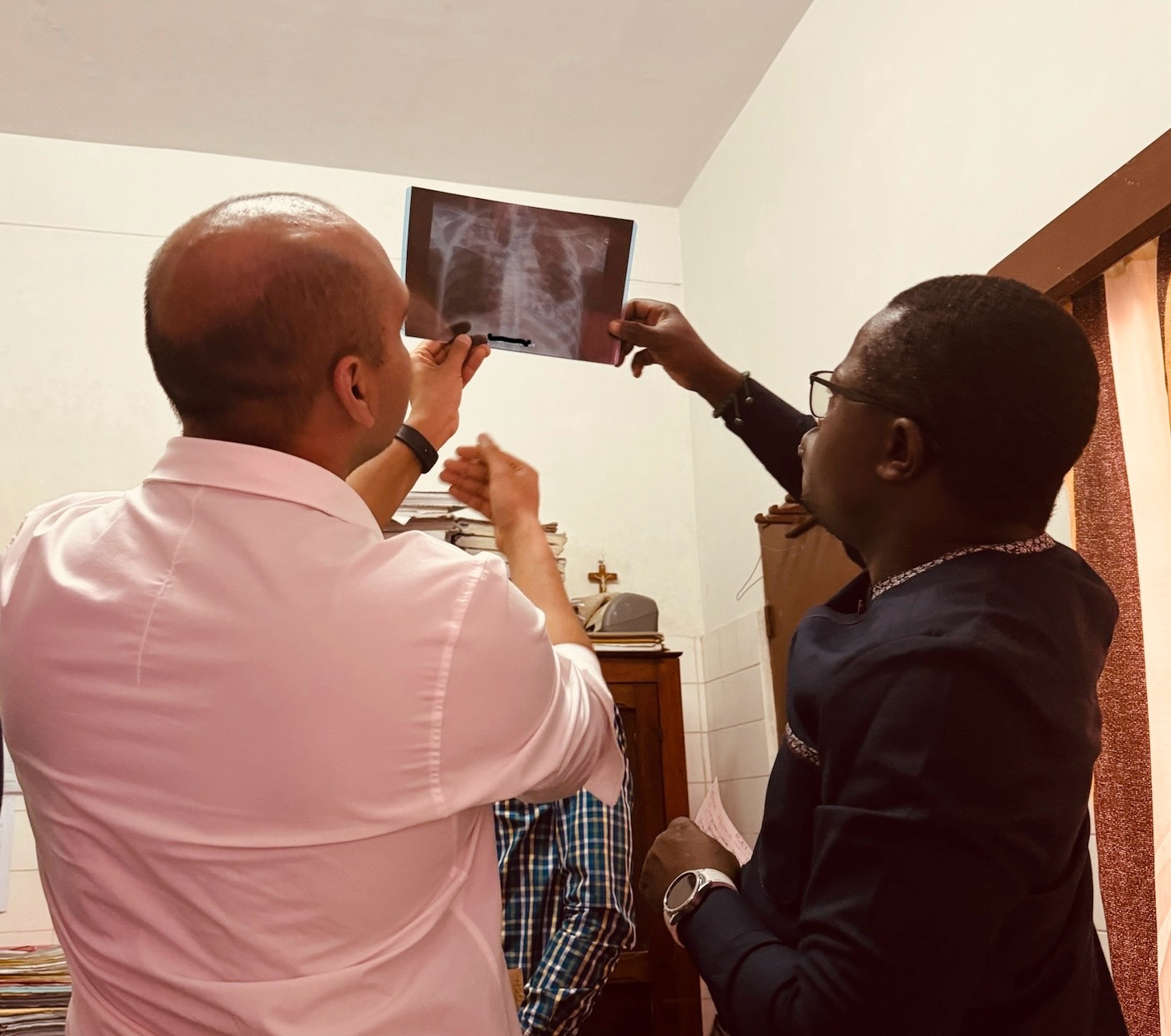






"How am I supposed to pay my rent?"
I had no answer. The irony of practicing medicine in the wealthiest country in the history of the world is that I could measure drug concentrations in his blood and even sequence the genome of his TB bacilli at the click of a button, but could not help him with his rent, which costs far less than either test.
TB has been described as the shadow of misery. Our biomedical response, for all its brilliance, ends up chasing the shadow and not the person casting it.
At conferences, it may appear as if the end of TB is just awaiting the arrival of a new drug, test, or vaccine. Indeed, our grant applications and buzzy press releases often signal as much. But the inconvenient truth, written plainly in the mortality curves, is that TB had already begun its retreat in the wealthy world before we had any effective tests or treatments. Death rates fell as people ate better, worked shorter hours, and moved out of airless tenements. The bacillus did not surrender to medicine alone. It receded as life got less brutal.
We have spent the decades since forgetting that lesson. We have bet, and bet heavily, on the biomedical paradigm — on the next diagnostic, the shorter regimen, the elusive vaccine. These are good bets, and I have placed many of them myself. But a disease that lives in the lungs is born in the conditions of a life: in undernutrition, in crowded and unventilated rooms, in the soot of the air, in the precariousness of being poor. We keep treating the cough and ignoring the world that produced it.
Although we routinely call TB a disease of poverty, we seem to design all our interventions downstream of this principal driver. For all its biological tricks and complexity, TB is ultimately a predictable disease. It goes where deprivation goes, and it leaves where deprivation lifts. When TB flares, it is telling us something true about hunger and housing and inequality long before our other instruments register it.
When a canary dies in a coal mine, we don't just apply an oxygen mask to its beak; we get the miners to safety.
This is the difference between public health and social medicine. Public health counts the sick and delivers the cure. Social medicine asks why this person, in this place, got sick in the first place — and treats the answer as part of the disease. Social protection is where that conviction becomes concrete. Cash transfers keep months of catastrophic costs from turning into generational poverty. Nutritional support turns a starving patient into a healing one. There is mounting evidence that this support does not merely comfort people, it helps cure them, keeps them in treatment, and protects those around them.
What we still lack is enough rigorous, real-world evidence on how to actualize this support for those who need it the most.
That is the gap this collection exists to close. Our goal is to extend our gaze past the shadow, and to build an evidence base that informs person-centered action. In the International Journal for Equity in Health, we have opened a collection on social protection for people affected by TB, and we are inviting the people doing this work to write it down. We want the implementation studies — how these programs are designed, financed, and adapted to fragile settings. We want the country experiences, the case studies, the honest accounts of what worked and what didn't, the analyses of the politics that decide whether a program is funded or forgotten. We want the evidence that lets an advocate walk into a finance ministry and make an undeniable case.
This is our chance to finally turn from the shadow and face the person. I do want better tests and better drugs, but I also want my patient to be able to pay his rent.
--
The collection "Social Protection for TB-Affected Individuals" is open for submissions in the International Journal for Equity in Health.
Guest Editors: Pranay Sinha and Ernesto Jaramillo, with the support of Delia Boccia, Priya Shete, and Jillian Kadota.

Follow the Topic
-
International Journal for Equity in Health
This journal presents evidence relevant to the search for, and attainment of, equity in health across and within countries and publishes research which improves the understanding of issues that influence the distribution of health and healthcare within populations.

Related Collections
With Collections, you can get published faster and increase your visibility.
Health Inequities’ Lethal Impact
Advancing our collective understanding of health inequities remains essential for addressing the complex and often lethal consequences of systemic disparities in health outcomes. While significant progress has been made in recognizing the role of social determinants of health (SDOH), there is an urgent need to further investigate the structural injustices that perpetuate income inequality, racial and ethnic disparities, and the disproportionate burden of chronic disease—particularly among historically marginalized and underserved populations.
This Collection centers on the lethal impact of health inequities, with a primary focus on mortality and the systemic conditions that lead to preventable deaths. While morbidity—defined as the burden of disease and disability—plays a critical role in shaping health trajectories, it is the escalation to premature mortality that underscores the urgency of this research. Authors are strongly encouraged to examine how inequities contribute to death and life-shortening outcomes, rather than submitting work that addresses health equity in general without engaging with its fatal consequences.
Recent research has revealed that the relationship between morbidity and mortality is complex and non-linear. Some populations endure prolonged suffering due to chronic conditions, while others face abrupt and avoidable death due to systemic neglect. These patterns reflect the cumulative impact of adverse SDOH, such as housing insecurity, food instability, limited education, and lack of access to timely care.
Communities facing intergenerational trauma, persistent socioeconomic disadvantage, and discrimination—including Indigenous populations and other minoritized groups—are disproportionately affected. Individuals living in areas of high social vulnerability experience significantly higher all-cause mortality rates, and those with multiple concurrent adverse SDOH face the poorest health outcomes.
Ongoing examination of these issues is vital for informing evidence-based decision-making and equipping policymakers with the insights needed to foster equity in health. Beyond identifying policy failures, this Collection seeks to highlight mechanisms for translating research into equitable policy action. By bridging the gap between evidence and implementation, we aim to surface practical pathways for systemic change—whether through legislative reform, community-led initiatives, or integrated health system strategies.
We invite researchers to contribute to this special Collection, Health Inequities’ Lethal Impact. Topics of interest include, but are not limited to:
-Structural injustice and health
-The role of income inequality in health outcomes
-Racial and ethnic disparities in chronic disease
-Health inequities in Indigenous communities
-Policy interventions for reducing preventable deaths
-Mechanisms for translating evidence into equitable policy action
-Social determinants of health and morbidity
-Community-based approaches to health equity
-Examining policy failures in health systems
-Intersections of morbidity and mortality in vulnerable populations
This Collection supports and amplifies research related to SDG 3, Good Health and Well-Being and SDG 10, Reduced Inequalities, reinforcing the global imperative to ensure equitable access to health.
All submissions in this collection undergo the journal’s standard peer review process. Similarly, all manuscripts authored by a Guest Editor(s) will be handled by the Editor-in-Chief. As an open access publication, this journal levies an article processing fee (details here). We recognize that many key stakeholders may not have access to such resources and are committed to supporting participation in this issue wherever resources are a barrier. For more information about what support may be available, please visit OA funding and support, or email OAfundingpolicy@springernature.com or the Editor-in-Chief.
Publishing Model: Open Access
Deadline: Nov 02, 2026
Racism and Health
The ongoing advancement of our understanding of how racism impacts health - both directly and structurally - is crucial for addressing the deep-rooted health inequities that persist globally. Structural racism shapes health outcomes among racialized populations, contributing to inequities in healthcare access and quality, and impacting social, political, or environmental determinants of health. Existing research also connects direct and visible manifestations of racism, such as major and everyday discrimination, to negative health outcomes. At the same time, racism does not operate in isolation. A growing body of research shows how it intersects with other systems of oppression—such as classism and patriarchy—and with broader social determinants of health, producing compounded and context-specific inequities. An intersectional lens is therefore essential to understand how overlapping structures of power and exclusion shape health and healthcare experiences. These insights are essential in conducting rigorous and thorough health research, guiding anti-racist health policy, and ultimately, ensuring equitable health for all.
Looking forward, research holds the potential to develop new methodologies and indices and unveil complexities in how racism manifests within healthcare systems and societal structures. By deepening our collective understanding, we can develop more effective interventions that target the root causes of health inequities.
We invite researchers to contribute to this special Collection on Racism and Health, focusing on advancing our understanding and addressing health inequities. Topics of interest include but are not limited to:
- Racism as a structural determinant of health
- Racism as a direct determinant of health
- Racialized health outcomes in different populations
- Intersectionality and inequities in health, healthcare access and quality
- Nexuses between social, political, and environmental determinants of health and systemic discrimination
- Anti-racist health policy frameworks and systems
- Impact of racism on mental health
- Health inequities in reproductive, maternal, and child health
- Obstetric and reproductive violence
- Community-based interventions for equitable health
- Decolonizing health research and global health epistemologies
We strongly encourage contributions from racialized scholars and authors with lived experience or expertise in addressing systemic discrimination in health research.
This Collection supports and amplifies research related to SDG 3, Good Health and Well-Being and SDG 10, Reduced Inequalities.
All submissions in this collection undergo the journal’s standard peer review process. Similarly, all manuscripts authored by a Guest Editor(s) will be handled by the Editor-in-Chief. As an open access publication, this journal levies an article processing fee (details here). We recognize that many key stakeholders may not have access to such resources and are committed to supporting participation in this issue wherever resources are a barrier. For more information about what support may be available, please visit OA funding and support, or email OAfundingpolicy@springernature.com or the Editor-in-Chief.
Publishing Model: Open Access
Deadline: Nov 14, 2026