The Story Behind the Paper: In vitro antimalarial activity of phytochemicals from Bombax costatum via inhibition of β-hematin formation
Published in Chemistry


The Story Behind the Paper: In vitro antimalarial activity of phytochemicals from Bombax costatum via inhibition of β-hematin formation
I and my long-time colleague and friend, Hassan Ali Bila, have been on this journey together for nearly a decade. We were course mates during our MSc at Ahmadu Bello University, Zaria, back in 2016, both specializing in Natural Product Chemistry. It was no coincidence that we found ourselves drawn to the same research area—malaria. Growing up in Nigeria, we have both seen the devastating toll this disease takes on families and communities. With Africa accounting for nearly 70% of global malaria cases, we knew this was where we wanted to make our contribution.
That shared passion became the foundation of our collaboration. Through our MSc and later our PhD programmes, we remained focused on discovering new antimalarial agents from medicinal plants. Bombax costatum caught our attention because of its long-standing ethnomedicinal use in Northern Nigeria for treating fever and malaria, coupled with its rich and underexplored phytochemical profile. The plant's root bark, in particular, was frequently mentioned by traditional healers, and this guided our decision to investigate it further.
Our earlier work had already established that the hexane, chloroform, ethyl acetate, and butanol fractions of B. costatum exhibited significant in vivo antimalarial activity in Plasmodium berghei-infected mice. That was encouraging, but we wanted to go deeper. One evening, while discussing in the research lab, Hassan turned to me and said Dr G, "We know the fractions work in vivo which we established. But what is actually driving this activity? Why don't we isolate the pure compounds and find out exactly how they work at the molecular level?"
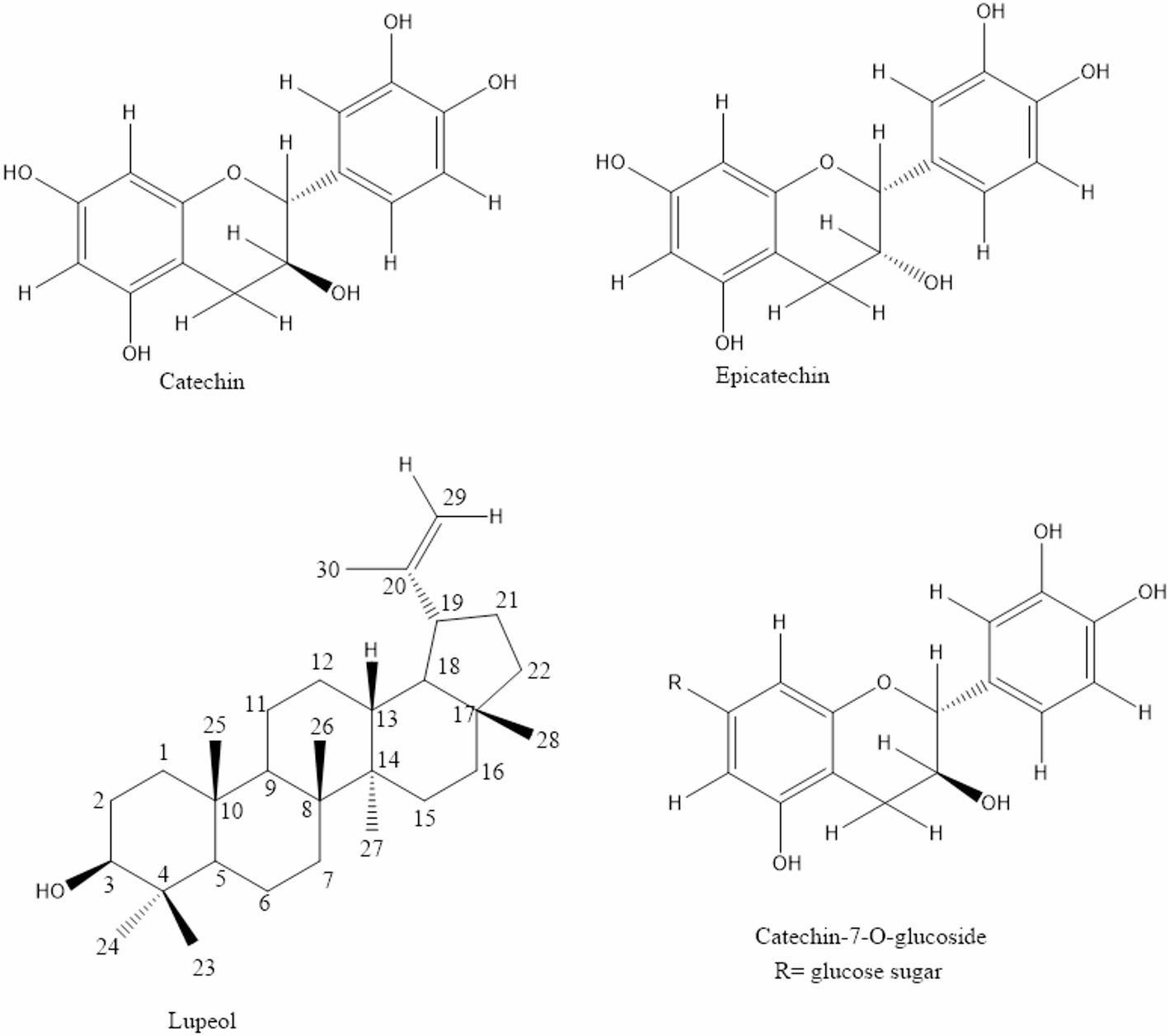
That conversation changed the direction of our work. We decided to isolate the bioactive constituents and investigate their mechanism of action using the β-hematin inhibition assay—a well-validated model that targets the heme detoxification pathway central to Plasmodium survival. The isolation and characterization of catechin, epicatechin, lupeol, and catechin-7-O-glucoside from the root bark was painstaking work, but seeing those compounds inhibit β-hematin formation in a dose-dependent manner was deeply rewarding. It was the first time these specific compounds had been isolated from this plant and evaluated through this mechanistic lens.
This paper is the fruit of that evening's discussion and the rigorous work that followed. It also reflects the strength of our collaborative network. Our co-authors, Dlama Stephen, Khadijah Isa Imam, and Amina Busola Olorukooba, brought invaluable expertise in pharmacology and parasitology, helping us interpret the biological relevance of our findings and strengthening the overall study.
Since we began this journey together, Hassan and I have authored and co-authored over 20 articles in the field of malaria drug discovery. Each one represents a small step forward, but this paper holds a special place—it is a testament to the power of curiosity, friendship, and the simple act of asking "why not?"
We hope our work contributes, even in a small way, to the global effort to develop effective, accessible, and plant-based antimalarial therapies for the communities that need them most.
Dauda Garba, PhD
University of Abuja, Nigeria

Dr. Dauda Garba is from Nigeria. He is a committed scholar trained at some prestigious national institutions, including Ahmadu Bello University, Zaria, and the Federal University of Technology, Minna. Dr. Garba is a pharmaceutical and medicinal chemist with a keen interest in the use of natural products for the discovery of drugs. His area of expertise is most evident in the use of computational and spectroscopic methods for the isolation, characterization, and biological assessment of phytochemicals.
His area of research addresses critical global health challenges, primarily focusing on malaria through the discovery of novel antimalarial drug candidates. Dr. Garba has made a substantial contribution to the area of expertise by conducting an extensive investigation of Nigerian medicinal plants, particularly those belonging to the genus Globimetula (mistletoe). His scholarly contributions include the isolation and structural elucidation of numerous bioactive compounds, such as prenylated Quercetin, chalcone, triterpene, and novel dihydrostilbenes, and the demonstration of their efficacy through in vivo and in silico studies against Plasmodium species.
A prolific researcher, Dr. Garba has published thirty-five peer-reviewed articles and presented at many international and local conferences. His contributions have been recognized, including the award for Best Oral Presentation award at the 8th International Society for Medicinal Plants and Economic Development (SOMPED) conference in 2024. He is also actively involved in the academic community as a reviewer for several reputable journals, such as Science of Phytochemistry, ChemistrySelect, ChemistryEurope, Modern Chemistry, and Natural Product Research.
Dr. Garba is also involved in education and capacity building, having facilitated workshops on molecular docking and research proposal writing. He is currently a Lecturer II and holds several administrative roles, including Departmental Examiner Officer and Course Coordinator, at the University of Abuja's Faculty of Pharmaceutical Sciences.
Follow the Topic
-
Discover Chemistry
A fully open access, peer-reviewed journal supporting multidisciplinary research and policy developments across all fields of chemistry.

Related Collections
With Collections, you can get published faster and increase your visibility.
Chemistry in Action: Multidisciplinary Approaches in Current Research and Novel Applications
This topical collection aims to highlight the role of Chemistry in multidisciplinary cutting-edge research. Currently, the traditional and siloed research approach is inadequate to solve the complex global challenges. Therefore, a new paradigm of multidisciplinary research is emerging, proposing innovative solutions that address issues from multiple angles by integrating insights from different fields. We call for submissions of papers reporting original Research, Reviews, Perspectives, Comments, Brief Communications, Case Studies, Registered Reports, and Data Notes that integrate chemical concepts and techniques with other fields such as Biology, Medicine, Pharmacy, Physics, Engineering, Environmental Science, Materials Science, and Food Science, among others. This collection is particularly interested in, but not limited to, manuscripts that address:
• Development of new materials with tailored features for specific applications.
• Design and synthesis of molecules for therapeutic or diagnostic purposes.
• Chemical approaches to clean generation and storage of energy.
• Sustainable chemical processes for environmental care and remediation.
• Integration of chemical principles with advanced engineering and fabrication
• Techniques.
Keywords: Materials chemistry, chemical synthesis, chemical engineering, sustainable chemistry, environmental sciences, biochemistry, pharmacy.
Publishing Model: Open Access
Deadline: Oct 31, 2026
Selected Papers from International Conference on Green Chemistry and Sustainable Development
Green chemistry advances sustainable development by enabling innovative chemical processes that minimize toxicity, waste, and resource consumption. The International Conference on Green Chemistry and Sustainable Development brings together scientists, researchers, industry leaders, and policymakers from around the world to share innovations, research findings, and strategies for promoting environmentally friendly chemical practices. The conference focuses on advancing green technologies, reducing environmental impact, providing renewable energy solutions, waste management, and supporting global efforts toward sustainable economic and social development. It serves as a platform for collaboration, education, and the exchange of ideas aimed at building a greener and more sustainable future through responsible scientific practices and sustainable industrial development.
Homepage: https://www.acsfuo.org/abstract
Keywords:Sustainability, Renewable resources, Biodegradable materials, green chemistry, Waste reduction, Renewable energy, Eco-friendly processes
This Collection supports and amplifies research related to SDG 7, SDG 9, SDG 10, SDG 13, and SDG 15.
Publishing Model: Open Access
Deadline: Nov 30, 2026