The Symbolic Communication of the Ukuwala Mahiate Ritual of the Indigenous Peoples of Mamala, Moluccas, Indonesia
Published in Social Sciences
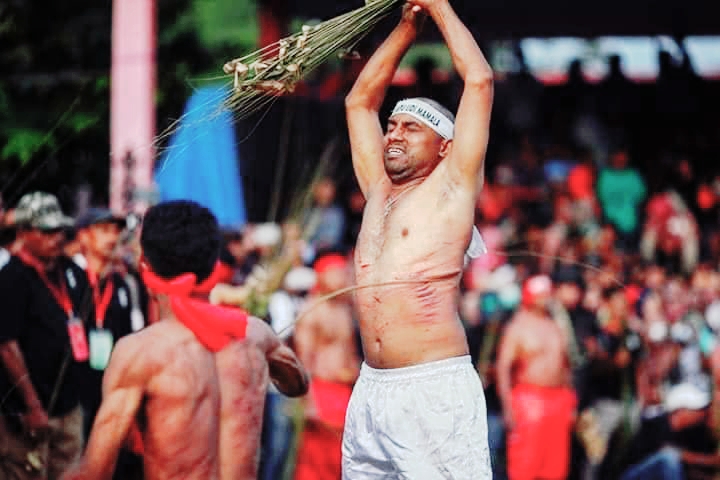
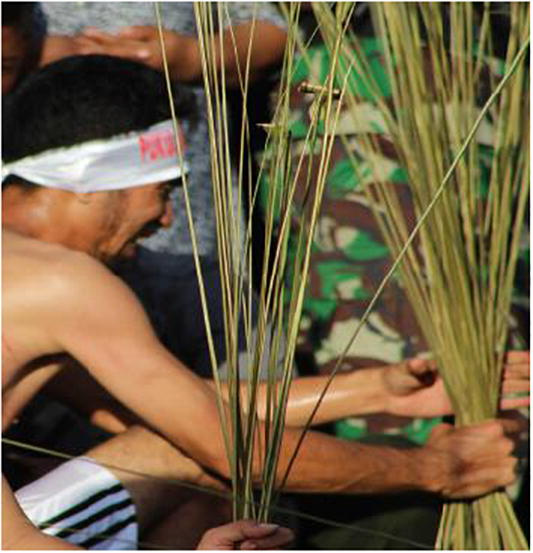

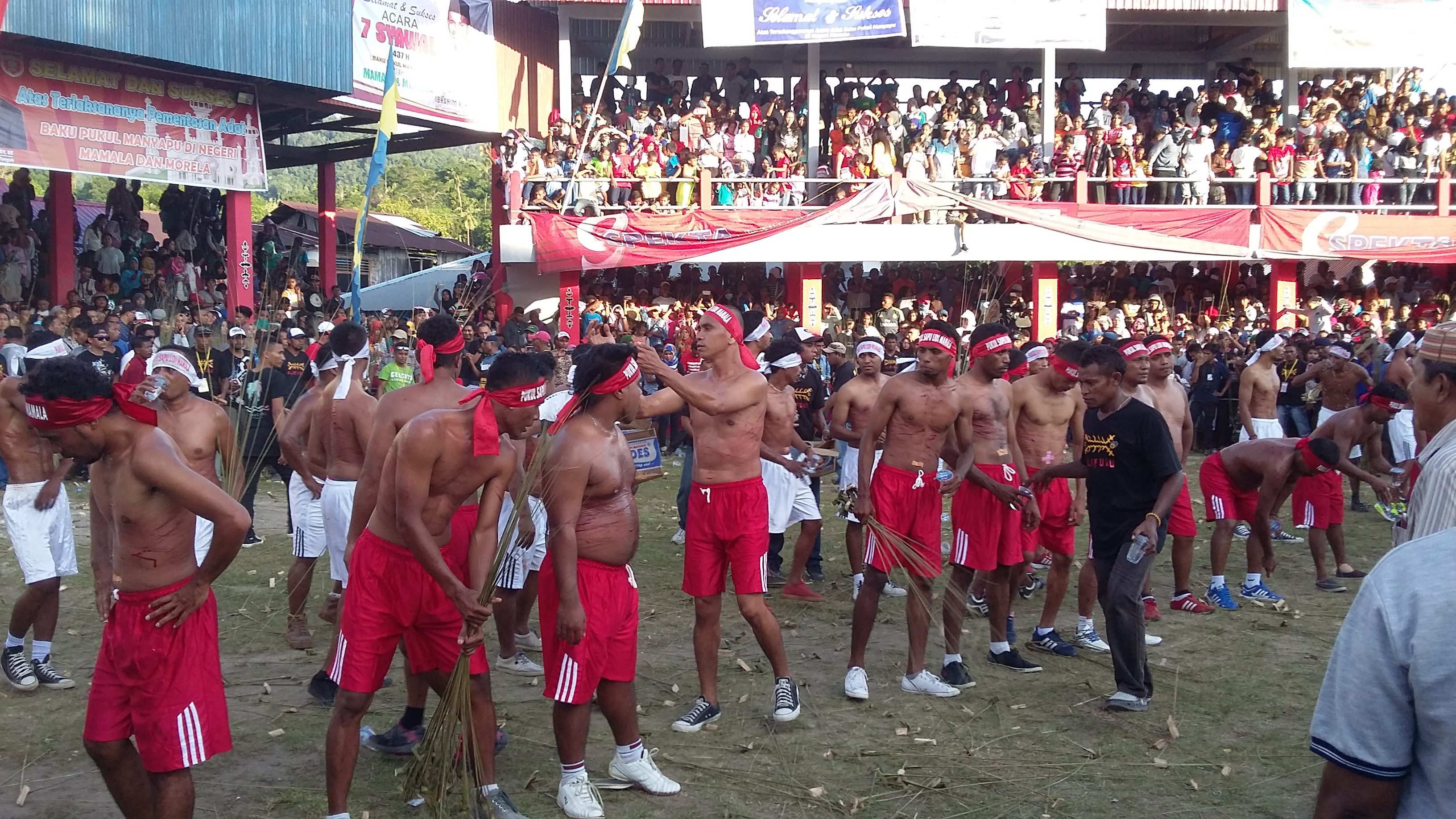
The Ukuwala Mahiate ritual is an integral part of the cultural traditions of the indigenous people of Mamala, Moluccas, Indonesia. It is a fusion of Islamic teachings and local wisdom, comprising various ritual elements such as palm sticks, coconut oil, and more. The ritual is held on the 8th day of Shawwal and integrates the understanding and knowledge of fasting in Ramadan, sunnah fasting in Shawwal, and the Ukuwala Mahiate ritual itself. The ritual involves symbolic communication through non-verbal means, where participants beat each other until they get injured and bleed, and then are healed using coconut oil. The ritual holds deep meaning and significance for the Mamala people, representing their relationship with Allah, community unity, individual identity, and even supernatural power.
1. The Ukuwala Mahiate ritual is an integral part of the cultural traditions of the indigenous people of Mamala, Moluccas, Indonesia.
2. It is a fusion of Islamic teachings and local wisdom, comprising various ritual elements.
3. The ritual is held on the 8th day of Shawwal and integrates the understanding and knowledge of fasting in Ramadan, sunnah fasting in Shawwal, and the Ukuwala Mahiate ritual itself.
4. The ritual involves symbolic communication through non-verbal means, where participants beat each other until they get injured and bleed, and then are healed using coconut oil.
5. The ritual holds deep meaning and significance for the Mamala people, representing their relationship with Allah, community unity, individual identity, and even supernatural power.
Traditional society as a research object have constructed the Ukuwala Mahiate symbol as the meaning of offerings, praying, and hopes. The meaning does not happen by itself, but a communication of ritual process in interpreting the ritual process of collecting the palm sticks, treatment oil, reminder and hopes, communication of broomsticks fight and treatment in the communication of broomsticks fight attempt.
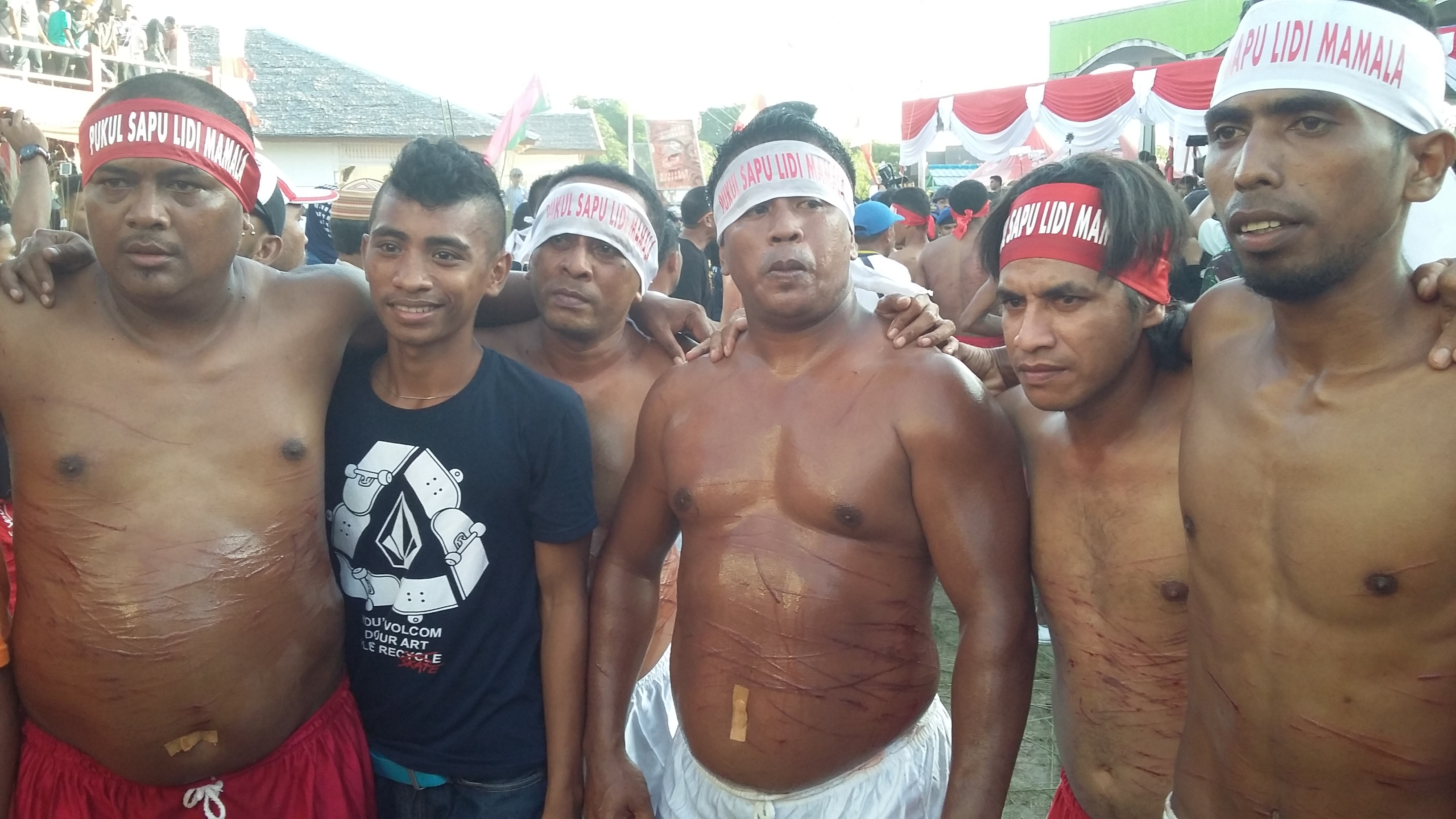
The ritual procession of Ukuwala Mahiate symbols is defined as the fulfillment of self-identity as an effort of togetherness through the power of prayer as offerings, praying and hope to Allah SWT in the building, preserving and developing the harmonious relationships interaction among ethnic peoples, protect the culture against other ethnic’s claim.
The meaning of Ukuwala Mahiate ritual symbol for traditional society is considered as something hereditary from previous generations. This symbol has been believed to be related to logical aspects.
The use of symbolic interaction theory has been useful in exploring the ritual symbols of Ukuwala Mahiate, especially the meaning of the treatment rituals of the performers at broomsticks fight, Nyuwelain Matehu as a healing medium that has human relation with Allah.
This research has discussed some aspects of the meaning of ritual Ukuwala Mahiate symbol. Many other aspects still need the research, such as how life experience of ritual performers. It has been found, for example, those who have done the broomsticks fight experienced the injury and bleed throughout the body and the scars of being hit and whipped with palm sticks that will not disappear. So by using a phenomenological perspective, it can explore the communication experience of broomsticks fight attempt. Of course, this topic is beyond our current discussion.

Communication Sciences, Media Studies, Culture Studies, Ritual Communication, Health Communication, and Journalism.
Follow the Topic
-
Journal of International Migration and Integration
This is a multidisciplinary peer-reviewed scholarly journal, which publishes original research papers, policy discussions and book reviews that enhance the understanding of immigration, settlement and integration and that contribute to policy development.

Related Collections
With Collections, you can get published faster and increase your visibility.
Crossing Borders, Shaping Lives: Gendered Trajectories of Global Migration
Introduction
Women constitute nearly half of the world’s international migrants, yet migration remains structured by deeply gendered hierarchies of labour, mobility, and belonging. Increasing numbers of women migrate autonomously as primary earners, navigating climate precarity, conflict, economic restructuring, and care deficits across borders. Despite their qualifications and economic contributions, migrant women are disproportionately concentrated in informal, low-wage, and unprotected sectors, while facing wage discrimination, restrictive labour regimes, and heightened vulnerability in irregular migration pathways. Their material labour sustains transnational households and economies, yet their intellectual, political, and social contributions remain under-theorised. They are frequently visible as workers but invisible as agents.
This Special Issue recentres gender as constitutive—not peripheral—to migratory processes. It foregrounds how intersecting systems of power, including race, class, coloniality, sexuality, disability, and citizenship, shape differentiated migration trajectories. By highlighting marginalized groups—queer and disabled migrants, adoptees, racialised minorities, second-generation diasporic women—the collection illuminates not only structures of constraint but also the diverse strategies of resistance, negotiation, and survival that migrants deploy within unequal global mobility regimes.
Rationale for the Special Issue
Migration scholarship has expanded significantly over the past three decades, yet dominant frameworks remain largely state-centric and masculinized, privileging governance, security, and economic rationality over lived experience. Gender is often treated as a variable rather than an analytic lens capable of reshaping core concepts such as borders, labour markets, diaspora, and transnationalism. This Special Issue addresses that blind spot by positioning gender as foundational to understanding how migration is organized, regulated, and experienced.
In a moment marked by widening global inequalities, hardened borders, authoritarian governance, and neoliberal austerity, gendered precarity is intensifying. Feminization of labour migration, care economies, and survival strategies demands renewed theoretical attention. At the same time, migration knowledge production remains uneven, with Euro-American institutions disproportionately shaping “global” narratives. This collection contributes to diversifying intellectual geographies by centring cases and epistemologies emerging from the Global South, Global East, and non-Anglophone contexts. In doing so, it reframes gender not only as a site of vulnerability but also as a source of political imagination and feminist solidarity across borders.
Aims and Goals
The Special Issue advances three interconnected aims. First, it develops an intersectional, feminist, and transnational analytic framework to examine how migration governance, labour markets, social reproduction, and identity negotiations are structured by gendered power relations. Second, it foregrounds migrant agency by documenting practices of resistance, identity modulation, solidarity-building, and survival across diverse contexts—from domestic work regimes and expatriate households to adoption systems, diasporic formations, and queer mobility. Third, it bridges scholarship and policy by generating evidence-based insights for gender-responsive migration governance while amplifying voices frequently marginalized within both migration and feminist debates.
Collectively, the contributions offer a timely and transformative intervention in migration studies. By theorising gender as central to analytical innovation and policy relevance, the Special Issue deepens understanding of contemporary mobility landscapes and opens new pathways for thinking about justice, belonging, and power in an unequal world.
Full paper submission deadline: October 2026
Publishing Model: Hybrid
Deadline: Ongoing
Remote and Digital Work among Forced Migrants: Experiences, Opportunities and Challenges
While many refugees continue to face strict barriers to employment and the devaluation of their skills, the rise of remote and online work offers new pathways for income, resilience, and participation in global labour markets. These emerging opportunities have the potential not only to support migrant livelihoods, but also to meet worldwide demand for skilled labour, stimulate local economies, and contribute to recovery in post-conflict regions.
Yet digital work is not without risks. Existing research warns of heightened vulnerability to online exploitation, especially for those with precarious legal status and limited voice. Solid empirical evidence on how refugees actually experience and navigate digital work remains scarce.
This Special Issue advances critical reflection on the promises and pitfalls of digital labour for refugees and other displaced groups. Through diverse case studies across rural and urban contexts, and at micro-, meso-, and macro-levels, our contributions highlight:
- individual trajectories and gendered barriers to accessing digital work;
- the role of migrant-led and civil society organizations in enabling more flexible livelihoods;
- the influence of migration regimes, labour policies, and trans-local networks.
Publishing Model: Hybrid
Deadline: Nov 01, 2026