The unfolded protein response when recovery remains incomplete
Published in Protocols & Methods and Cell & Molecular Biology

Review article
The unfolded protein response as a proteotoxic stress-resolution circuit: branch-selective signaling and failed resolution in environmental immunotoxicity
Why recovery matters
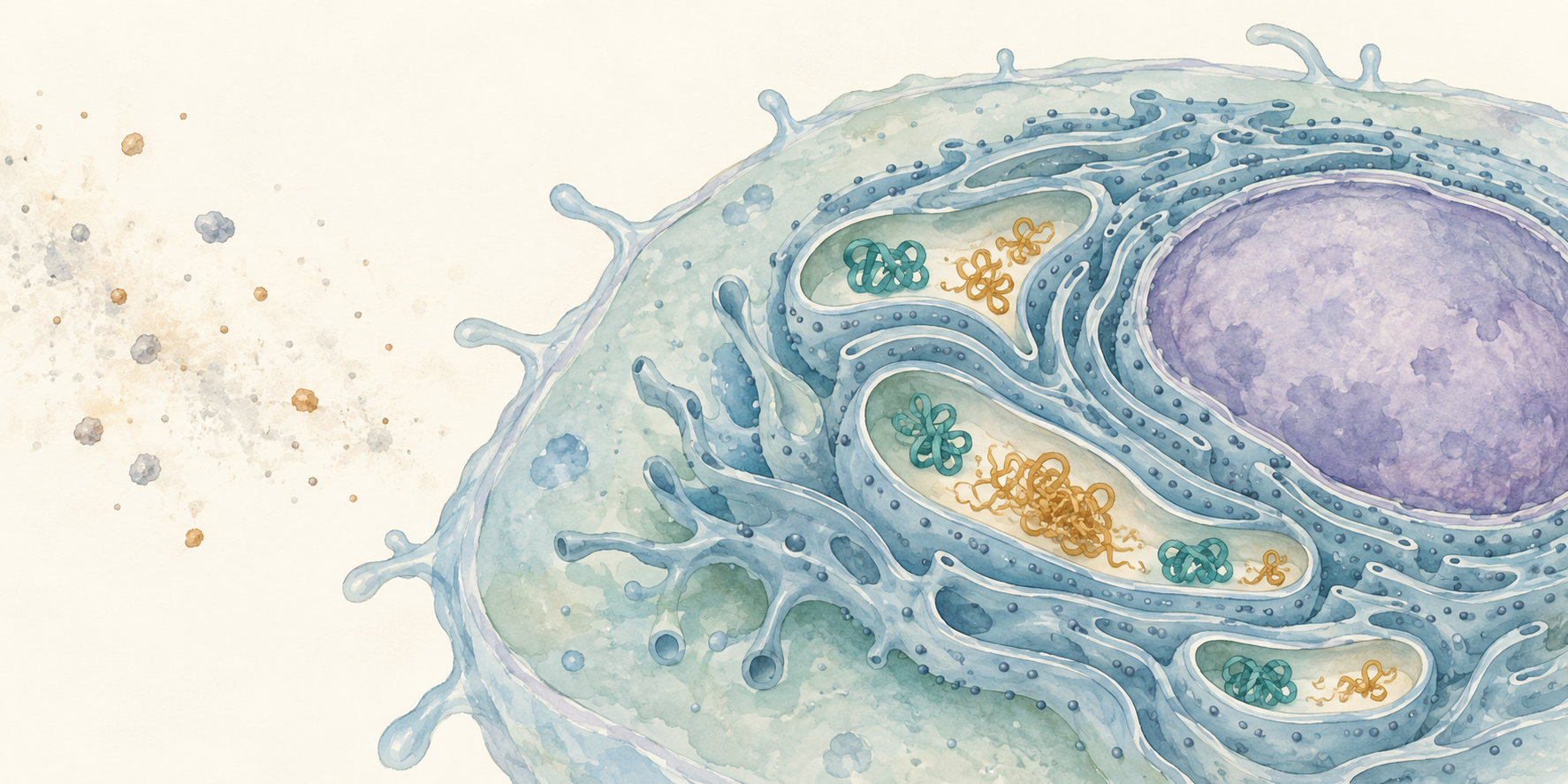
The unfolded protein response, or UPR, helps cells respond to disturbances in the endoplasmic reticulum, where many proteins are folded and processed.
Environmental toxicants can disrupt this system through altered protein folding, calcium balance, redox conditions and membrane composition.
Activating a stress response is only part of the process. Cells must also restore normal function.
Three branches, different roles
The UPR coordinates three interacting branches:
-
IRE1α regulates RNA processing, adaptation and inflammatory signaling.
-
PERK reduces general protein synthesis while supporting stress adaptation and cell-fate decisions.
-
ATF6 strengthens protein-folding capacity and quality control.
Their effects depend on timing, duration and cell type. UPR activation can support recovery, while persistent or imbalanced signaling may contribute to dysfunction.
Why immune function is vulnerable
Immune and barrier cells depend on protein production for antibody secretion, cytokine release, antigen presentation and protective barrier function.
Proteostasis disruption can alter these activities before cells die. Survival alone therefore does not establish that immune function remains intact.
When exposure outpaces recovery
Repeated exposure may arrive before cells have recovered. Mixtures may also disturb different parts of the protein-handling system simultaneously.
The framework predicts that recovery intervals and branch-specific signaling could help explain why similar cumulative exposures produce different immune outcomes.
These possibilities remain to be tested directly.
The evidence gap
Environmental toxicants can activate UPR signaling, and UPR branches influence immune function.
However, the proposed link between failed resolution and environmental immune dysfunction remains largely extrapolated from other ER-stress models. Elevated stress markers alone do not establish causality.
What research should do next
Studies should follow cells after exposure ends, measure individual UPR branches and assess immune function in the same system.
Comparing single and repeated exposures at matched cumulative doses would help determine whether incomplete recovery changes the outcome.
The central question is:
how completely do immune cells recover after exposure, and what happens to their function when recovery fails?
Reference
Sailis AB. The unfolded protein response as a proteotoxic stress-resolution circuit: branch-selective signaling and failed resolution in environmental immunotoxicity. Chemico-Biological Interactions. 2026.