The Use of X-Ray Crystallography in the Analysis of a Variety of Protein–Lipid Complexes. In: Patel, A. (eds) Biochemical Techniques for Analyzing Protein-Lipid Interactions
Published in Protocols & Methods
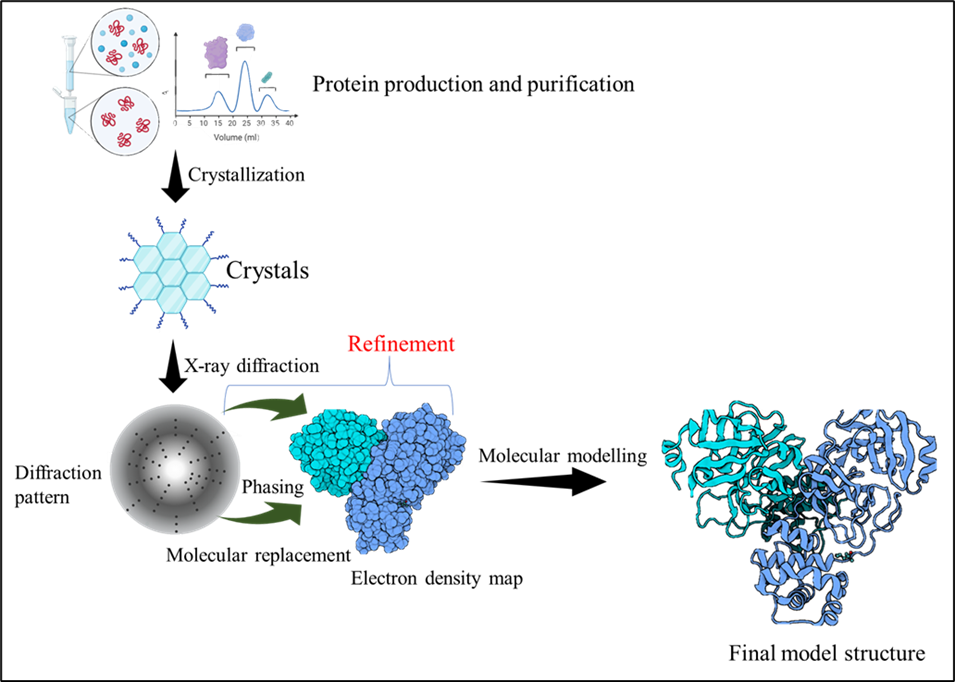


Finally, this chapter delves further into the critical function of X-ray crystallography in scientific study, including structural biology, materials science, and medication development. The historical development of this approach, from Nicolaus Steno's fundamental work to its modern uses, demonstrates its ongoing importance. The concepts of X-ray crystallography are clarified, notably Bragg's Law, emphasizing their vital contributions to understanding atomic arrangements in crystalline materials. The relevance of protein and lipid crystallization as crucial processes in sample preparation for X-ray crystallography is noted in this chapter. The difficulties and complexities connected with maintaining stability during these procedures are discussed, emphasizing the need for protein purification and lipid extraction. The protein-lipid complex experimental setup incorporates several approaches for characterizing interactions, reflecting the multidisciplinary nature of X-ray crystallography. The gathering of X-ray data emerges as a critical stage, with an emphasis on imaging detectors and the complexities involved in acquiring high-quality data for subsequent processing. The topic includes methods for determining structure and refining it, including not just X-ray crystallography but also complementing techniques like NMR spectroscopy and cryo-electron microscopy. The difficulties associated with protein-lipid complex crystallization are discussed, emphasizing the importance of precise optimization and the usage of lipid-based technologies. The chapter finishes by stressing the importance of X-ray crystallography in furthering our understanding of molecular structures. Despite obstacles, the technology remains a research cornerstone, giving deep insights into the atomic and molecular landscapes of a wide range of materials. X-ray crystallography's diverse contributions highlight its lasting relevance in driving scientific discoveries and developments across a wide range of domains.