TLG - THE INTERNATIONAL AFFAIRS JOURNAL OF THE LONDON SCHOOL OF ECONOMICS - TOWARDS A DE-DOLLARIZED GLOBAL OIL MARKET ?
Published in Social Sciences and Arts & Humanities
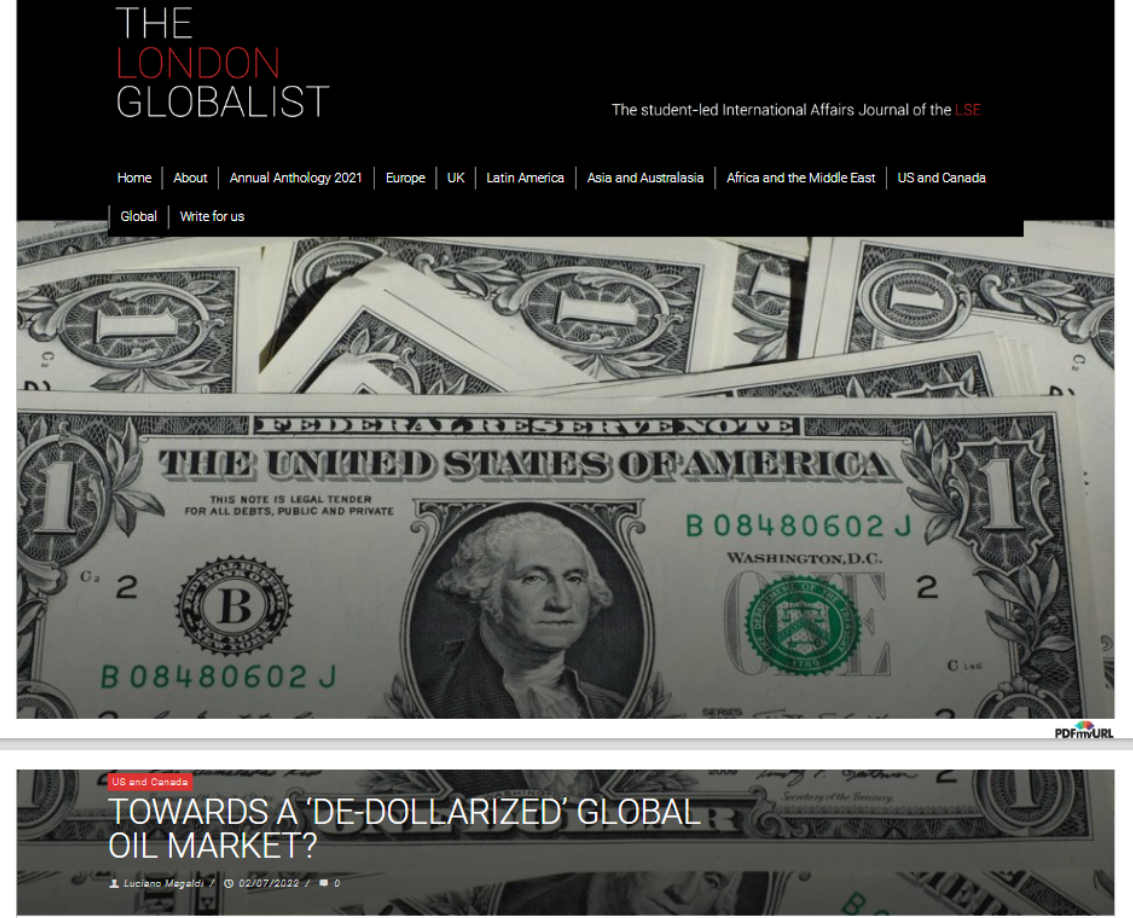
For decades, the petrodollar system anchored the United States’ monetary primacy, underwritten by strategic ties with Saudi Arabia and the wider OPEC constellation. Yet the landscape is shifting. Diplomatic frictions between Washington and Riyadh, Russia’s exclusion from dollar‑centric payment infrastructures, and China’s expansive Belt and Road footprint have collectively accelerated a move towards currency diversification in oil trade.
The article argues that this trend is neither linear nor unbounded. Structural constraints—such as the limited global liquidity of the yuan and the enduring gravitational pull of the eurodollar system—continue to temper the pace of change. Nonetheless, the strengthening Sino–Saudi partnership, coupled with Asia’s broader economic recalibration, signals a potential redistribution of financial power within the international system.
A world in which oil is traded in multiple currencies would have profound implications: weakened efficacy of U.S. sanctions, altered patterns of financial interdependence, and a more pluralistic—though more complex—architecture of global monetary governance. The article invites scholars and practitioners to consider how these dynamics may reshape the geopolitical economy of energy in the decades ahead.
Keywords: Dollar Hegemony; De‑Dollarisation; Sino‑Saudi Partnership; Global Oil Market; Geopolitical Tensions; Financial Power Shift.
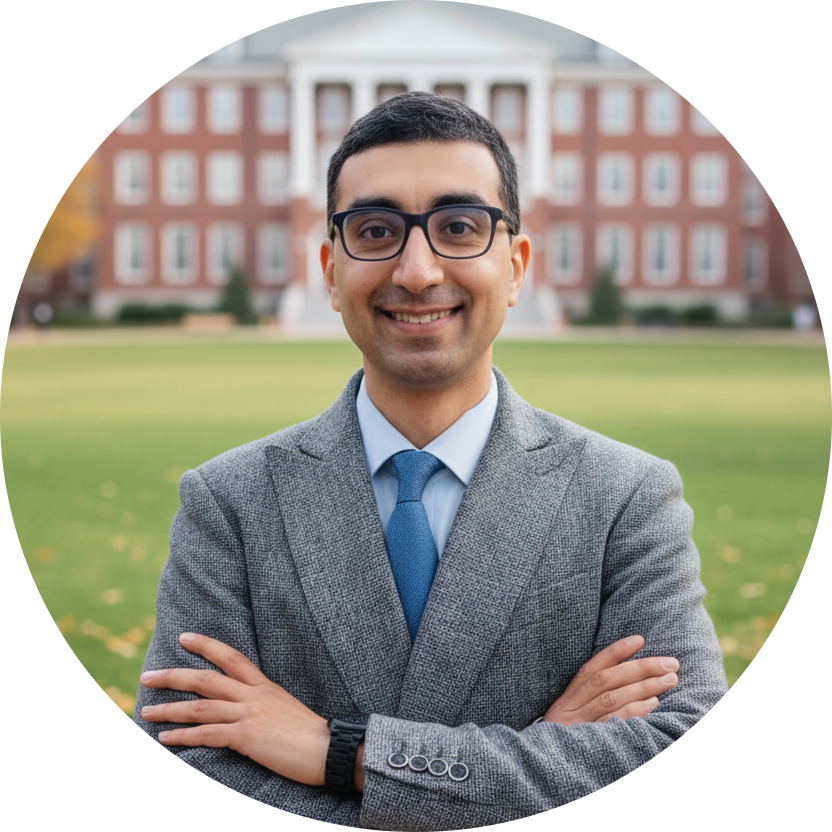
- Pluriennal high-tech practictioner at Google Ireland (Dublin), Apple EU Headquarters (Cork), and Amazon Slovakia (Bratislava).
- Alumnus of Aspire Institute, Harvard Business School.
- Current Member of Harvard Aerospace and Defense Alumni Organization (HADAO).
- Former Member of the White House Historical Association (WHHA).
- Former Member of Yale Club of New Haven (YCNH).
- International Journalist with numerous pieces/interviews featured on London Daily News, New York Post, Los Angeles Journal, The Hill, The Washington Post Opinion, Fox News USA, The Associated Press, The Daily Mirror UK, Metro UK, BBC News World Services, AS USA, Yahoo, AOL, MSN, The Scottish Daily Express, The Daily Record Scotland's Champion, L' Essentiel Luxembourg, 20Minuten.ch, NYC Up Magazine, Yale Daily News, The Stanford Daily, The Psychologist, Popular Archeology, Hollywood Beats Magazine, Opera Gazet, Corriere della Sera, Blog L' Espresso-Repubblica "Fino a Prova Contraria", Blog Nicola Porro, Agenda Digitale.
- Contributing Academic Author to the "Stanford Social Innovation Review" at Stanford University.
- Contributing Academic Author to the Faculty of Law B., University of Oxford.
- Contributing Academic Book Critic to the LSE Review of Books with Executive Education Certificate in Communication from the London School of Economics (LSE) and Political Science.
- Alumnus of the Aspire Institute, Harvard Business School.
- Pro PhD and MBA at the European Open University, Germany.
- Open Researcher and Contributor ID (ORCID):
0009-0003-9392-9213
- Web of Science ResearcherID:
OYE-6074-2025
- Google Scholar:
https://scholar.google.com/citations?user=XALdgW8AAAAJ&hl=it
- Zenodo Author Page Profile:
https://zenodo.org/search?q=metadata.creators.person_or_org.name%3A%22Magaldi%20Sardella%2C%20Luciano%22&l=list&p=1&s=10&sort=bestmatch
- Academia.edu Profile: https://cambridge.academia.edu/LucianoMagaldiSardellaPhD
- ResearchGate Profile:
https://www.researchgate.net/profile/Luciano-Magaldi-Sardella
Follow the Topic
Introducing the Palgrave Macmillan Campaign for the Humanities
At Palgrave Macmillan we publish cutting-edge humanities research that has real-world impact. This research community brings together the voices of our authors and editorial team to highlight and publicize the value of the humanities and humanities research in our world today.
Continue reading announcement