Ultralong Purely Organic Aqueous Phosphorescence Supramolecular Polymer for Targeted Tumor Cell Imaging
Published in Electrical & Electronic Engineering

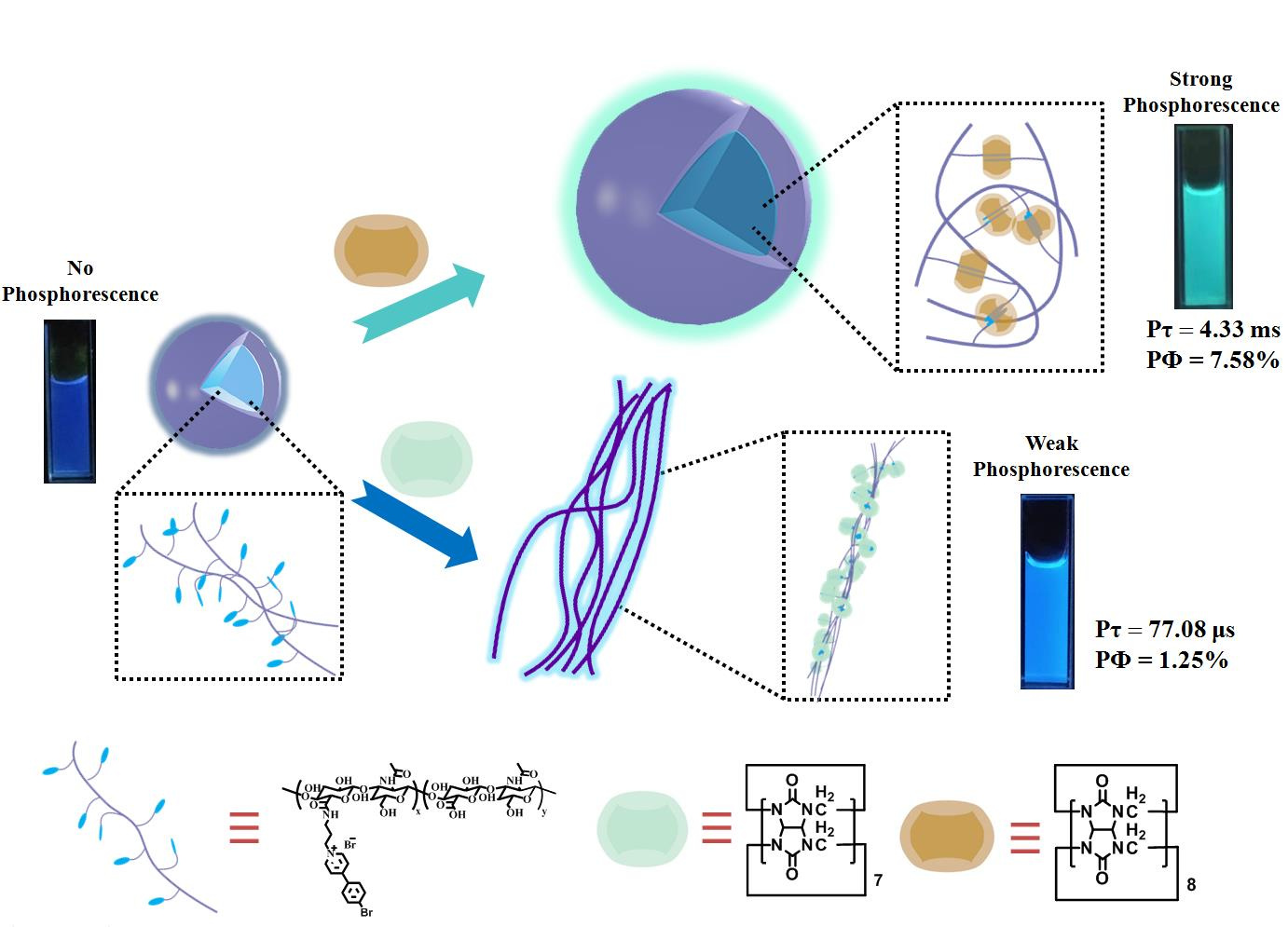

Room–temperature phosphorescence (RTP) emitted by purely organic molecules has been attracting increasing attention owing to its advantages over fluorescence, such as longer lifetime, larger Stokes shift, and the involvement of triplet states. Unfortunately, most systems showing RTP are solid–state, the practical utility of RTP in aqueous biosystems is limited due to the quenching of the oxygen and other molecules that occurs in aqueous solutions. Although the aqueous phosphorescence had a certain development, millisecond–level RTP from purely organic materials in water has rarely been reported. This greatly limits its functionalization and applications. Therefore, the purely organic phosphorescence with long life (millisecond-level) in water still faces great opportunities and challenges up to now.
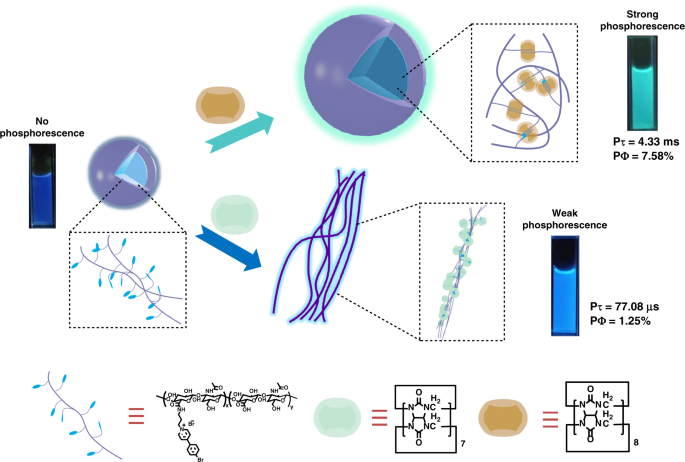
This work just published in Nature Communications was an important part of my research. The idea came up when we asked ourselves if we could produce ultralong purely organic aqueous phosphorescence systems via synergistic effects of functional water-soluble polymers with multiple hydrogen bonds and macrocyclic compounds with the host–guest interaction. We combined the three components: hyaluronic acid (HA), a water–soluble, biocompatible, biodegradable polymer that is specifically recognized by receptors (e.g., CD44 and RHAMM) overexpressed on the surface of cancer cells; cucurbit[n]urils (CB[n]s, where n = 7 or 8), which are biocompatible macrocycles that strongly bind organic cations; and 4–(4–bromophenyl)–pyridin–1–ium (BrBP), an organic phosphor. In this paper, we modified the organic phosphor 4-(4-bromophenyl)-pyridin-1-ium to hyaluronic acid (HA) with cancer cell targeting property, and the effects of cucurbiturils on the phosphorescence of HA-BrBP were systematically studied. Significantly, the resultant of aqueous biaxial pseudorotaxane polymer CB[8]/HA-BrBP achieved the ultralong RTP lifetime (4.33 ms) with a quantum yield of 7.58%. Benefiting from the targeting property of HA, this supramolecular polymer is successfully applied for cancer cell targeted phosphorescence imaging of mitochondrion. So purely organic room temperature phosphorescence by the synergistic effects of polymers with multiple hydrogen bonds and supramolecular interaction is helpful to improve its property and realize the functionalization.
Follow the Topic
-
Nature Communications
An open access, multidisciplinary journal dedicated to publishing high-quality research in all areas of the biological, health, physical, chemical and Earth sciences.

Related Collections
With Collections, you can get published faster and increase your visibility.
Women's Health
Publishing Model: Hybrid
Deadline: Ongoing
Tumor Microenvironment Crosstalk and Therapeutic Implications
Publishing Model: Hybrid
Deadline: Nov 02, 2026