Unveiling the Triad of Risk: Occupational Health Challenges in the Global Seafood and Aquaculture Industry
Published in Healthcare & Nursing, Public Health, and Agricultural & Food Science




The seafood industry is undergoing a massive transformation under the global "blue economy" initiative. As the sector transitions from traditional wild-capture fisheries to intensified aquaculture environments and highly automated onshore processing lines, the occupational health and safety (OHS) landscape is shifting dramatically.
Historically labeled as a "3D" (dirty, dangerous, and difficult) industry due to alarming maritime fatality rates, modern seafood and aquaculture facilities present a much more insidious and complex spectrum of hazards.
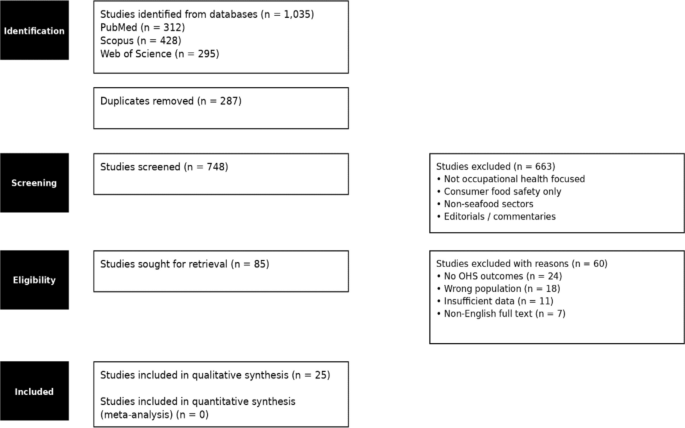
In our newly published systematic review in the Journal of Public Health, we synthesized global evidence from 25 rigorous studies (spanning 2000 to 2026) to map out these emerging challenges across the entire aquaculture and seafood value chain.
The "Triad of Risk"
Rather than analyzing occupational hazards in isolation, our study introduces a unified framework to understand how these threats interact synergistically:
-
Acute Physical Trauma: While aquaculture offers more controlled settings than open-deck commercial fishing vessels, severe accident risks like machinery entanglement, deep-water hypothermia, and drowning remain alarmingly persistent.
-
Cumulative Physiological Strain: Industrial processing lines generate high-exposure bioaerosols. The inhalation of aerosolized proteins induces serious non-allergic airway inflammation and occupational asthma. Concurrently, manual handlers—predominantly women in the Global South—face severe musculoskeletal disorders (MSDs) from prolonged standing and repetitive ergonomic strains.
-
Psychosocial Vulnerability: A substantial portion of the global seafood processing lines relies on migrant and transient workforces. Intense "production pressure" and systematic language or legal barriers often force vulnerable workers to bypass essential safety measures, establishing a direct link between psychosocial stress and physical injuries.
A Dangerous Global Disparity
One of our most striking findings is the sharp geopolitical division in occupational health research and enforcement. Studies from the Global North increasingly track "second-generation" OHS concerns, such as monitoring chemical persistent organic pollutants (POPs) in blood serum or optimizing safety culture. Conversely, the Global South is still battling foundational "first-generation" safety failures, including a severe lack of basic personal protective equipment (PPE), like cut-resistant gloves and non-slip boots.
Harmonizing Food Safety and Worker Safety
We also address a critical institutional conflict: aggressive chemical disinfection, rigorous high-pressure cleaning, and extreme cold chain constraints mandated to preserve consumer food safety inadvertently create hazardous chemical burns, respiratory irritation, and severe cold stress for the workers. Resolving this conflict demands an integrated "One Health" perspective.
Moving Forward
As the seafood sector expands to fulfill global protein demands, our current safety strategies must adapt. Sustainable growth cannot rely on reactive, post-accident responses. It requires a definitive paradigm shift toward proactive health surveillance, culturally inclusive multilingual training, and regionally tailored safety management frameworks.
To read the full systematic methodology, detailed data extractions, and the complete regional policy recommendations, check out the full open-access article in the Journal of Public Health here: [https://doi.org/10.1007/s10389-026-02834-9]

Follow the Topic
-
Journal of Public Health
The Journal of Public Health: From Theory to Practice is an interdisciplinary publication for the discussion and debate of international public health issues, with a focus on European affairs.




Please sign in or register for FREE
If you are a registered user on Research Communities by Springer Nature, please sign in