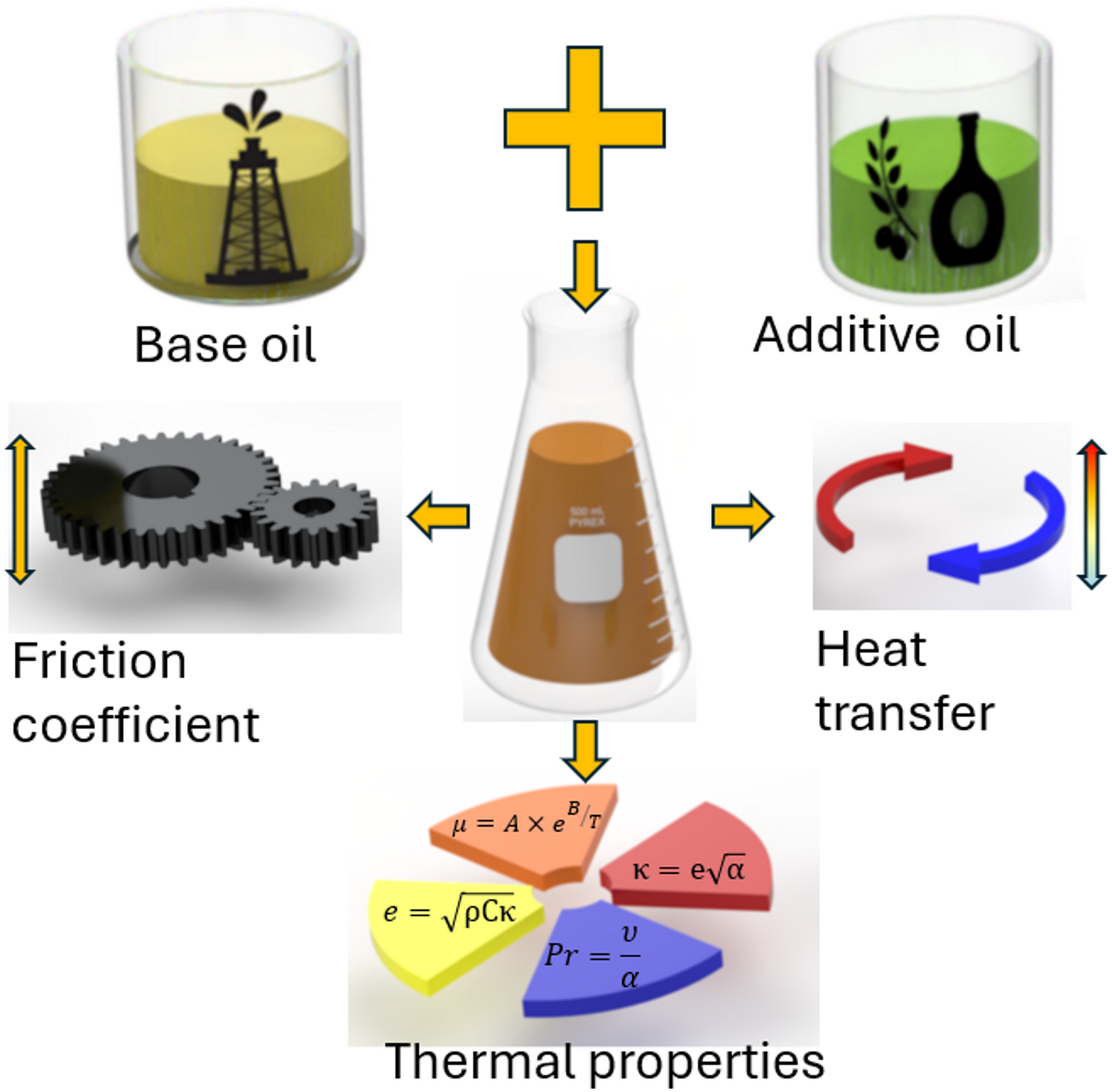

Lubricants are essential for many everyday applications, from preventing friction in specialized machinery to reducing noise in doors. One of the significant concerns when using lubricants is their petroleum origin. This paper presents data on the thermal properties of vegetable oils.

Follow the Topic
-
Discover Chemical Engineering

This is a broad, open access journal publishing research from across all fields relevant to chemical engineering, providing cutting-edge research findings to researchers, academicians, students, and engineers.
Related Collections
With Collections, you can get published faster and increase your visibility.
Innovative and Advanced Materials: Transforming Forensic Science and Beyond
The field of forensic science is at a pivotal juncture, driven by the integration of innovative materials that enhance the efficacy and accuracy of evidence analysis. As societal demands for reliable forensic methodologies grow, the role of materials science becomes increasingly significant. Emerging technologies are redefining how forensic evidence is collected, analyzed, and interpreted. These innovations not only improve the sensitivity and specificity of forensic tests but also expand the possibilities for cross-disciplinary applications, making a profound impact on criminal justice and public safety.
With the increasing complexity of forensic challenges, there is a need for a platform that encourages the exploration of new material solutions, particularly those that integrate artificial intelligence and sustainability. By focusing on cutting-edge advancements, this collection aims to highlight the transformative potential of these materials in forensic science and beyond.
Topics of interest include, but are not limited to:
- Nanotechnology in Forensic Applications
- Smart and Responsive Materials for Evidence Analysis
- Innovations in Biometric and Trace Evidence
- Sustainable Forensic Tools and Techniques
- AI-Integrated Materials for Enhanced Forensics
This Collection supports and amplifies research related to: SDG 9.
Keywords: nanotechnology, smart materials, forensic science, biometric evidence, sustainable tools, AI-integrated materials
Publishing Model: Open Access
Deadline: May 01, 2026
Artificial Intelligence Application in Sustainable Chemical Engineering
Artificial intelligence, including artificial neural network, deep neural network, support vector machine, genetic algorithm, fuzzy logic, adaptive-neuro fuzzy systems, sensors, software, and other technologies, has been recently employed in the field of chemical engineering. These AI techniques have been utilized in water and wastewater treatment engineering systems for predicting the pollutants’ removal efficiencies, optimizing the systems’ operational factors, and controlling the chemicals/reagents dosages, medium pH, and tank temperature. Moreover, AI-based digital tools have been applied for deploying real-time monitors and early warning systems to detect chemical transfer and immigration in aquatic, terrestrial, and atmospheric environments. AI-supported soft-sensors are also used for collecting, monitoring, assessing, and analyzing remote data accompanied by chemical pollution, where chemical pollutants discharged into the environment as a consequence of human activities could constitute a serious threat to human health and the environment. Furthermore, AI is employed to identify inputs/outputs nonlinear relationships in chemical and biochemical environmental-associated systems, e.g., ecological biochemistry represents the synergistic interactions between animals, plants, and the environment. Intelligent control schemes are used for smart and wireless monitoring of thermodynamics, reaction engineering, surface science, and catalysis. Regarding sustainable chemical and biochemical processes, AI-based techniques are used to diagnose, manage, and forecast pollution-related diseases to fulfill the sustainable development goals accompanied by pollution control and reduction, protection of human health, and climate change mitigation and adaptation.
Keywords: artificial intelligence; chemical process systems; chemical reaction optimization; deep learning; early-warning; intelligent control; molecular simulation; neural networks; property prediction; soft measurement
Publishing Model: Open Access
Deadline: Apr 30, 2026