We will always remember you
Published in Cancer




However, as usual in many scientific stories, there is much more behind these phrases that outline the main idea of our paper.
It all began with the ideas and efforts of Dr. Natalia Martínez to understand the implications of a phosphorylation hotspot in Spry2 (serine residue 112), which she first detected to be phosphorylated by the protein kinase p38MAPK (unpublished results). Later, other groups found that it was also a target of MNK1/MNK2, and subsequently – perhaps by serendipity – Natalia and coworkers determined that fundamentally serine 112 corresponded to a consensus PKD phosphorylation motif.
Natalia's scientific activity focused on basic research, a concept that Abraham Flexner (director of the Institute for Advanced Studies in Princeton, 1930-1939) defined in his essay “The Usefulness of Useless Knowledge” as pathbreaking research that leads to new tools and techniques, often initiated at unpredictable and indirect ways as a useless form of activity. Flexner argued that the vast majority of great discoverers were motivated not by a desire to be useful, but by the satisfaction of curiosity, and that this kind of research provides greater satisfaction than it would otherwise be obtained. Decades later, philosopher Nuccio Ordine proposed a similar thesis in his book “The Usefulness of the Useless” (“L'utilità dell'inutile”), which included Flexner's essay. As the center of his reflections, Ordine places the idea of utility of certain knowledge (such as humanistic knowledge or that obtained through basic research) whose essential value is completely alien to any utilitarian or commercial purpose.
For many years, Natalia worked hard to understand the physiological role of Spry2 phosphorylation by PKD. Finding the answer took a long time: regulation of its stability through the PKD/COP9 complex. However, she could not enjoy the pleasure of that discovery, as a metastatic melanoma took her away from us.
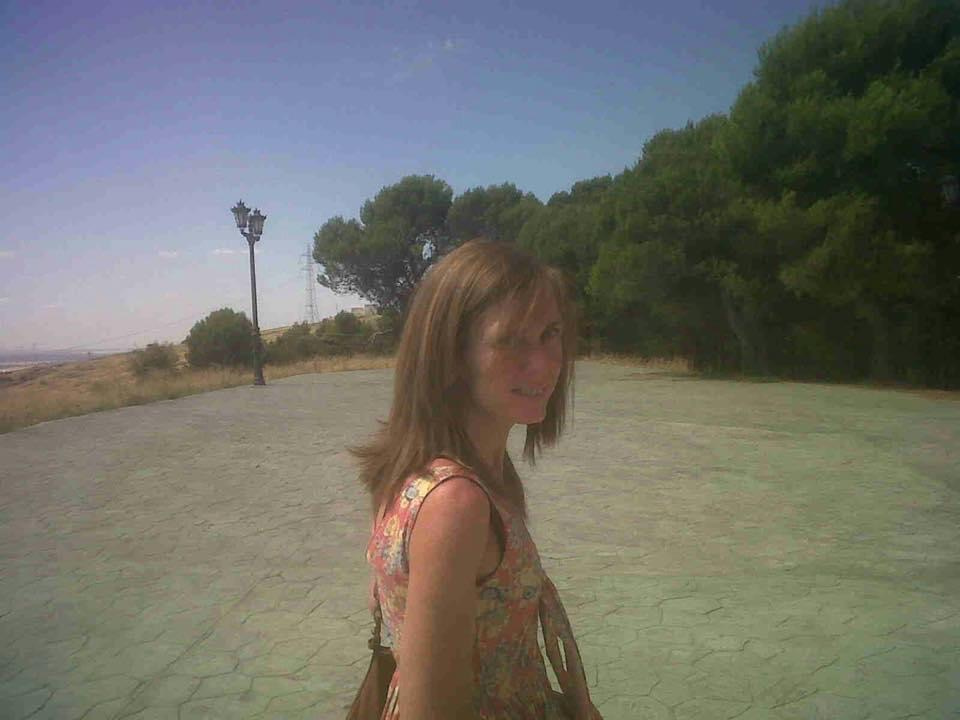
Natalia Martínez was a Doctor of Science from the Autonomous University of Madrid (UAM) and a staff scientist at the Carlos III Health Institute (ISCIII). Red-haired, progressive, kind woman, defender of animal rights, fighter against social inequalities and injustices and, especially, a person of great curiosity for all aspects of cellular and molecular biology. A young researcher, whose example of perseverance will always remain with us, because according to the classics, no one is dead as long as they are remembered.
Saul Bellow said that “the value of a human life is not measured by the triumphs achieved, by the power attained, nor by the wealth accumulated, but by the dignity of how it has been lived”. Dr. Natalia Martínez is a paradigm of dignity for us. For all these reasons, we dedicate this article to the memory of Dr. Natalia Martínez.
Follow the Topic
-
Oncogenesis
A peer-reviewed open access online journal that publishes articles exploring mechanistic insight and molecular basis of cancer and related phenomena. It seeks to promote diverse and integrated areas of molecular biology, cell biology, oncology, and genetics.

Related Collections
With Collections, you can get published faster and increase your visibility.
Metabolic Reprogramming in Cancer
The field of cancer metabolism has expanded rapidly, revealing how metabolic reprogramming drives tumour progression, therapy resistance, and cellular adaptation. Beyond local interactions, accumulating evidence shows that circulating immune cells and blood‑borne factors—including metabolites, cytokines, and extracellular vesicles—actively influence tumour metabolic states. These systemic signals interact with tumour‑resident cells to shape metabolic plasticity, modulate survival pathways, and affect treatment responses.
Within the tumour microenvironment itself, metabolic interplay between cancer cells, immune cells, and stromal components remains a central determinant of tumour behaviour. Altered glycolytic flux, lactate‑driven microenvironmental changes, and cancer stem cell–associated metabolic adaptations contribute to tumour aggressiveness, immune evasion, and resistance mechanisms. Together, these local and systemic dimensions provide an integrated view of how metabolism underpins cancer progression.
This collection supports United Nations SDG 3: Good Health & Well-Being.
Topics of interest include:
- metabolic interactions within the tumour microenvironment
- cancer stem cell metabolism
- glycolytic pathways in tumour promotion
- tumour–immune cell metabolic interplay (local and systemic)
- interplay between circulating blood cells and tumour metabolism
- drug resistance and metabolic shifts
- protein expression in metabolic reprogramming
- role of transcription factors in metabolism
- signal transduction pathways affecting cancer metabolism
Publishing Model: Open Access
Deadline: Dec 31, 2026