What I learned when I stopped counting the time
Published in Biomedical Research and Public Health


“No, no, no… this is so stressful! I don’t have time to talk about what I do with others during a chalk talk or at the weekly lab meeting. I’m running out of time,” I thought.
When I first joined the mass spectrometry lab, the working environment was somewhat lonely, perhaps because of the combination of two things: my research and the pandemic.
The study of glycans through mass spectrometry was not of particular interest to the different groups using the same space, and the global health emergency had made interaction with others nearly impossible.
Despite the sporadic coming and going of people looking for supplies and using equipment in room 231, I rarely exchanged more than a few words with them. I was focused on achieving my goals. With time, however, the pandemic gradually receded. The machines hummed louder, glass containers clinked, and the constant opening and closing of doors announced more people coming and going. Yes, everything was returning to the unsettling yet exciting normality of laboratory life.
Early one morning, I sat in front of the monitor, almost holding my breath, waiting for the instrument to confirm that the batch had finished successfully. The screen slowly came to life. Oh, geez! After a whole day of sample preparation and an overnight run, an error message popped up.
“All of yesterday’s work was wasted,” I muttered. “I’ll have to repeat everything.”
A persistent problem in one of the LC-MS/MS modules made me call the company responsible for the equipment again and again. After so many visits from the Field Service Engineers (FSEs), our conversations gradually moved beyond troubleshooting. As familiarity grew into friendship, I soon found myself disassembling modules and performing maintenance tasks alongside them.
While the FSE worked, I could have used that time to work on my review or catch up on papers in my field. But welcoming the experts and staying to talk with them was no longer simply a matter of courtesy. It had become a privilege.
Little by little, I went from being completely dependent on the company to troubleshooting several problems on my own. That autonomy made unexpected, though greatly desired, progress possible.
I could now work with greater confidence and efficiency, without feeling that every failure would leave me in a state of panic. A single equipment problem could bring my work to a halt for days, even weeks, depending on the FSEs’ availability.
Those conversations had not only taught me how to keep the equipment running; they had taught me how to look beyond it. My perception of the people around me had shifted: they were no longer interruptions to my work, but people who knew extraordinary things.
The problem was never that I knew everything. I was simply running like a freight train, trying to accomplish as much as possible without noticing how much I could learn from the people around me.
Little by little, I opened myself up to conversation and began participating in scientific gatherings with more intention and enthusiasm. Looking back, I remember how often I had declined these opportunities, convinced that the clock was keeping me chained to the bench.
Finally, the name of my Co-PI appeared on my calendar, and she kindly asked me to present some progress from my experiments. Although, as a visiting researcher, it was not mandatory, I took it as a learning opportunity. Months earlier, I would probably have thought of any excuse to avoid the presentation. Now, I was looking forward to it, eager to share my progress.
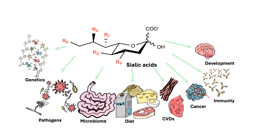
It was immediately after that lab meeting that a researcher became interested in my work, which explored the connections between glycans, chronic diseases, immunity, and nutrition. She was working as an editor on her second book and invited me to contribute a chapter.
A book chapter? Me? How? When?
I had always thought that writing a book, or even a chapter, was reserved for great scientists. I had not realized that I was already growing alongside them, and that perhaps I was ready to take on such a challenge.
Once the guidelines were clear, the next thought that came to mind was: “I need help.” And who better to ask than my fellow PhD students and friends? Although far away and with complicated schedules, it was worth sharing my excitement with them and inviting them to join me. It did not take much convincing. Without knowing all the details, they were already willing to embark on the adventure of writing the chapter together.
The day I saw the book, I understood that those conversations I had once considered interruptions had helped make every page of the chapter possible. And once the book was opened, that section we call a chapter no longer belonged only to us, the authors, but also to every reader who might find something useful in its pages.
Looking back, I realized that the way I managed my time had not changed. What had changed was my definition of what it meant to invest it well.
I learned that sometimes, the time we think we are losing with others is precisely the time that helps us move forward.
I’d describe myself as someone curious and always trying to refine how I understand things.