When a Blood Smear Tells the Story: Diagnosing Fatal secondary hemophagocytic lymphohistiocytosis in Pregnancy
Published in Healthcare & Nursing and General & Internal Medicine


The Case That Haunted Us
She was 20 years old, experiencing her first time pregnancy, and in her third trimester. She came to our facility with intermittent high-grade fever, a racing heart, rapid breathing, and an enlarged spleen. Basic labs showed anemia, low platelets, a high white cell count, and Plasmodium falciparum on the peripheral smear. Malaria in pregnancy. We treated it aggressively, intravenous artesunate, broad-spectrum antibiotics, fluids. Despite everything, she deteriorated rapidly and suffered a fatal cardiac arrest within hours.
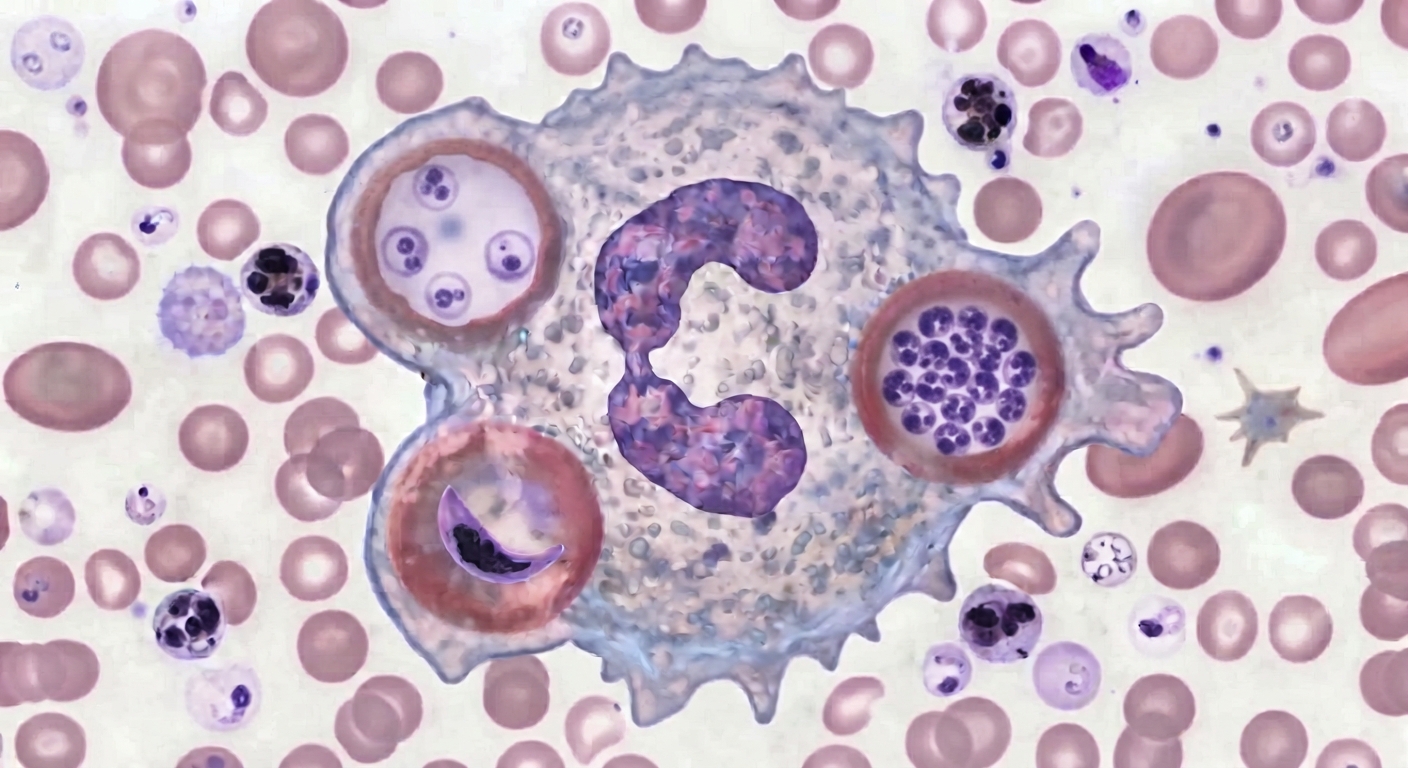
It was only after her death, when we re-examined the peripheral blood smear, that we saw it: hemophagocytic histiocytes engulfing red blood cells. The diagnosis was secondary hemophagocytic lymphohistiocytosis (sHLH), a life-threatening hyperinflammatory syndrome triggered by her malaria infection. The treatment we had given was correct for malaria, but it was not enough for sHLH.
Why This Case Matters
Malaria is common. Pregnancy is common. But the combination triggering sHLH? To our knowledge, this is the first reported case of sHLH in pregnancy primarily triggered by malaria. The only previously reported case involved an HIV-confounded presentation where malaria was an incidental finding. This case stands alone.
More importantly, the diagnosis was made on a peripheral blood smear, no bone marrow biopsy. In resource-limited settings like ours, bone marrow biopsy is rarely available. The peripheral smear is what we have. And in this case, it held the answer. We just didn't see it in time.
The Diagnostic Challenge We Missed
sHLH is notoriously difficult to diagnose. Its symptoms, fever, cytopenias, splenomegaly, overlap with severe malaria, sepsis, and HELLP syndrome. In pregnancy, these overlaps become even more treacherous. The HScore exists to guide diagnosis, but it requires parameters like serum ferritin, fibrinogen, and triglyceride levels that may not be readily available in district hospitals. We suspected severe malaria. We treated severe malaria. We did not suspect sHLH until it was too late.
The peripheral smear we examined for malaria parasites also contained the answer to a different question. Leukoerythroblastic reaction. Hemophagocytosis. These morphological clues were there. But in the chaos of an acutely deteriorating patient, the focus was on the parasite, not the histiocytes.
A Lesson in Collaboration
This case taught us something fundamental: laboratory personnel are not just technicians. They are diagnosticians. When a blood smear shows something unusual, phagocytosed erythrocytes, atypical histiocytes, flagging it can change the entire clinical trajectory. In our case, that collaboration failed. Not because anyone was negligent, but because the system did not emphasize it.
We need to strengthen the feedback loop between the lab and the bedside. (Engaging the knowledgeable clinical and laboratory personnel available on the ground, how can we better empower our frontline teams to flag these subtle findings?). A simple phone call about "unusual morphology" could have prompted us to re-evaluate the smear, to consider sHLH, to consider immunomodulatory therapy alongside antimalarials. We cannot know if it would have saved her life. We do know it would have changed our understanding of what was happening.
Clinical Take-Home
When you see malaria in pregnancy with rapidly worsening multi-organ dysfunction, ask yourself: is this just severe malaria? Or is there a cytokine storm driving it? Look at the peripheral smear again. Look for hemophagocytosis. Consider sHLH. And talk to your lab team, they may be seeing something you are not.
Read the full case report and literature review: Diagnostic utility of peripheral blood smear in fatal hemophagocytic lymphohistiocytosis complicating severe falciparum malaria in pregnancy
Follow the Topic
-
Journal of Medical Case Reports
This journal will consider any original case report that expands the field of general medical knowledge, and original research relating to case reports.