When Distinct States Share a Coordinate but Not a History The journey behind Finite-Support Admissibility and Hausdorff Interface Geometry
Published in Physics and Mathematics
What does it mean for two mathematically distinct states to appear at the same coordinate?
At first glance, this might seem to be an ordinary example of noninjectivity: two source points are mapped to one image. But that set-theoretic description leaves the essential questions unanswered. How do the states remain distinct? What is retained as they enter the shared coordinate? What governs the transfer between them? And why does the overlap not terminate the process that produced it?
These questions motivated my paper, Finite-Support Admissibility and Hausdorff Interface Geometry, now accepted for publication in Analysis and Mathematical Physics. The work forms part of Chronoscalar Field Theory, or CFT, a broader framework in which time is not treated as a passive coordinate through which otherwise complete states are transported. Instead, physical and mathematical structure is organized through asymmetric time-scalar events whose effects persist through continuous handoff into succeeding events.
From this perspective, an overlap is not simply a place where two states become coincident. It is an active interface at which a prior event continues into the next without losing the distinction carried by its source history.
From coordinate coincidence to persistent structure
A disconnected coproduct can make noninjectivity trivial. Two points belonging to separate components may simply be assigned the same image. That construction establishes coincidence in the target space, but it does not explain the algebraic content of the overlap or the persistence of the states passing through it.
The central task of the paper was therefore to construct two source states that remain Hausdorff-separated while their ambient projections occupy the same coordinate. Their distinction cannot depend only on disconnected labels. It must be preserved by the finite-support, phase, and transition structure of the system.
In the resulting construction, each source state carries its own phase and support history. Those histories are not erased when the lower-dimensional projections coincide. The shared coordinate records where the states appear in the ambient geometry, but it does not exhaust what the states are.
This is central to the CFT interpretation. An asymmetric time-scalar event does not end by disappearing into an isolated point. It persists through the wake that it establishes and through the succeeding event into which that wake is handed. The wake is therefore not an auxiliary memory variable appended to the system after the fact. It is the retained continuation of the preceding event.
The Hausdorff-separated source states provide the topology needed to preserve this distinction, while the shared ambient coordinate identifies the locus at which the handoff becomes geometrically visible.
Overlap as a dynamic slide
One of the principal conceptual changes in the paper is the treatment of overlap as a dynamic slide governed by a rate of change, rather than as a static coincident fiber.
The states do not arrive at the interface, become identical, and stop. The spiral ascent instead reaches its maximum at the overlap locus. An Euler phase embedding, represented through (e^{i\theta}), remains carried in the Hausdorff-separated source states even though their ambient (3+1)-dimensional projections occupy the same coordinate.
The overlap is therefore a point of maximal transition rather than maximal collapse.
The off-diagonal coupling represents the active transfer of phase and momentum through this interface. It records a handoff from the persistent wake of one asymmetric time-scalar event into the structure of the succeeding event. The coupling is consequently not a static association between two matrix entries. It describes the continuation of an ordered process.
This interpretation also changes the role of time. Time is not an independent background parameter that merely labels a sequence of otherwise static configurations. The scalar event is intrinsically asymmetric: it establishes a direction of continuation, carries a retained wake, and conditions what may follow. Persistence is produced by that ongoing handoff rather than by the indefinite survival of an unchanged object.
The (1{:}3) split
The characteristic (1{:}3) split of CFT is woven into this interface structure.
The split distinguishes the retained directional contribution participating in the active handoff from the threefold ambient realization through which that contribution is expressed. It is not merely a numerical division imposed on the geometry. It organizes the relation between the persistent source-directed event and its spatially distributed projection.
At the interface, the single retained temporal contribution does not vanish into the three-dimensional ambient sector. Nor does the ambient sector exist independently of the event that conditions it. The two remain linked through the finite-support admissibility structure.
This (1{:}3) organization helps explain how two states can share an ambient coordinate without becoming the same source state. Their projected occupancy belongs to the threefold spatial realization, while their asymmetric time-scalar histories remain separated and continue through the retained temporal channel.
The shared coordinate is therefore not a loss of information. It is a selective projection of a more structured event.
Why finite support matters
Finite support provides the admissibility conditions needed to keep this process selective and mathematically controlled.
Rather than beginning with an indefinitely divisible continuum of formally possible states and restricting it afterward, the paper begins with a finite-support architecture. Only configurations satisfying the required support relations are admitted to the interface.
This makes the overlap nontrivial. Not every nominal coincidence is a valid transition, and not every pair of source states can participate in the same ambient projection. The admissibility relations determine which histories can reach the interface, which phase relations can persist across it, and which handoffs are structurally available.
Finite support also prevents persistence from becoming an unspecified appeal to continuity. The preceding event persists because its retained contribution is transferred through a defined support relation into the succeeding event. What continues is not an infinitely extended copy of the original state, but an ordered and constrained handoff.
Topology, algebra, phase, temporal asymmetry, and support are therefore not separate descriptive layers. They are different aspects of the same interface mechanism.
The most difficult part of the work
The main challenge was not producing two points with the same image. That would have been straightforward.
The real difficulty was showing that the shared projection arose from a nontrivial algebraic and temporal structure while preserving Hausdorff separation in the source space. The construction had to establish that:
- the two source states remain distinguishable;
- their common projection is not an artifact of disconnected labeling;
- their phase and support histories survive the projection;
- the overlap supports an active handoff rather than a static coincidence;
- the asymmetric time-scalar event persists into its succeeding wake;
- and the (1{:}3) partition remains compatible with the finite-support conditions.
Anchoring the topology to the discriminant was essential. It tied the shared projection to the algebraic structure of the system instead of introducing it as an arbitrary identification.
This was also where the work changed most during its development. Many constructions can depict an overlap. Far fewer can explain why the overlap occurs, what remains distinct within it, how the preceding event survives it, and how the transfer proceeds without converting the interface into either a static graph or an unconstrained continuum.
A broader mathematical question
The paper ultimately asks readers to reconsider a familiar assumption: when two states share a coordinate, must they have become the same state?
The construction shows that distinct source states can remain Hausdorff-separated while presenting a common ambient location. Their histories, phases, finite-support relations, and temporal orientations remain active even when the projection no longer displays those distinctions directly.
CFT places this result within a broader account of persistence. An event is not an isolated episode followed by a disconnected replacement. Each asymmetric time-scalar event conditions the next through its retained wake. The system advances through continuous handoff, while the (1{:}3) split organizes the relation between temporal persistence and ambient spatial realization.
The apparent coincidence of two states is therefore not necessarily an endpoint. It may instead mark the exact location at which one stage of an ordered process is transferred into another.
This perspective may be useful wherever a lower-dimensional representation conceals distinctions that remain active in the source structure. Such situations occur in geometry and mathematical physics wherever interfaces, phase transfer, branch structures, projections, and noninjective mappings interact.
The broader lesson is that coordinate coincidence does not imply structural identity, and persistence does not require static continuation.
Looking ahead
I hope this work encourages further discussion about how mathematical interfaces should be represented. In particular, it may be fruitful to study overlap as a region of maximal transition, where separated source histories remain active while their ambient projections temporarily coincide.
The paper is part of a wider research program at Chronoscalar Dynamics examining finite-support structure, asymmetric time-scalar events, persistent wake handoff, the (1{:}3) partition, and projection geometry. Together, these ideas provide a framework for describing systems in which distinct states interact and transfer structure without losing their source identity.
I am grateful to the Editors and reviewers at Analysis and Mathematical Physics for their careful engagement with the manuscript and for the opportunity to bring this work into the mathematical-physics community.
I look forward to conversations with researchers interested in the relationship between source separation, asymmetric temporal persistence, shared projections, and dynamic interfaces.
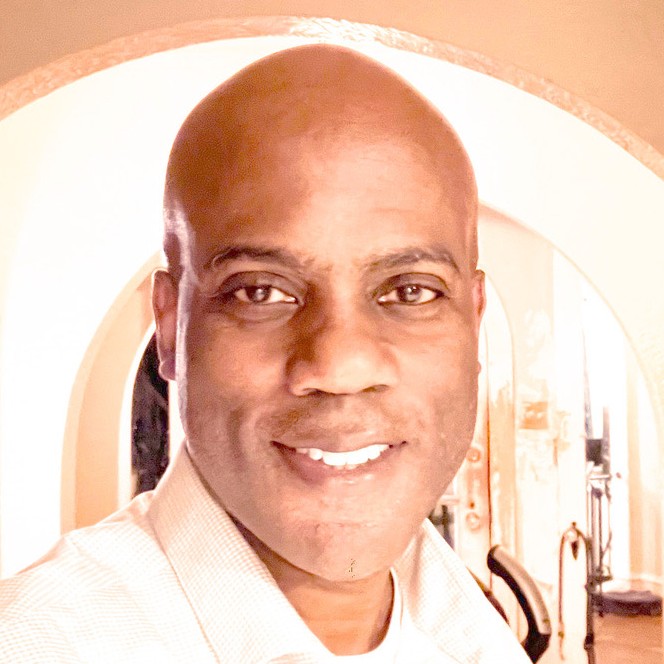
I developed a love of advanced mathematics and theoretical physics while studying medicine at the University of Pennsylvania and internship/residency at Harvard Medical School. After a career in ophthalmology and vitreoretinal surgery, I founded Chronoscalar Dynamics to develop Chronoscalar Field Theory and investigate the nonlinear foundations of nature.