When do migratory birds get a chance to reset their clocks?
Published in Ecology & Evolution


A question that began with a few species
Migration is a race against the calendar. Each year, migratory birds travel thousands of kilometres between breeding and non-breeding grounds, often crossing continents, deserts and seas while conditions change around them. They must reach the right places at the right times. But events across the annual cycle are not necessarily independent. A bird that leaves its breeding grounds late might also arrive late at its non-breeding grounds. That delay could potentially persist into the following spring.
Studies of individual species had revealed striking variation in these relationships. In some populations, the timing of one event strongly predicted the next. In others, the connection weakened or disappeared. This raised a broader question: are general rules governing how migratory schedules are connected across the annual cycle? Most previous studies had focused on a single species, population or portion of the migratory journey. Answering the larger question required a much broader view.
From individual tracks to a global annual cycle
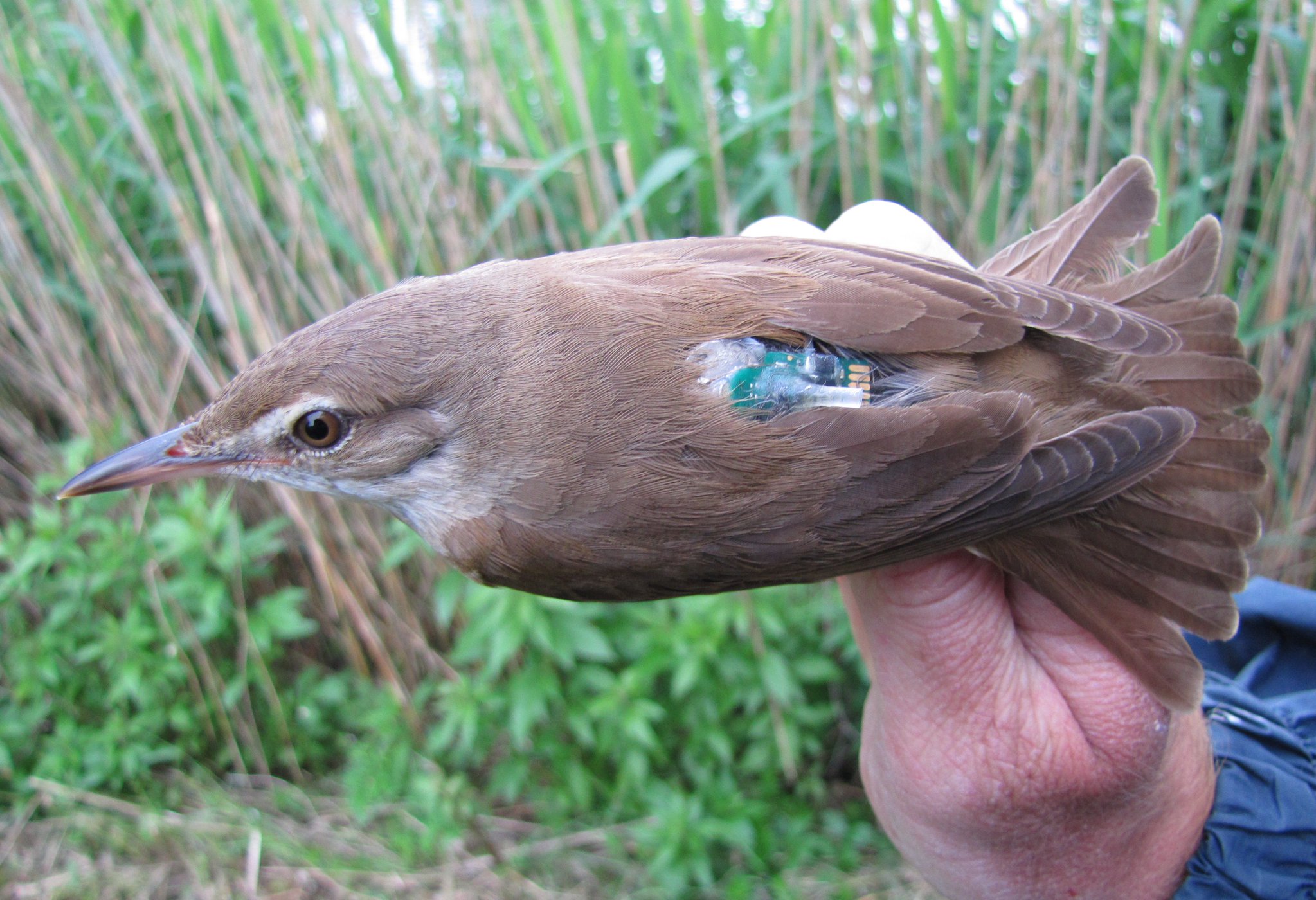
For decades, following the same small migratory bird throughout its annual cycle was extremely difficult. That changed when light-level geolocators became small enough to be carried by songbirds. A landmark study by Stutchbury and colleagues in 2009 demonstrated that these devices could reconstruct movements between breeding and non-breeding grounds, opening a new era of full annual-cycle migration research.
Over the following years, research groups around the world accumulated tracking datasets for many different migratory species. Together, these independent studies represented an extraordinary, but scattered, record of individual migration schedules. We wanted to bring those datasets together to ask how strongly the timing of successive events is connected across populations, species, and hemispheres, and whether birds can compensate when their schedules are delayed.
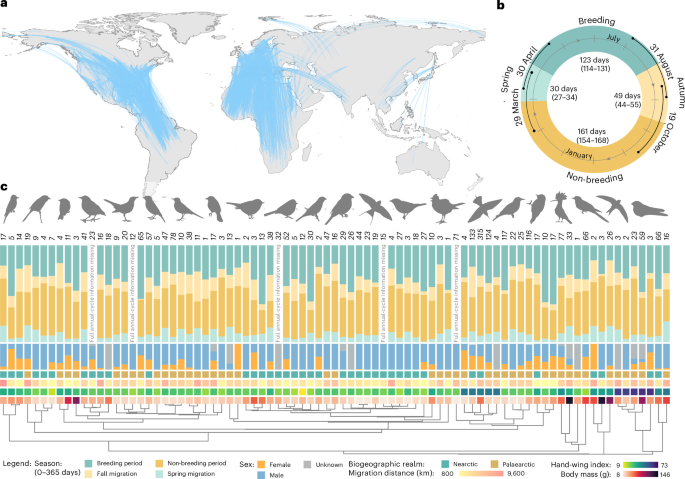
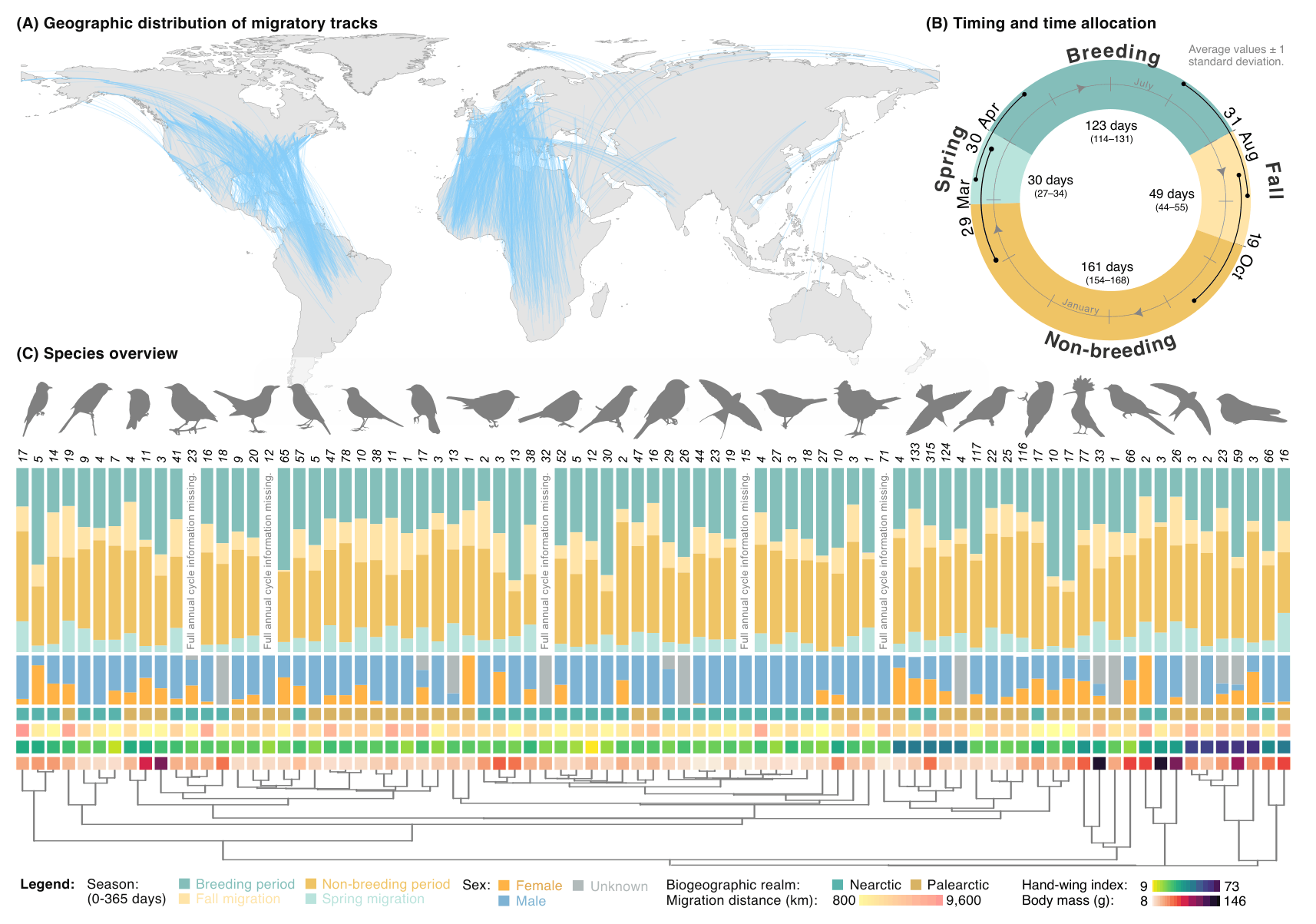
After harmonizing published and unpublished data, we reconstructed annual schedules for 2,324 individual birds representing 83 species and 22 families across six continents. For each bird, we examined four major events: departure from the breeding grounds, arrival at the non-breeding grounds, departure from the non-breeding grounds, and return to the breeding grounds.
We asked whether the timing of one event predicted the next, or whether there were points in the annual cycle when earlier timing differences were effectively erased.
Every row in the dataset had a story behind it
A global tracking dataset can eventually look simple: rows in a spreadsheet and points on a map. But every track has a field story behind it.
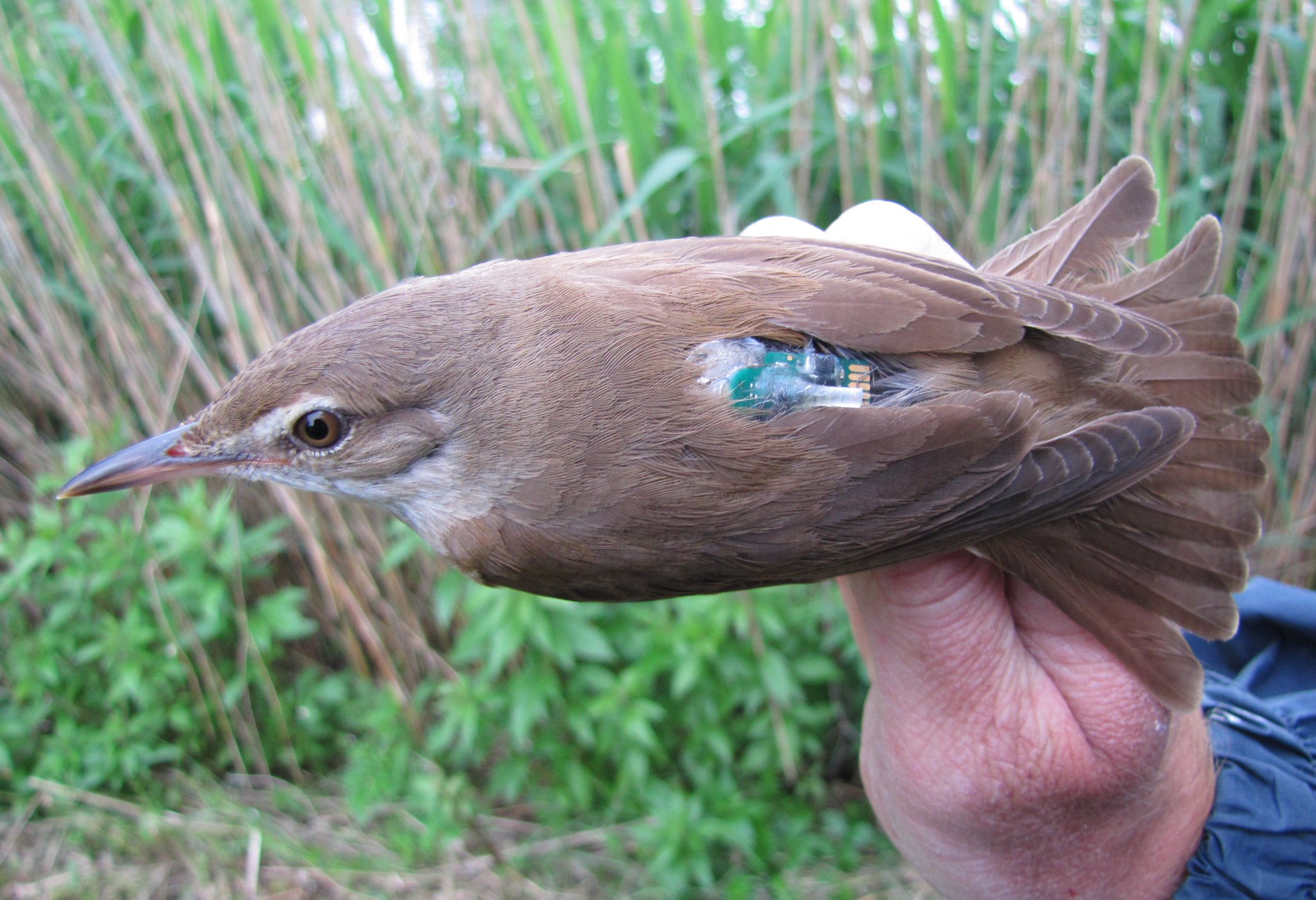
Most small birds in our study were tracked using archival light-level geolocators, which do not transmit their data. Researchers must first capture a bird and attach the device, then return the following year and recapture the same individual after it has completed migration and spent most of the year thousands of kilometres away.
Only then can the stored data be recovered.
Building even a modest tracking dataset can, therefore, require multiple breeding seasons, repeated field visits and considerable persistence. The thousands of tracks used in our study represented years of work by research groups around the world.
Bringing those datasets together depended on an equally important form of collaboration. More than 85% of the researchers we contacted agreed to contribute their data and became co-authors on the resulting paper. This collaboration made it possible to address patterns that none of us could have resolved alone.
Following the dominoes
One possibility was that delays would behave like falling dominoes. A bird leaving its breeding grounds late might arrive late at its non-breeding grounds, then depart late the following spring and ultimately return late to breed. We found strong evidence for this pattern during migration. Birds that left the breeding grounds later tended to arrive at their non-breeding grounds later. Similarly, birds departing the non-breeding grounds later tended to return to the breeding grounds later in spring.
These relationships appeared across species, among populations of the same species and among individuals within populations. In other words, successive migration events were temporally coupled: the timing of one event was strongly connected to the timing of the next.
Migratory birds can make up time – but only partly
We next asked whether birds that started late could catch up.
Migration is not continuous flight. Small landbirds spend much of their journey on the ground refuelling between flights, meaning that migration speed can change through differences in stopover duration, refuelling rate, and travel speed.
Later-departing birds did migrate faster. On average, a 10-day delay in departure was associated with about a 6-day reduction in autumn migration duration and a 4-day reduction in spring migration duration.
That compensation, however, was incomplete. Birds that started migration later still tended to arrive later. Migratory schedules, therefore, contain considerable flexibility, but not enough to erase delays completely during migration itself.
Then the connection disappeared
The clearest contrast emerged during the longest stationary period of the annual cycle.
Across the species in our dataset, birds spent an average of about 161 days on the non-breeding grounds. If delays simply propagated from one stage to the next, birds arriving late should also have departed late the following spring.
They did not.
Across more than 2,000 individuals from 79 species, the date of arrival at the non-breeding grounds had almost no relationship with the date of departure the following spring.
The strong temporal coupling evident during migration had effectively disappeared. We refer to this as a temporal reset, a point in the annual cycle where earlier differences in timing no longer strongly predict what happens next.
The same pattern appeared across the full year. The date on which a bird left its breeding grounds explained very little variation in when it returned to breed the following year.
The annual cycle therefore does not appear to be one uninterrupted chain of dependent events. Instead, periods of strong temporal coupling are separated by opportunities for schedules to reset.
Why might the non-breeding period reset the clock?
Our results identify the non-breeding period as the major point where migratory schedules become decoupled, and they also suggest several plausible reasons why.
Time itself may be important. Months separate arrival from departure, during which birds experience changing weather, food availability, competitors, predators and other local conditions. These experiences may progressively weaken the influence of when an individual originally arrived.
Conditions immediately before spring departure may also matter more than events many months earlier. Resource availability, for example, can affect how quickly birds accumulate the fuel needed for migration. Some species also move among several sites during the non-breeding season, exposing individuals to an even wider range of conditions.
The non-breeding period may therefore be much more than a pause between migrations. It appears to provide an important window in which migratory schedules can be reorganized before the next journey begins.
Determining exactly which environmental and biological processes drive that reset is an important next step.
What comes next?
Tracking technology now provides remarkably detailed information about where migratory birds go and when they get there. A major remaining challenge is understanding what these differences in timing mean for survival and reproduction.
Does arriving five days later reduce reproductive success? Does accelerating migration carry a cost? Do birds that successfully reset their schedules during the non-breeding period perform better during the following breeding season?
Answering these questions will require combining full annual-cycle tracking with measures of survival and reproductive success across populations and species.
Geographic gaps also remain. Even a dataset spanning six continents reflects where tracking studies have been possible and where researchers have had the resources to deploy and recover devices. As tracking devices become smaller, more accurate, and increasingly capable of remote data download, global analyses should become both broader and more powerful.
Our study shows that migratory schedules can be tightly linked over parts of the annual cycle without remaining locked together for the entire year. Birds can partly compensate for delays during migration, but the strongest reset appears to occur during the long non-breeding period.
Understanding how that reset happens, and what it means for the ability of migratory birds to cope with changing environments, is now the next challenge.
Follow the Topic
-
Nature Ecology & Evolution
This journal is interested in the full spectrum of ecological and evolutionary biology, encompassing approaches at the molecular, organismal, population, community and ecosystem levels, as well as relevant parts of the social sciences.

Related Collections
With Collections, you can get published faster and increase your visibility.
Biodiversity and ecosystem functioning of global peatlands
Publishing Model: Hybrid
Deadline: Jan 31, 2027
Understanding species redistributions under global climate change
Publishing Model: Hybrid
Deadline: Dec 31, 2026