When Food Choices Tell a Bigger Story: Understanding Food Literacy among Young Adults in India
Published in Education




Living and working in Delhi NCR, we observed a growing contradiction among young adults. Many were aware of concepts like “healthy eating,” “balanced diets,” and “junk food,” yet daily eating habits often reflected a different reality. Fast food deliveries had become routine, meal skipping was common, packaged snacks replaced homemade meals, and eating patterns were increasingly shaped by stress, convenience, social media, and busy urban lifestyles.
At the same time, India is witnessing a sharp rise in obesity, diabetes, hypertension, and other non-communicable diseases (NCDs), even among younger populations. We wanted to understand whether the issue was simply a lack of nutrition knowledge or whether something deeper was happening.
This led us to explore the concept of food literacy.
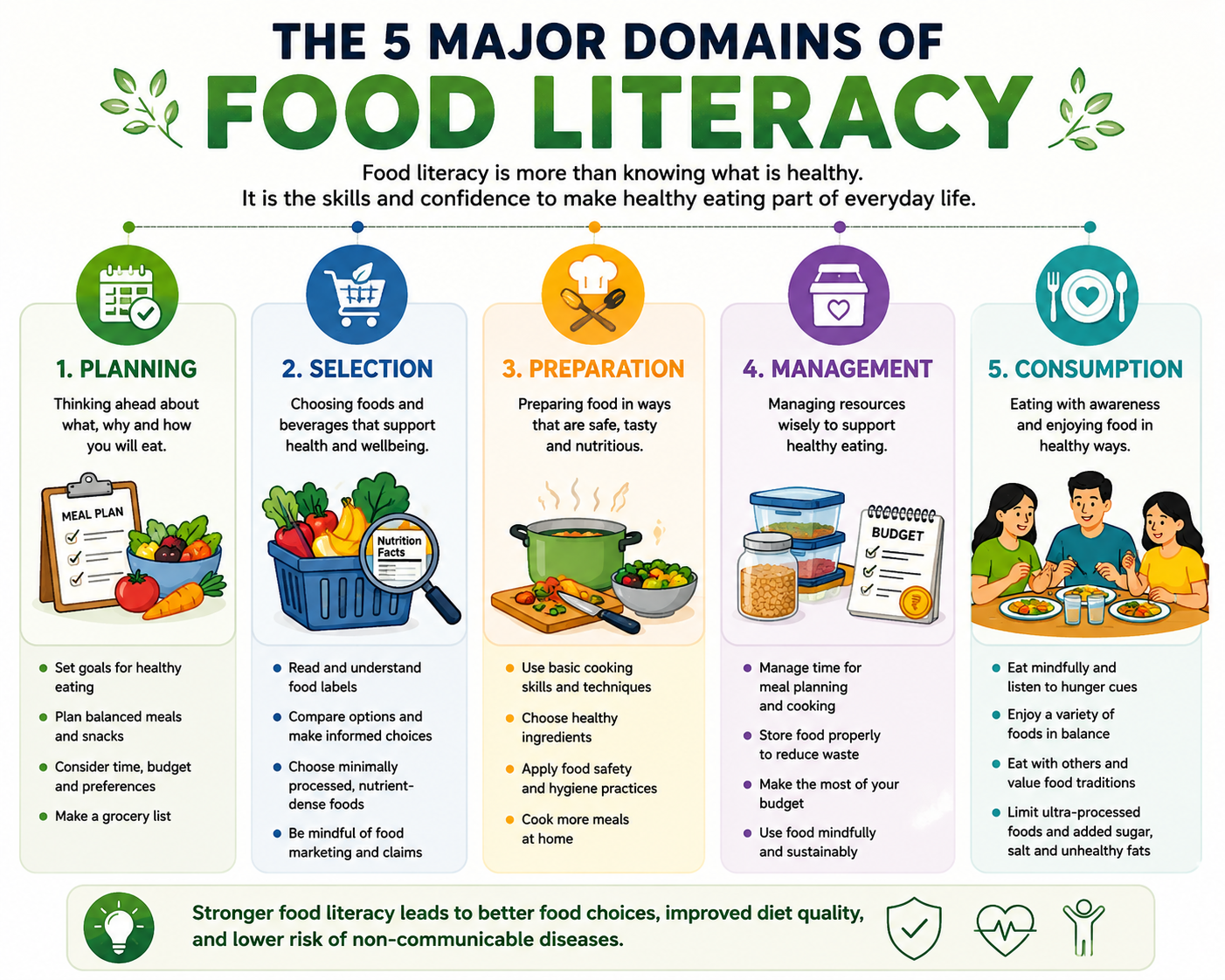
Food literacy goes beyond knowing which foods are healthy. It includes the practical and behavioural skills needed to make healthy eating possible in everyday life: planning meals, reading labels, shopping wisely, preparing food, managing time, and making informed choices despite environmental pressures.
Although food literacy has been studied in several countries, very little research has explored it in the Indian context using validated multidimensional tools. We saw an opportunity to contribute evidence from India, especially among urban young adults who are rapidly transitioning toward modern food environments.
Our study, conducted among 119 adults in Delhi NCR, examined self-perceived food literacy and diet quality using internationally validated assessment tools.
One of the most surprising findings was that while many participants demonstrated moderate skills in certain areas, such as healthy food preparation or nutrition awareness, only about 19% showed comprehensive food literacy across all major domains.
This finding revealed something important: food literacy is fragmented.
A person may know how to cook but struggle with meal planning. Another may understand nutrition labels but still rely heavily on ultra-processed foods because of time constraints, stress, or convenience. Food decisions are rarely shaped by knowledge alone.
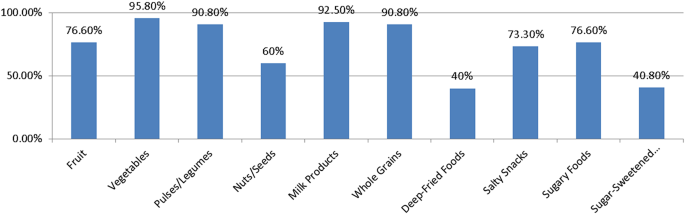
Our diet quality findings reflected this “dual dietary burden.” Many participants consumed protective foods like fruits, vegetables, pulses, and dairy, yet these foods coexisted with frequent consumption of sugary beverages, deep-fried foods, packaged snacks, and fast foods.
This pattern mirrors what many of us see every day in urban India a mix of traditional eating habits and rapidly expanding processed food culture.
Another interesting aspect of the study was that higher food literacy was associated with better diet quality, particularly in areas such as food selection, label reading, meal planning, and nutrition self-efficacy. However, food literacy alone was not directly associated with body weight or BMI. This reminded us that obesity and metabolic health are influenced by many interconnected factors, including stress, sleep, physical activity, environment, affordability, and lifestyle.
The research also highlighted the emotional and environmental dimensions of eating. Many young adults today navigate food choices in environments filled with aggressive marketing, online food delivery apps, social pressures, and limited time for cooking. Healthy eating is no longer simply a matter of “willpower”; it is deeply connected to the systems surrounding us.
As researchers, this study changed how we think about nutrition education.
Traditional nutrition messaging often focuses only on information: telling people what to eat and what to avoid. But our findings suggest that knowledge alone is insufficient. Young adults also need practical life skills, supportive food environments, affordable healthy options, and opportunities to develop confidence in managing food choices.
Food literacy, therefore, becomes not just an educational concept but a public health strategy.
We believe future interventions should move beyond classroom-style nutrition advice and instead include cooking skills, meal planning workshops, digital food literacy, label-reading education, emotional eating awareness, and policy-level actions that make healthy foods more accessible and convenient.
This research journey was especially meaningful because it brought together behavioural science, nutrition, and public health within the Indian context. It also reinforced the importance of understanding people’s lived experiences around food rather than viewing dietary behaviour in isolation.
Most importantly, the study reminded us that healthy eating is not simply about individual choices. It is about the interaction between knowledge, skills, emotions, culture, time, economics, and the environments we live in.
As India continues to urbanize and younger populations face increasing lifestyle-related disease risks, understanding food literacy may help us design more realistic and compassionate approaches to nutrition promotion.
Research is often driven by data, but behind every dataset are real people trying to make food choices in increasingly complex environments. We hope that this work contributes to creating healthier, more supportive food systems for the next generation.

Follow the Topic
-
Discover Public Health
This is an open access journal publishing research from all fields relevant to public health.

Related Collections
With Collections, you can get published faster and increase your visibility.
The Economics of Longevity: Health Expenditure and Societal Implications for Public Health Systems
The relationship between health investment and life expectancy has long been a focal point in public health research and policy. As nations grapple with rising healthcare costs and varying health outcomes, understanding how financial allocations influence population health becomes increasingly critical. Numerous studies have illustrated that increased spending on health services often correlates with improvements in life expectancy; however, the complexities of this relationship are not fully understood. Factors such as socioeconomic status, healthcare accessibility, and the efficiency of health systems play significant roles in determining how investments translate into health outcomes.
At the national level, health investments primarily encompass government expenditure on healthcare systems, public health initiatives, and health infrastructure. Nations that allocate substantial resources toward healthcare often experience better health outcomes and increased life expectancy among their populations. For instance, countries with robust healthcare funding tend to provide more comprehensive services, including preventive care, chronic disease management, and health promotion programs, all of which contribute to enhanced population health. However, it is crucial to consider how these investments are distributed across different segments of the population. Inequities in health spending can exacerbate existing disparities, leading to significant differences in life expectancy among various demographic groups. Effective health investment strategies must address these disparities to ensure that improvements in life expectancy are equitable and inclusive.
The motivation for this Collection arises from the urgent need to bridge the gap between health expenditures and tangible improvements in life expectancy. Recent global health crises and ongoing disparities in health outcomes across different populations have underscored the necessity for a deeper exploration of how resource allocation affects health dynamics. This Collection seeks to provide a platform for researchers and practitioners to discuss empirical evidence, theoretical frameworks, and innovative approaches to understanding these critical interactions. By fostering dialogue around effective health investment strategies, we aim to contribute to the development of more equitable and efficient health systems worldwide.
The purpose of this Collection is to gather comprehensive research that elucidates the dynamics between health investment and life expectancy across diverse contexts. We welcome contributions that analyze historical trends, comparative studies, and policy evaluations, as well as those that explore the implications of financial investments on health equity. By highlighting interdisciplinary perspectives and fostering collaboration, this Collection aspires to advance the discourse on optimizing health investments for improved population health outcomes.
Topics of interest include, but are not limited to:
- Economic evaluations of health interventions
- Policy impacts on health spending and life expectancy
- Health equity and investment disparities
- Longitudinal studies on health expenditures and population health
This Collection supports and amplifies research related to SDG 3.
Keywords: health expenditure; healthcare economics; life expectancy; economic evaluation; population health; health investment; health policy
Publishing Model: Open Access
Deadline: Dec 31, 2026
Digital Frontiers in Public Health: Data-driven Solutions and Technologies for Efficiency, Effectiveness, and Equity
In recent years, the landscape of public health has been transformed by unprecedented access to high-quality data, advances in data storage and processing, and a growing willingness to share information across jurisdictions. The global response to the COVID-19 pandemic exemplified how coordinated data use and technological innovation can accelerate decision-making, enhance surveillance, and save lives. These developments mark a new era in which the application of modern data analytics in evidence-driven public health practices is not only possible but essential.
Building on this momentum, contemporary innovations are contributing to significant improvements in the three Es of public health: efficiency, effectiveness, and equity. Improved efficiency enables resources to be allocated and managed in a manner that generates the maximum attainable outputs; enhanced effectiveness ensures that public health policies, interventions, and practices achieve the expected health outcomes; and strengthened equity promotes fair access to healthcare and public health services across all populations. Together, these dimensions reflect the evolving priorities and capabilities of modern public health systems.
This Collection, “Digital Frontiers in Public Health: Data-driven Solutions and Technologies for Efficiency, Effectiveness, and Equity,” invites contributions that explore these themes through empirical studies, methodological advancements, case studies, and policy analyses. We seek manuscripts that highlight innovative data applications, cross-sector collaborations, digital health initiatives, and strategies that enhance equity through technology and data integration, as well as collaborative public health practices.
Topics of interest include, but are not limited to:
- Applications of novel data linkage and analytics methods in public health
- The role of participation and co-creation in addressing public health issues
- Digital and technological innovations in public health
- Complete or partial assessments of triple Es in public health
- Economic evaluations of public health interventions
By showcasing diverse approaches from around the world, this Collection aims to provide a comprehensive overview of how data-driven innovations are reshaping public health practice today, and in the future. Researchers, practitioners, and policymakers are encouraged to share their insights and experiences to contribute to this critical dialogue on the future of public health.
This Collection supports and amplifies research related to SDG 3.
Keywords: digital applications; data sharing; data infrastructure; economic evaluations; health equity; public health; policy analysis; health informatics
Publishing Model: Open Access
Deadline: Sep 30, 2026

