
Across Africa and Asia, pangolins are disappearing at an alarming rate. Often called the world’s most trafficked mammal, these shy, nocturnal animals face relentless pressure from illegal wildlife trade, habitat loss, electrocution on fences, and increasing human disturbance. Yet, despite their conservation importance, we still know remarkably little about their biology, particularly how they physiologically respond to stress.
Our recent study focused on a deceptively simple question: how can we measure stress in a pangolin without causing additional stress to the animal itself?
At first glance, that may sound straightforward. In many animals, stress hormones can be measured using blood samples. However, pangolins are exceptionally sensitive animals. Capturing, restraining, and repeatedly handling them can itself trigger profound physiological stress responses. For threatened species already struggling to survive, invasive procedures are not always ethical, practical, or safe.
This challenge forced us to think differently.
Rather than relying on blood sampling, we used a non-invasive approach to measure hormone metabolites in pangolin faeces. These hormone metabolites provide insight into the activity of the hypothalamic-pituitary-adrenal (HPA) axis, the system responsible for the physiological stress response in vertebrates. Importantly, faecal samples can often be collected without disturbing the animal, allowing researchers to monitor stress over time while minimising human interference.
But there was another complication. Hormone-monitoring tools cannot be transferred from one species to another. Pangolins metabolise and excrete hormones differently from other mammals, meaning we first had to validate which laboratory assay could reliably detect meaningful changes in stress hormone metabolites in this species.
That validation process became the heart of our study.
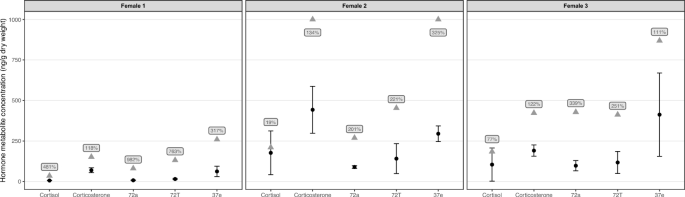
Because experimental stress tests are not possible in pangolins, we relied on a rare opportunity provided through rehabilitation centres caring for confiscated Temminck’s pangolins rescued from illegal wildlife trafficking. These animals were already undergoing veterinary assessments and rehabilitation procedures as part of their care. By collecting faecal samples before and after naturally occurring stressors, such as transport, handling, veterinary examinations, and movement between facilities, we could determine whether specific hormone assays detected biologically meaningful changes in stress levels.
Working with rehabilitated pangolins is unlike working with almost any other species. Every sample matters. Every observation matters. Pangolins are elusive, nocturnal, and highly stress-prone. Sample collection is entirely opportunistic. Sometimes days pass before a fresh sample can be obtained. In many ways, the study required patience above all else.
One of the most memorable aspects of the project was how collaborative it became. Veterinarians, rehabilitation staff, conservationists, laboratory specialists, and researchers all contributed to the work. Conservation science often appears highly technical in publications, but behind every dataset lies enormous coordination and dedication from people deeply invested in protecting species on the brink.
Our results showed that a specific enzyme immunoassay, the 72a assay, consistently detected strong increases in stress hormone metabolites across all study participants. This means we now have a validated, non-invasive tool for monitoring physiological stress in Temminck’s pangolins.
That may sound highly specialised, but the implications are surprisingly broad.
For rehabilitation centres, this provides a way to evaluate how stressful particular procedures or environments may be for rescued pangolins. Human interaction, transport, and even movement between holding facilities all triggered substantial physiological stress responses in our study animals. Understanding these responses can help refine rehabilitation protocols to minimise stress and potentially improve survival after release.
The findings also highlight something conservationists often discuss but rarely quantify directly: surviving is not necessarily the same as thriving.
Animals can appear outwardly healthy while experiencing substantial physiological strain. Stress physiology allows us to look beneath the surface and identify hidden welfare challenges before they become visible through illness, reproductive failure, or mortality. In endangered species conservation, this type of early-warning system can be invaluable.
Beyond rehabilitation, the validated assay also offers opportunities to monitor wild pangolin populations. As climate change, habitat transformation, and human expansion continue to alter African landscapes, conservationists urgently need tools that can assess how animals are coping physiologically with environmental change.
Importantly, this study also reinforces the growing importance of non-invasive conservation physiology. Modern wildlife conservation increasingly requires methods that reduce disturbance while still providing meaningful biological information. Non-invasive hormone monitoring is one example of how advances in physiology can directly contribute to animal welfare and conservation management.
For me, one of the strongest takeaways from this project was how much remains unknown about pangolins. Despite their global conservation importance, even basic physiological information is still lacking for many species. That knowledge gap makes every successful study feel significant, not only scientifically, but also practically for conservation.
There is also something deeply humbling about working with pangolins. They are ancient, unique animals, unlike anything else in the mammalian world. Watching a rehabilitated pangolin slowly recover, forage, and eventually prepare for release is a reminder of why conservation research matters in the first place.
Ultimately, this study was never just about hormones. It was about developing better ways to understand, care for, and protect one of the world’s most threatened mammals.
And sometimes, saving a species begins with learning how to listen to what its physiology is trying to tell us.



Please sign in or register for FREE
If you are a registered user on Research Communities by Springer Nature, please sign in