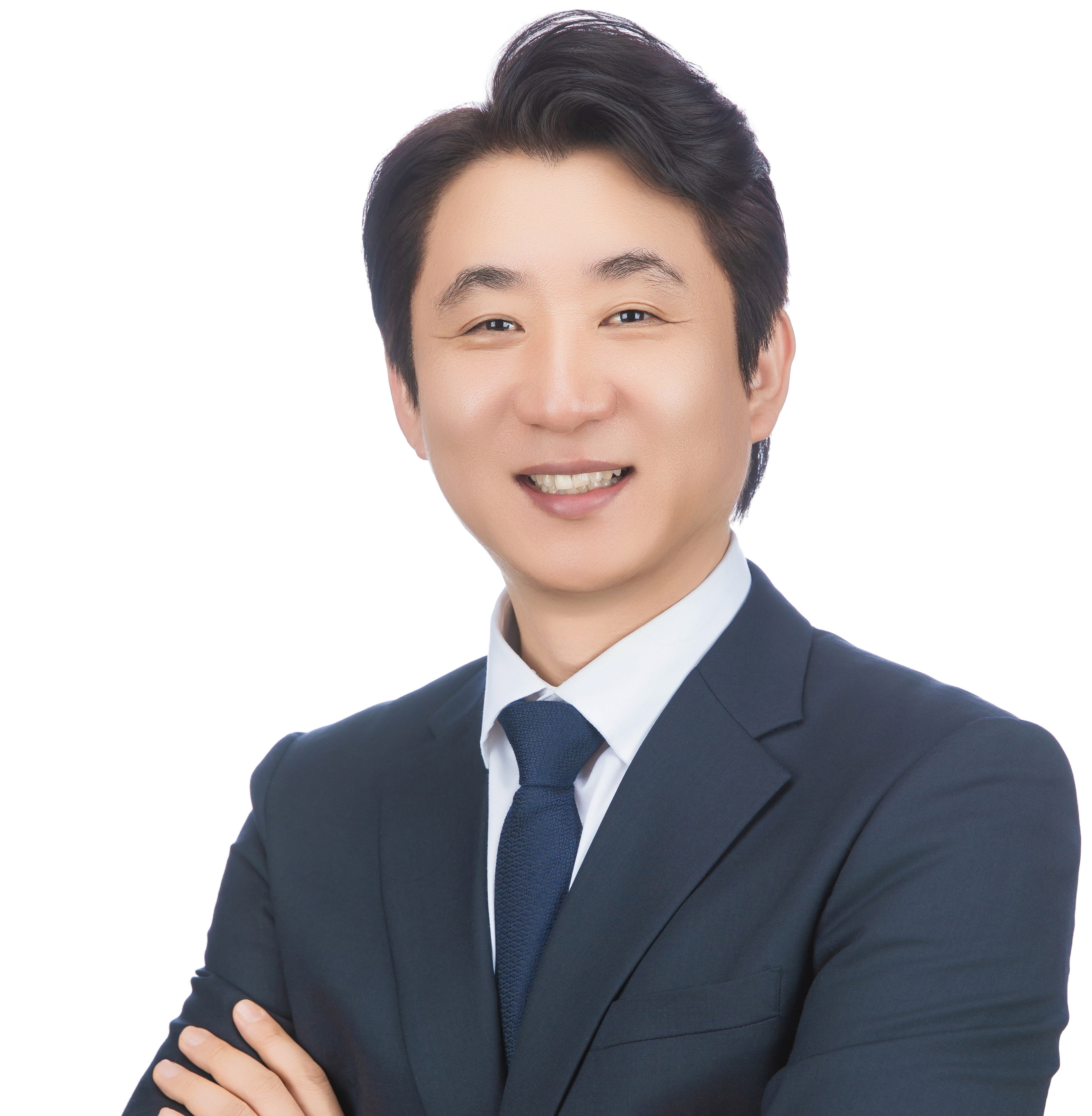
About KIM SEUNGJIN
I am a Ph.D. in AI Convergence Engineering and currently serve as a Research Professor at the Institute for Industrial Policy Studies (IPS), Republic of Korea.
My research lies at the intersection of AI systems engineering and AI social science. I specialize in medical AI and robotics-enabled intelligent systems, while also examining the governance and institutional dimensions of AI-driven infrastructures. I analyze how advanced AI technologies are embedded within governmental institutions, industrial structures, and public infrastructure, and how these interactions shape broader socio-technical transformation.
Methodologically, my work integrates engineering-based system modeling with institutional and policy analysis. Through empirical investigation and structural analysis, I study the deployment and expansion of AI systems, with particular attention to healthcare applications, robotics platforms, and the governance architectures that influence technological diffusion and societal impact.
Research interests include medical AI, robotics and intelligent systems engineering, AI infrastructure governance, socio-technical systems, and technology policy design.
Recent Comments
Your essay resonated deeply with me. Thank you for sharing such a sharp analysis of the identity-based contradictions you faced as a Filipino American applying for STEM-focused funding. Your point about the monolithic "Asian American" category erasing Southeast Asian experiences is critically important.
I’d like to add one layer to your reflection: this issue may extend beyond the need for disaggregated racial data and point toward a deeper structural imbalance—the unequal value our society places on STEM versus the humanities and social sciences (HSS).
Your advisor’s question—“Are you eligible?”—likely emerged from a context where:
A shifting labor market has reinforced the stereotype that “Asian Americans belong in STEM.”
Diversity in HSS fields like social psychology is often treated as less urgent or valuable than in STEM.
As a result, policies treat “Asian Americans” as a monolith already succeeding in STEM, completely overlooking the reality of HSS scholars like you from underrepresented Asian subgroups.
While data disaggregation is essential, we must also ask a more fundamental question: Why do we assume certain racial groups “belong” in certain academic fields? This speaks to what kinds of knowledge and insight our society chooses to value and support.
Your path as a social psychologist can help demonstrate the importance of HSS—and the diversity within it—even in a STEM-prioritizing world. I hope your work contributes not only to better racial data practices but also to a broader rethinking of hierarchies between disciplines.
Wishing you continued courage and impact in your research.
"Deeply resonate! As a Ph.D. in AI Engineering, I’m investigating the 'AI Paradox'—where technological acceleration causes systemic deadlocks in education and labor. Beyond the 'tech vs. social' dichotomy, I apply nonlinear modeling to decipher these structural dynamics. My initial study is under peer review, and I’ve launched a large-scale global analysis to further this critique."