Video Abstract: Global Diagnostic Gaps in Congenital Heart Disease
Published in Chemistry


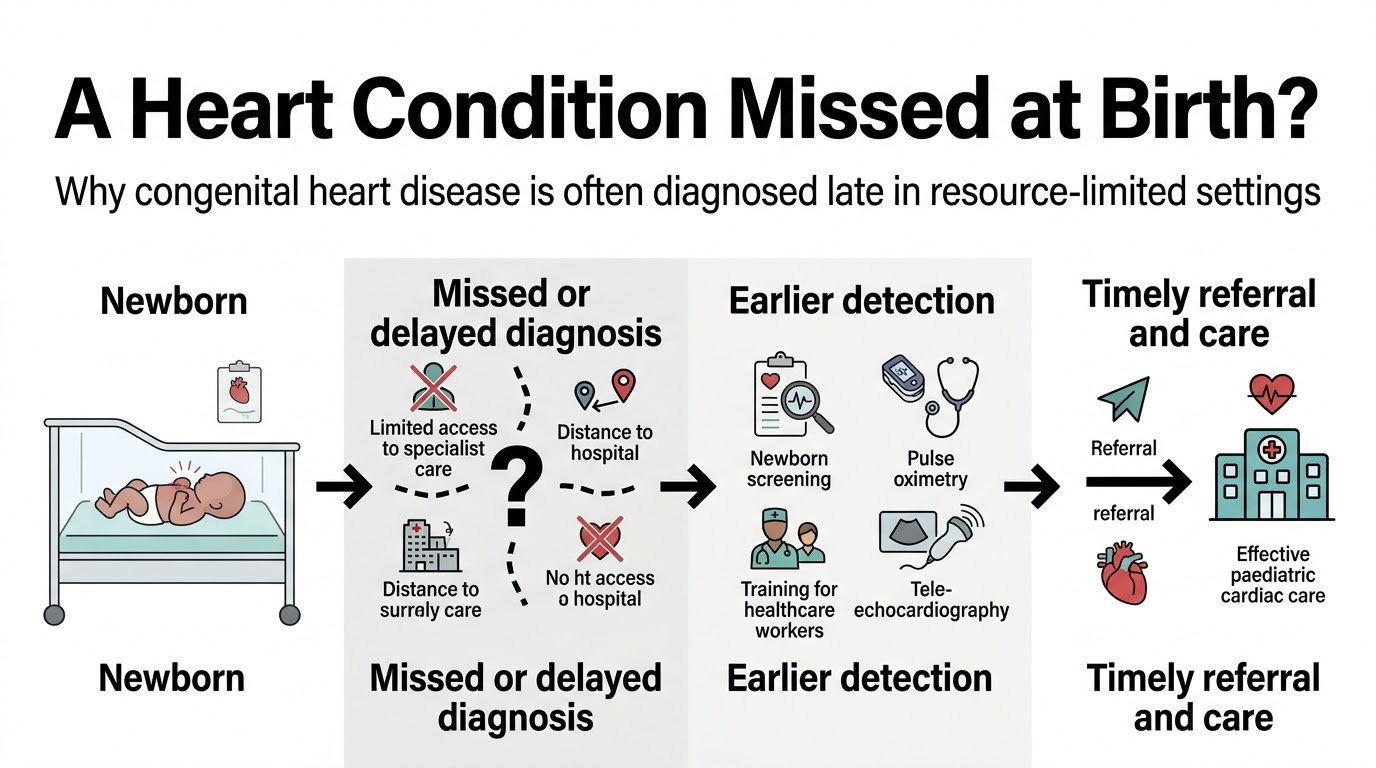
Why congenital heart disease is still missed
Congenital heart disease, or CHD, is one of the most common congenital conditions worldwide. Yet in many resource-limited settings, children may not receive a timely diagnosis. The result can be delayed referral, missed opportunities for early treatment and worse outcomes.
This video abstract presents the central question of my published review: why do diagnostic gaps persist, and which approaches may help close them?
What the review examined
The review examined evidence published between 2019 and 2025 on undiagnosed congenital heart disease in resource-limited settings. It focused on delayed diagnosis, barriers to timely detection and potential solutions for improving early identification.
The review considered the role of newborn screening, pulse oximetry, paediatric cardiac imaging, specialist expertise and referral pathways. It also discussed tele-echocardiography as a possible way to extend diagnostic support beyond centres with advanced cardiac services.
Why diagnosis is delayed
A child with congenital heart disease may not be diagnosed at birth if routine screening is unavailable or incomplete. In some settings, families may live far from hospitals with paediatric cardiology services. In others, health workers may not have enough training, equipment or referral pathways to recognise warning signs early.
These barriers can lead to late presentation, misdiagnosis or delayed referral. The consequences can be serious, particularly for infants with critical congenital heart disease who need timely intervention.
What may help
The review highlights several approaches that may support earlier detection.
Newborn screening can help identify infants who need further assessment. Pulse oximetry is a simple test that can detect low oxygen levels in the blood and may help identify some babies with critical congenital heart disease.
Training non-specialist healthcare workers can also improve recognition of warning signs. Tele-echocardiography may allow clinicians in remote settings to obtain specialist input without requiring the patient to travel long distances.
However, no single intervention is enough on its own. Screening must be linked to a reliable pathway for diagnosis, referral and treatment.
What the video does not claim
This video summarises a published review. It does not present a new clinical trial or claim that every diagnostic approach has been proven effective in every setting.
The evidence base remains uneven a regions and health systems. More research is needed to determine which strategies work best in different settings, how they should be implemented and how they can be sustained over time.
The video abstract is available here:
Related publication
The full review is published in Research Reports in Clinical Cardiology:
Reference
Al-Shawki YMAA. The Global Burden and Diagnostic Challenges of Undiagnosed Congenital Heart Disease in Resource-Limited Settings: A Comprehensive Review from 2019 to 2025. Research Reports in Clinical Cardiology. 2026. doi: 10.2147/RRCC.S558007.