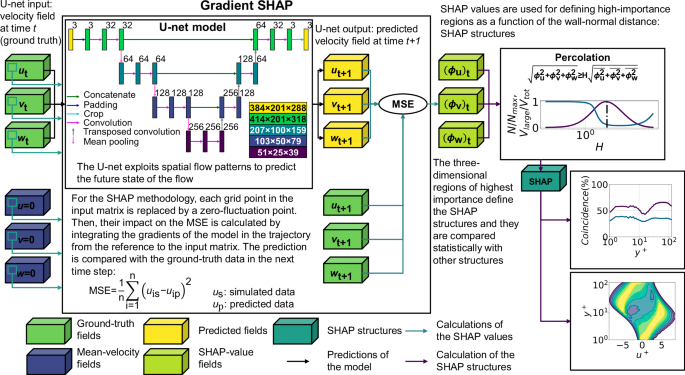

AI is transforming almost every scientific field, and turbulence is no exception. Many AI methods have been applied to turbulent flows; however, our approach is distinctly different. The goal in turbulence research is not simply to “solve” the Navier-Stokes equations. The ultimate goal is to control turbulent flows in order to reduce drag on vehicles, minimize energy losses in pipelines, enhance turbine efficiency, and design quieter and more efficient aircraft. This is not a million-dollar problem. This is a trillion-dollar problem.
Our method identifies the most important coherent structures in a turbulent flow, the parts of the flow that truly matter for what happens next. This opens the door to understanding the flow and eventually controlling it.
Cremades, Hoyas and Vinuesa: https://www.nature.com/articles/s41467-025-65199-9

Follow the Topic
-
Nature Communications
An open access, multidisciplinary journal dedicated to publishing high-quality research in all areas of the biological, health, physical, chemical and Earth sciences.

Related Collections
With Collections, you can get published faster and increase your visibility.
Women's Health
Publishing Model: Hybrid
Deadline: Ongoing
Tumor Microenvironment Crosstalk and Therapeutic Implications
Publishing Model: Hybrid
Deadline: Nov 02, 2026