Hepatocyte-targeting nanoparticles for enhanced hepatobiliary MRI
Published in Bioengineering & Biotechnology
Preview


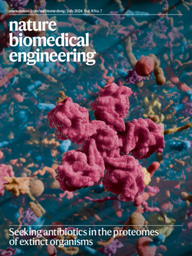
The cover illustrates an ultrasmall nanoparticle with a manganese ferrite core and with surface ligands with high specificity for hepatocytes, for use as a contrast agent for imaging the liver and the biliary tree.
Image: Haiming Fan, Northwest University. Cover design: Allen Beattie.

Follow the Topic
-
Nature Biomedical Engineering
This journal aspires to become the most prominent publishing venue in biomedical engineering by bringing together the most important advances in the discipline, enhancing their visibility, and providing overviews of the state of the art in each field.

Related Collections
With Collections, you can get published faster and increase your visibility.
Implantable wireless communication technologies
Publishing Model: Hybrid
Deadline: Nov 28, 2026
Medical Ultrasound: Emerging Techniques and Applications
Publishing Model: Hybrid
Deadline: Jan 29, 2027