Photoplethysmography based atrial fibrillation detection: a review
Published in Healthcare & Nursing
Explore the Research
 Nature
Photoplethysmography based atrial fibrillation detection: a review - npj Digital Medicine
npj Digital Medicine - Photoplethysmography based atrial fibrillation detection: a review
Atrial fibrillation (AF) is an irregularly irregular cardiac rhythm diagnosed using an electrocardiogram (ECG). This pathological rhythm represents a dysfunction of the left atrium of the heart leading to blood clot formation causing 20% of all ischemic strokes, hospitalization for heart failure, and double the risk of death. For individuals older than 80 years, AF prevalence can be between 10%–17%. AF is a treatable condition with anticoagulation therapy in high risk individuals and if detected early could lower the 5-fold increased risk of stroke associated with AF. Patients suffering from symptomatic palpitations are often cardioverted (shocked) to achieve normal sinus rhythm along with antiarrhythmic medications to prevent reoccurrence. If these treatments fail or individuals develop heart failure related to AF then an invasive cardiac ablation procedure can be performed. The current clinical investigation for the presence of AF outside the hospital relies upon wearable technology using ECG (patches, implanted sensors, pacemakers). There are significant limitations to the current clinical approach based on ECG because of short duration of monitoring, discomfort reducing patient use, as well as, invasive and costly devices.

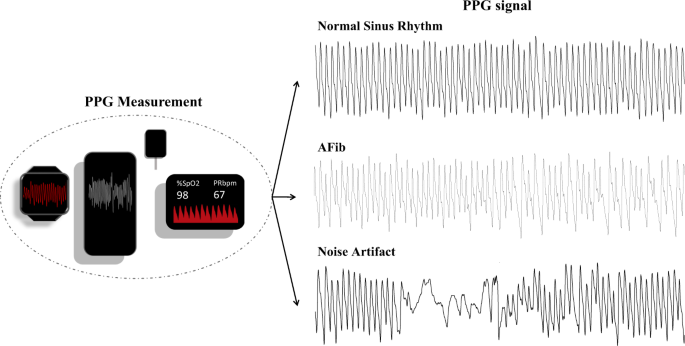
Recently, smart wearable devices (watches, phones) containing photoplethysmography (PPG) promise to enable continuous monitoring of cardiac rhythm, offering potentially transformative diagnostic and patient management tools. The PPG wearable devices are non-invasive and worn continuously for years, thus overcoming some limitations of current ECG technology. These ubiquitous devices use low-cost and easy-to-implement optical sensors to record PPG, which are pulse pressure signals from arterial blood vessels that carry information about the cardiac activity, cardiovascular condition, along with the interaction between parasympathetic and sympathetic nervous system. There are increasing numbers of wearable devices dedicated to detect AF using PPG, which can represent an important opportunity to prevent strokes and morbidity.
This review is a summary of the reported studies that use PPG to detect AF. We present the approaches used for PPG signal processing, machine learning, and deep learning approaches. Important for future clinical application of wearable PPG signal detection of AF is our discussion of the limitations and challenges. The PPG wearable devices must overcome poor signal quality, confusing AF with other arrhythmias, and clinician interpretation of signal waveforms. Addressing these challenges to PPG based systems will be critical to avoid false positive results that could lead to an unnecessary additional confirmatory diagnosis of AF and exposure to anticoagulant medications that carry increased bleeding risk. It is encouraging to recognize that many more methodological studies aiming at developing algorithms for PPG based AF detection were published in a short period of time since our last literature reviewed conducted for this paper. This high level of attention to the PPG algorithm is very timely because the realization of the full potential of this ubiquitous monitoring modality critically depends on the advancement of these algorithms. Then it is critical to understand the current performance of PPG derived AF detection algorithms so the opportunity to prevent stroke is fully optimized while avoiding potential harms. Our presentation analyzing the current literature is an effort to achieve this goal.

Follow the Topic
-
npj Digital Medicine
An online open-access journal dedicated to publishing research in all aspects of digital medicine, including the clinical application and implementation of digital and mobile technologies, virtual healthcare, and novel applications of artificial intelligence and informatics.

Related Collections
With Collections, you can get published faster and increase your visibility.
Synthetic Clinical Data and Privacy-Preserving Frameworks for Trustworthy Health AI
Publishing Model: Open Access
Deadline: Jun 03, 2027
Digital Biomarkers for Enabling Proactive Clinical Decisions
Publishing Model: Open Access
Deadline: May 18, 2027